Order Digital Reprints
Filed Under
Sign Me Up!
Sign up Digital!
Subscribe to Print!

Interested in Pumps?
Get Pumps articles, news and videos right in your inbox! Sign up now.
Pumps + Get AlertsDecentralized design benefits country club
Problem
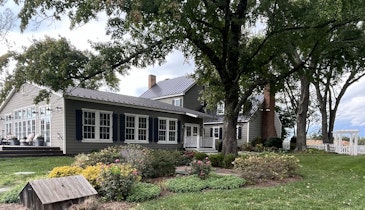
The design engineer for Keene Manor Estates, a country club development in Nicholasville, Ky., needed wastewater treatment options. The initial plan of drainfields in every backyard failed to meet the aesthetic quality sought by the owners.
Solution
The engineer turned to Clarus Environmental to provide decentralized collection using filtered septic tank effluent pumping (STEP) systems, a recirculating gravel filter, and drip distribution that irrigated portions of the golf course. Clarus helped the engineer with force main design, treatment system sizing, and dripfield zoning and layout.
Result
The system, operational and trouble-free since 2007, led to more consistent, professional, and effective wastewater management. 800/928-7867; www.clarusenvironmental.com.
Biofilters meet all requirements
Problem
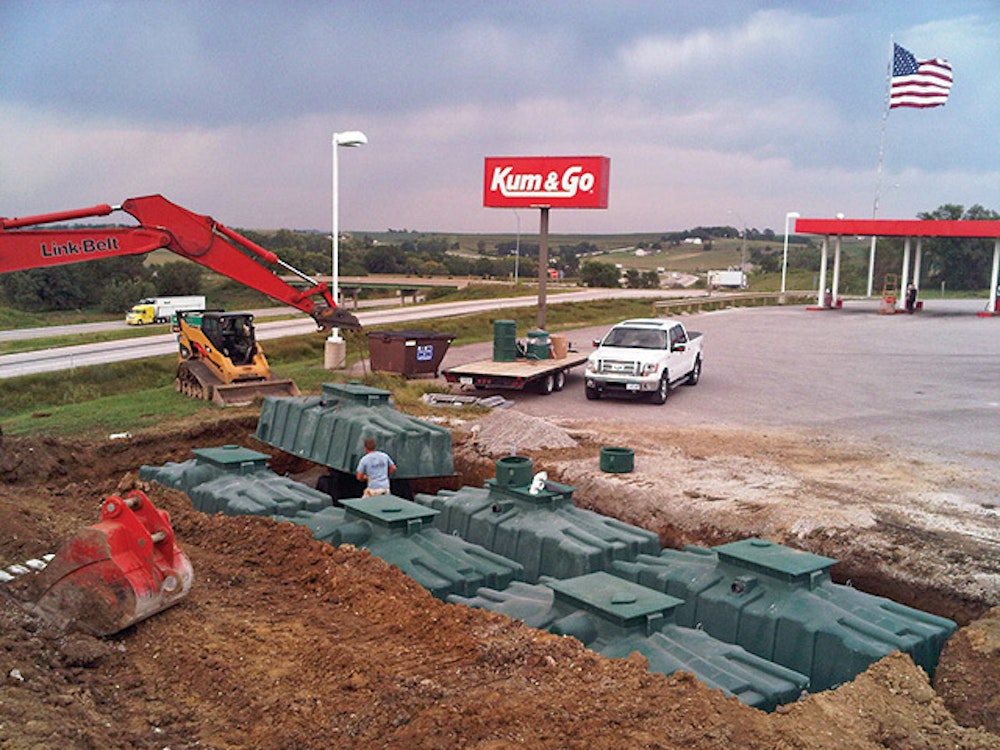
The onsite system serving the Kum & Go fuel and convenience store in Neola, Iowa, needed replacing. Constraints included 3,000 gpd high-strength wastewater, clayey soils with no possibility of infiltration, and peak flows during summer.
Solution
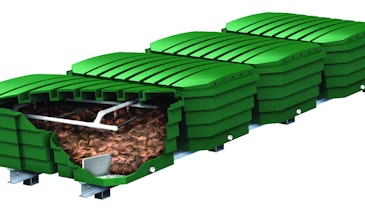
The system designer chose six ST-750 Ecoflo biofilters in fiberglass modules from Premier Tech Aqua to provide economical, practically maintenance-free treatment. The passive and compact system uses 100 percent organic filter media to retain pollutants and needs no electricity.
Result
The system meets all maintenance, discharge and budgetary requirements. It also offers the flexibility for future development. 800/632-6356; www.premiertechaqua.com.
UV disinfection resolves school problem
Problem
The 6,000 gpd (design) extended aeration plant treating wastewater from Richwoods (Mo.) Elementary School surface discharged without disinfection. In 2009, the state imposed an effluent requirement of less than 206 fecal coliform per 100 mL.
Solution
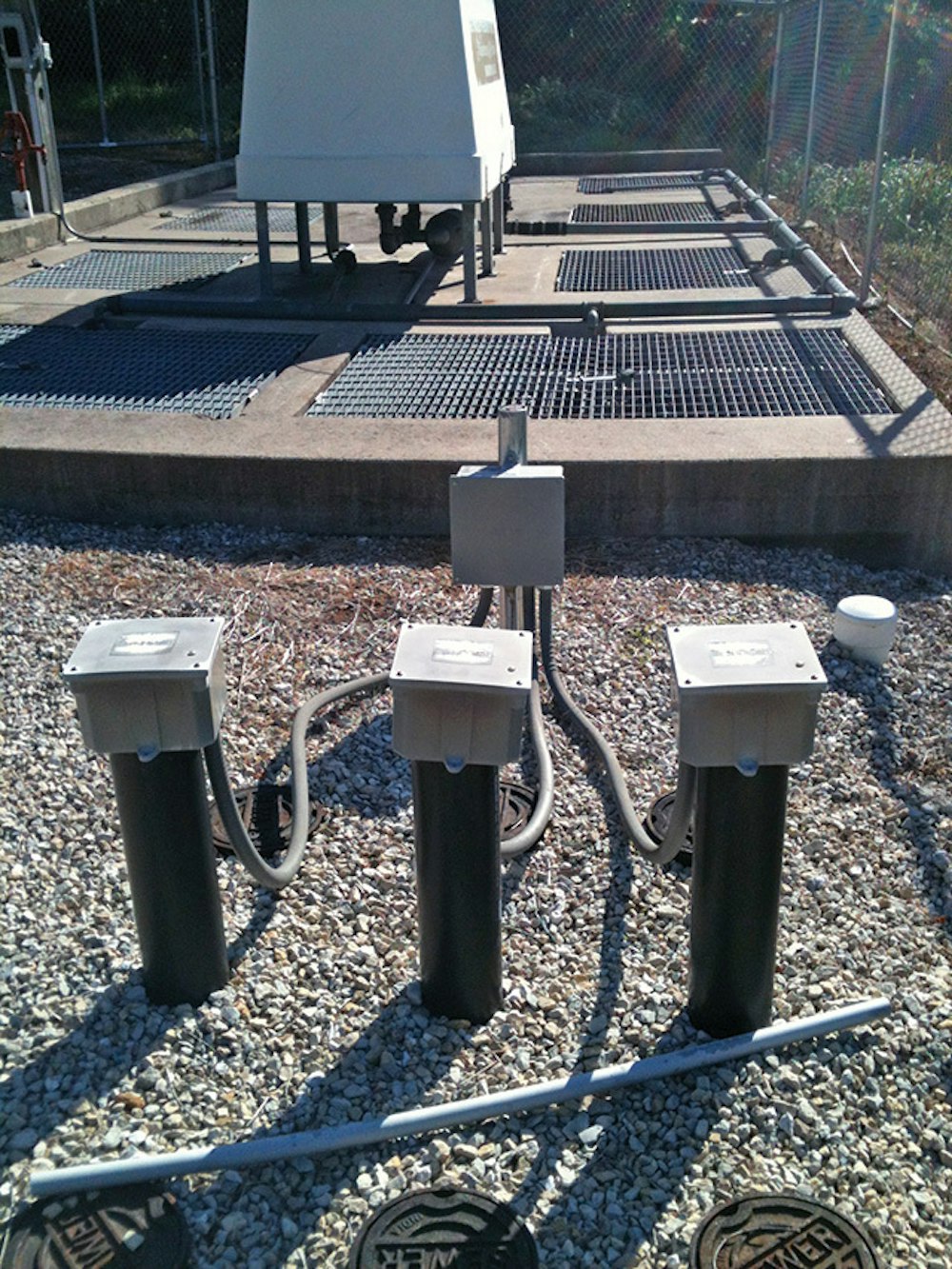
Trumpet LLC designed a disinfection system that included three 3G ultraviolet chambers (Salcor) in parallel. Valving enables one or two units to be taken offline without disturbing operation. Since disinfection is not required in winter, the chambers are deactivated by removing the lamp and a frame divider.
Result
The system is treating effluent to 6 mg/L BOD, 3 mg/L TSS, and less than 1 cfu/100 mL total coliform. 760/731-0745.
Truck stop recycles wastewater
Problem
A Husky Oil truck stop near London, Ontario, was expanding its restaurant. To accommodate the increased flow, contractors decommissioned the 5,000 gpd facultative lagoon and constructed a 15,000 gpd wastewater treatment system.
Solution
Space limitations, nitrogen loading, and lack of groundwater for flushing lavatories challenged designers. The system they chose uses grease traps to intercept kitchen flows and a biofilter from Waterloo Biofilter Systems to treat lavatory wastewater. Effluent is polished by slow sand filtration and chlorine addition, then used to flush commodes. Recycled effluent accounts for 40 to 50 percent of total water consumption. When demand is low, the overflow is pumped to a disposal bed.
Result
The treatment plant has met all Ministry of Environment requirements: less than 10 mg/L cBOD and TSS, and less than 5 cfu/100 mL total coliform and E. coli. 519/856-0757; www.waterloo-biofilter.com. O