Low-pressure distribution (LPD) systems distribute effluent at sites that need uniform distribution to treat wastewater properly. They deliver small doses to give the soil time to accept and treat the effluent. But as with any approach to wastewater treatment, there are limitations, according to the Texas Onsite Wastewater Treatment Research Council. As reported in the council's newsletter, here are six common reasons for LPD system failures:
1. Can’t fit a gallon of water in a half-gallon jug. The soil on a site can accept and treat only a specific volume of wastewater. In LPD systems, the actual surface area of the trench or infiltrative surface is smaller. This leads to a lower volume of media, which also acts as storage for the effluent until it moves into the soil. In many cases the site has half the volume of water storage as a gravity distribution trench.
2. Miscalculating load rates. The effluent applied to a site must go somewhere. In evaluating a site, the designer must ask: Where is the water going to go? For example, water moves down into the ground, up into the air through evaporation/transpiration, or laterally out to the sides of the soil treatment area. The design must consider not only the effluent applied to the site but also rainfall.
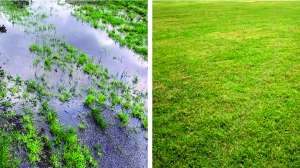
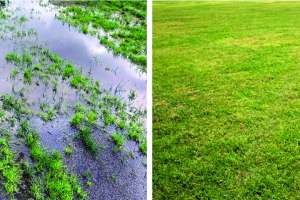
3. Misjudging obstacles. The area around the soil treatment area must be evaluated to determine if a barrier to water movement exists. A barrier limits the ability of water to move out to the sides of the soil treatment area or downslope. If a building, sidewalk, driveway, curb or path across the soil is located downslope of the soil treatment area, the water cannot migrate downslope. The effluent will pond against this obstruction, causing the water to pond and potentially surface.
4. Not accounting for irrigation. An irrigation system adds water to the water balance providing a greater volume of water that must be accepted by the site. Removing the irrigation system may bring a marginal site back into compliance.
5. Not accounting for surface runoff. Runoff must be diverted away from the treatment tanks and soil treatment area. Rainfall running off a roof, parking areas and patios must be directed around the treatment system. Otherwise it can overload and flood the soil treatment. Stormwater management must be applied to move rainfall away from the soil treatment area and treatment tanks.
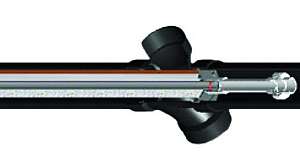
6. Distribution not uniform. The effluent distributed through the LPD piping is designed to achieve uniform distribution. However, uniform distribution is only achieved when the system is fully pressurized. During pressurization and depressurization, non–uniform effluent occurs because water flows downhill. Effluent draining from the piping may drain to the lowest lateral if this drainage is not restricted during design and construction.
For more information, visit http://towtrc.state.tx.us.
Continue reading for free