Question:
Does anyone have any experience with ATUs that use what is essentially an agitator for aeration? I am wondering about odors, and about their ability to handle shock loads. I do designs for holiday homes, and some ATUs really stink when you fire up the plumbing on a long weekend after being away for a month.
Answers:
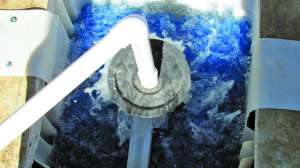
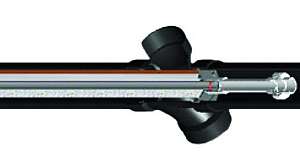
I have some. The aerator is a motor with a hollow central shaft that incorporates a hollow tube with an aspirator at the end down in the mixed liquor compartment. They also incorporate a fixed-film media that supports microbial life.
Typically the aerator runs 50 percent of the time, 30 minutes on and 30 minutes off. Feeding the microbes is a problem for seasonal homes. If the unit is left in operation when not in use during the off seasons, the smells are not as bad. This is where old dog food can come in handy to ensure food for the microbes. If you use underground disposal of some kind then the intermittent odors are far less of an issue.
If smell is an issue, you can add a charcoal filter to the exhaust. We have never seen a failure after an ATU here in our county, so I believe the worry over vacation homes using them is academic, and we have lots of vacation homes on Whidbey Island.
If the unit is shut down when the home is vacant, it will surely go anaerobic (septic) within hours. The bugs will use up all of the oxygen present, and the contents will soon smell like normal septage. That would happen with any kind of ATU.
Then, when the unit is restarted, the off-gasses will smell for a long time until the unit is again fully aerobic. I don’t think there is any way to avoid such a problem, unless you leave the unit going all year.
I don’t believe it has much to do with not having a good population of bugs — or lack of food — but more likely a lack of oxygen during down periods. My opinion is that any kind of ATU is not a good fit for a seasonal use. Packed bed filters are a better application for such situations.
Continue reading for free