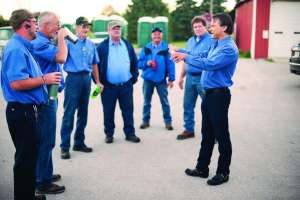

Each year I visit several continuing education events in Wisconsin where the attendees are there to get their required credits to keep their installer-related licenses.
The idea is they learn something by listening to speakers, have lunch and receive the credits they need to keep their licenses.
Many of the events I attend average 200 to 300 attendees and I am there to talk about the Wisconsin Onsite Water Recycling Association, the state’s onsite industry association.
The attendees paid little, if anything, to attend these events, and walk away with their credits, and in most cases a pretty good lunch. They see a few vendors and get updates from the state and counties.
This is not an article to bash those events; they serve an important purpose.
The hurt is when I get up in front of the room and ask how many attendees are members of our state association, and maybe if I’m lucky I get one or two hands raised.
I state the benefits of being a member, their eyes glaze over and later a few will come up and ask for membership information.
I know the thinking. Why do I have to join an organization, if all the things they do will get done without me anyway, where is the benefit in joining?
Here’s what they don’t realize: A state organization is not them. A state organization is made up of us. The members are onsite installers, soil testers, designers, the vendors we buy from every day and regulators who volunteer their time to help direct the industry.
When I get up in front of them, it’s not some professional “association” guy. My company installs an onsite system or two every day (that weather allows). I soil-test; I’m a plumber/installer like they are.
These are some of the things our association does that don’t just happen. These organizational functions need your help:
- We organize and run a three-day annual conference. At our annual conference we partner with the pumper organization and have 50 vendor booths, dozens of classes that gain continuing education credits for installers, soil testers, pumpers, etc. At our conference, members can be trained and certified in confined-space entry, OSHA-competent person for trench safety and other licenses and certifications.
- Some members sit on a state Code Advisory Committee where we voice installer/industry input and recommendations regarding changes in our code.
- Some association members are on a state Technical Advisory Committee. This committee allows the industry and the state to partner in discussing products and technologies that have applied for state approval.
- Association members work closely with legislative representation (lobbyists) who keep a close eye on bills that are coming up for a vote in the state legislature, and they guide us through the process of opposing or supporting proposed legislation that would directly affect our industry. This might sound dry, but consider this:
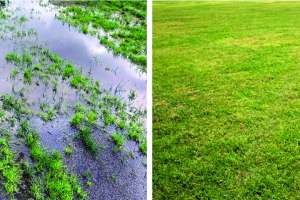
Our lobbyist alerted us to a state representative who, because he received letters from retired voters who don’t think they should have to pay for pumping or replacing their systems, was preparing to add the following into the budget: Homeowners can "inspect" their own systems to determine if they need to be pumped or not, and if their system fails, they would not have to replace their systems if the surface discharge remained within their lot lines.
The scary part is this was going to be part of a budget. Unlike a bill, a budget does not allow any public comments. We had to very quickly go to meet every state legislator involved and explain the importance of properly maintaining onsite systems and the health risks that unchecked surface discharge would cause due to vector attraction, pathogens, etc. We met many legislators and had to educate each on what this addition in the budget would mean.
If we did not have a strong association with a top-notch lobbyist, and that budget passed, we’d all be swimming in poo over here.
- Our association members have gathered together and installed systems at no cost for people in need. We’ve used those installations to bring out the local state representatives and further educate them on our industry.
- Our association works very closely with researchers in our state and other states to keep learning and understanding what works best to treat wastewater and protect public health. We always want to keep getting better and more efficient at what we do.
I want to say again, this isn’t them, it’s us — installers, soil testers, county and state regulators, tank manufacturers and our vendors working together to be better.
OK, maybe I do feel like a professional association person. I’ve been a member of our state association for over 30 years, on the board for most of those years, and president twice. But I’m not a person who thinks I know anything. I’m a person who wants to keep learning and do whatever I can that might help guide our industry. There is a place where we work together for our industry. It’s our state association.
Jack Welch, former head of GE, liked to say, “Control your destiny or someone else will.”
I don’t know about you, but the second I heard we had a state association, I was on the phone asking how to join. I wanted to be a part of the association; I believe in Welch’s quote.
There are too many people that are just fine going out each day, installing a system and hoping for the best. At least for me, that’s not good enough. Hoping for the best won’t do it.
If you are a system installer or septic pumper or tank manufacturer, this tells me you are a hard worker. Take some of that effort and join your state association. Or start a state organization if you don’t have one. Be an active member. Be a board member. Have your voice heard in the industry.
About the author
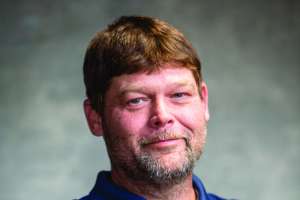
Todd Stair is vice president of Herr Construction, Inc., with 34 years’ experience designing, installing, repairing, replacing and evaluating septic and mound systems in southeast Wisconsin. He is the author of The Book on Septics and Mounds and a former president of the Wisconsin Onsite Water Recycling Association.
Continue reading for free