
Located 30 miles north of Winston-Salem, Hanging Rock State Park was established in North Carolina in 1936. Last year, Full Circle Environmental of Clayton, North Carolina, and MHI Contractors of Mills River, North Carolina, took on the challenging job of rejuvenating the park’s historic septic infrastructure, uniting several systems into a single treatment system across the park’s treed and mountainous terrain.
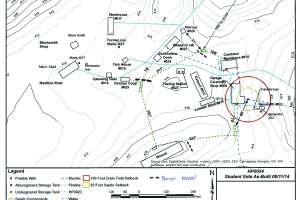
Throughout its history, Hanging Rock has grown through land acquisitions to more than 9,000 acres. In 2014, the park grew by 750 acres with the acquisition of the Moore Springs Campground and Vade Mecum properties. Located a half mile northwest of the original park boundary, these properties feature historic buildings served by septic systems built independently over a space of 90 years.
Designing a new system
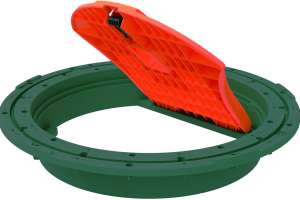
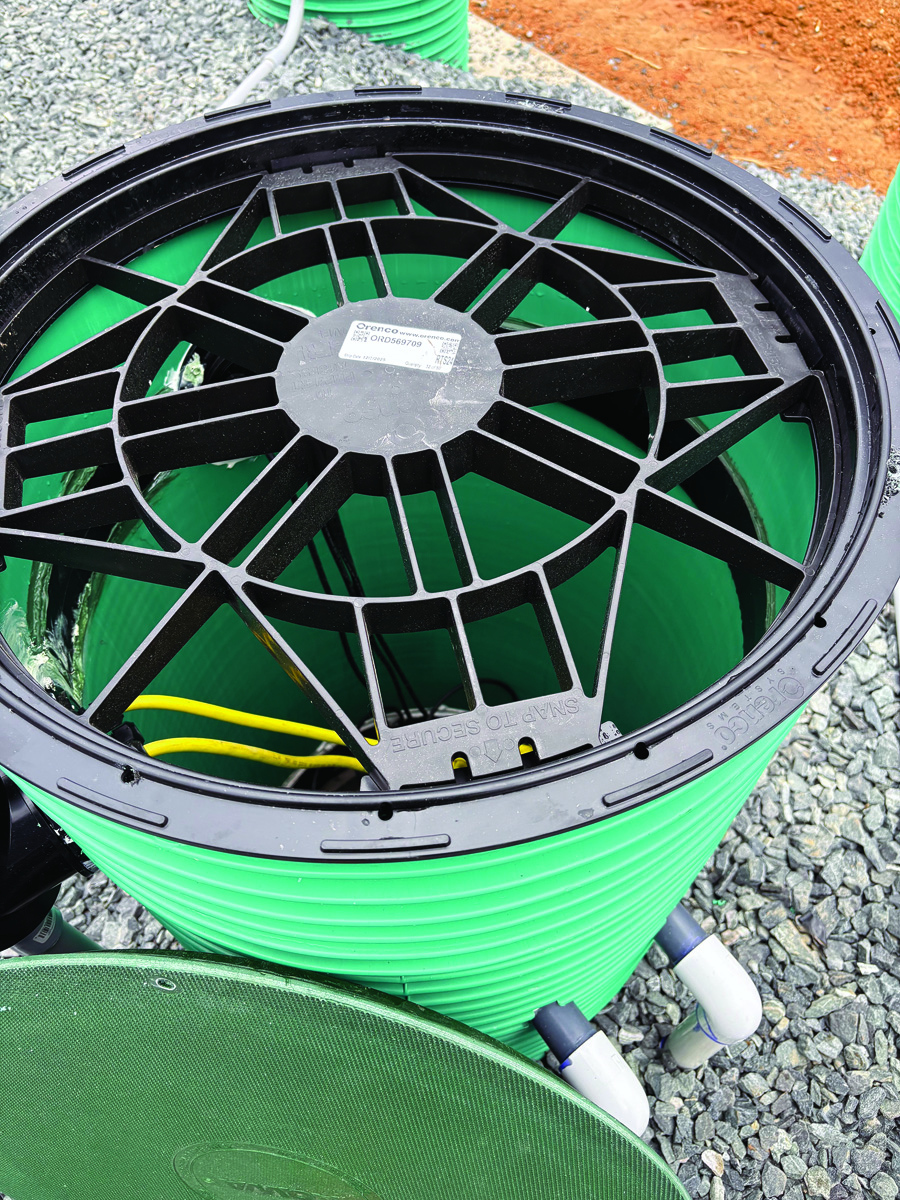
Agri-Waste Technology of Cary, North Carolina, designed the extensive system, which incorporates all of the individual septic systems on the Vade Mecum property into a single treatment system fed by both gravity and force mains powered by Orenco Systems pumps. Shoaf Precast of Lexington supplied new septic tanks. Orenco also supplied all risers, lids and the system control panel.
The facilities served include:
- Vade Mecum Springs Hotel (Cheshire Hall), built in 1902, and a restaurant. The design involved refurbishing and reusing the existing 4,000-gallon septic tank and 6,000-gallon pump tank, as well as the restaurant grease tank. Expected flow: 3,320 gpd.
- Tise Hall, a bathhouse, recreation center and gymnasium, was paired with an outdoor restroom building located near the hotel. The original tank was decommissioned and replaced with a new 5,100-gallon STEP tank. Expected flow: 1,350 gpd.
- Three tourist cabins were served by an original septic tank, which was decommissioned and replaced with a 2,500-gallon STEP tank. Expected combined flow: 960 gpd.
- The Vade Mecum chapel, which dates back to the 1940s. The original septic tank was decommissioned, and the facility was outfitted with a gravity-served 1,000-gallon septic tank. Expected flow: 207 gpd.
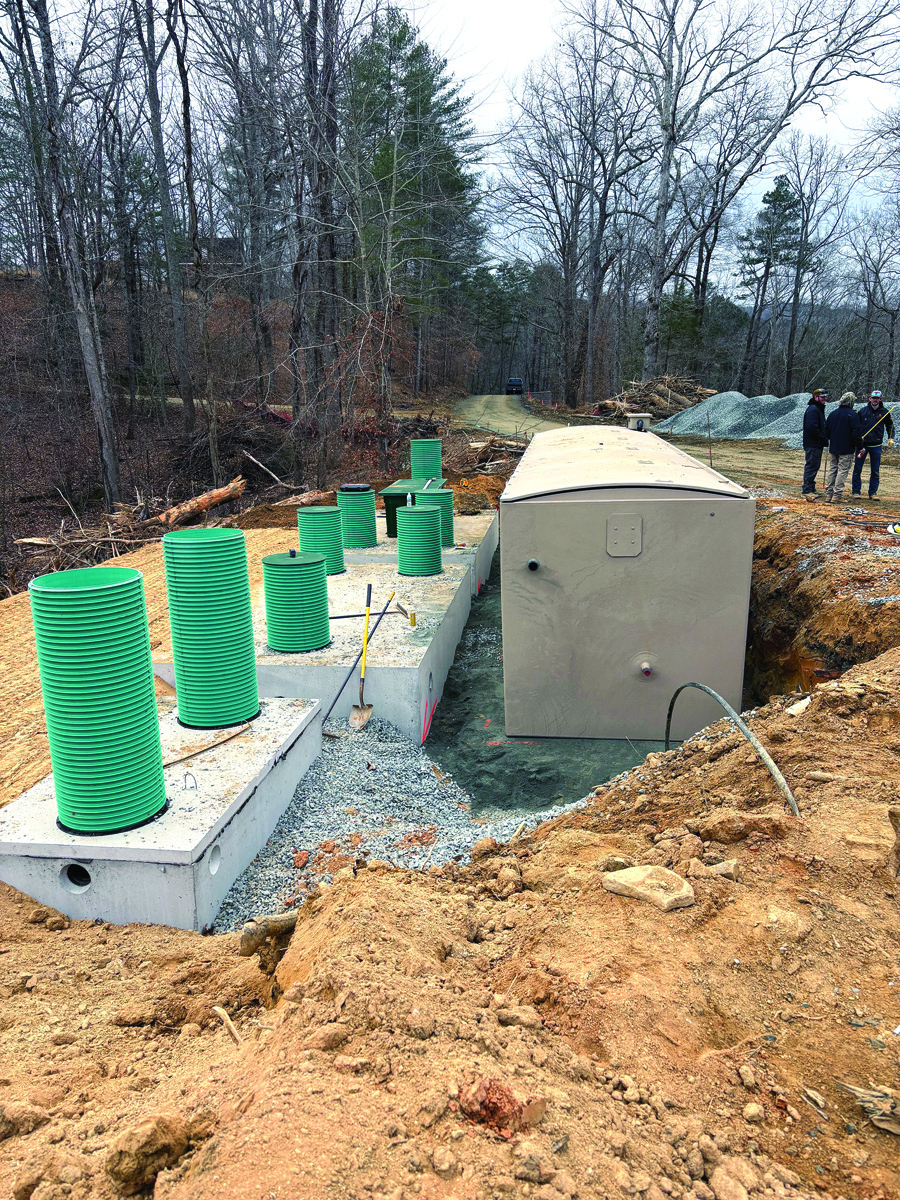
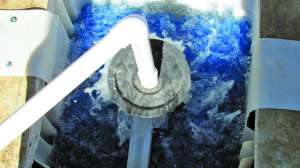
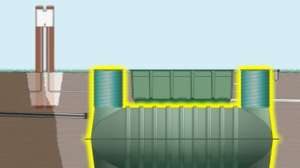
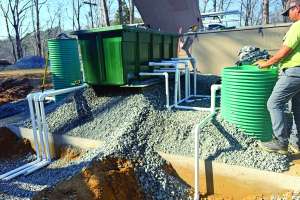
Wastewater is conveyed to a flow equalization tank with a capacity of 8,347 gallons at a rate of 5,170 gpd. From there, wastewater is conveyed to an Orenco AdvanTex AX-Max 225-35 Treatment System, which can treat up to 15,000 gpd using an engineered textile medium. Following treatment, the effluent is pumped to a 6,338-gallon field-dosing pump tank and distributed to three forested drainfields incorporating multiple subzones and measuring approximately 6,000 square feet each.
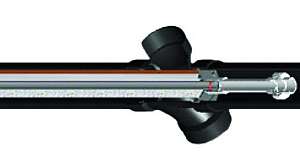
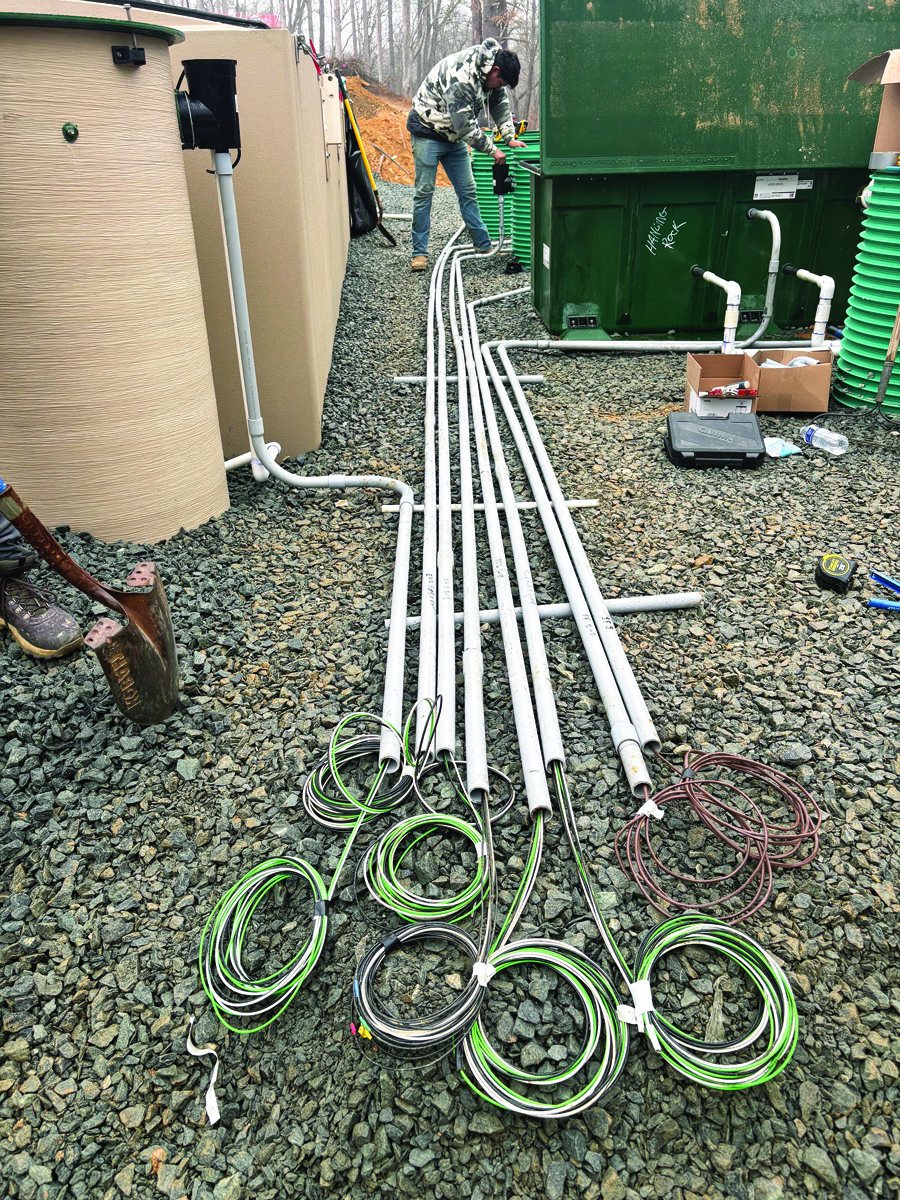
All lines connecting the system consist of Netafim USA Schedule 40 PVC supplied. Drainlines from the septic tanks are 4 inches in diameter. Field supply, force main and return lines through to the equalization tank range from 1/2 to 1 1/4 inch in diameter.
18,000 feet of 1/2-inch drip tubing spaced 2 feet apart unite the drainfields, which are installed through densely wooded areas and back and forth across steep slopes.
The contractors
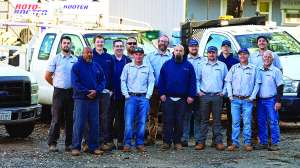
Zach Woody founded Full Circle Environmental in 2017. The company offers design, installation, maintenance, repair and pumping of onsite wastewater systems. MHI Contractors was founded in 2005 as a landscape company. Owner Miles Holden has been offering septic installation, inspection and repair since 2015.
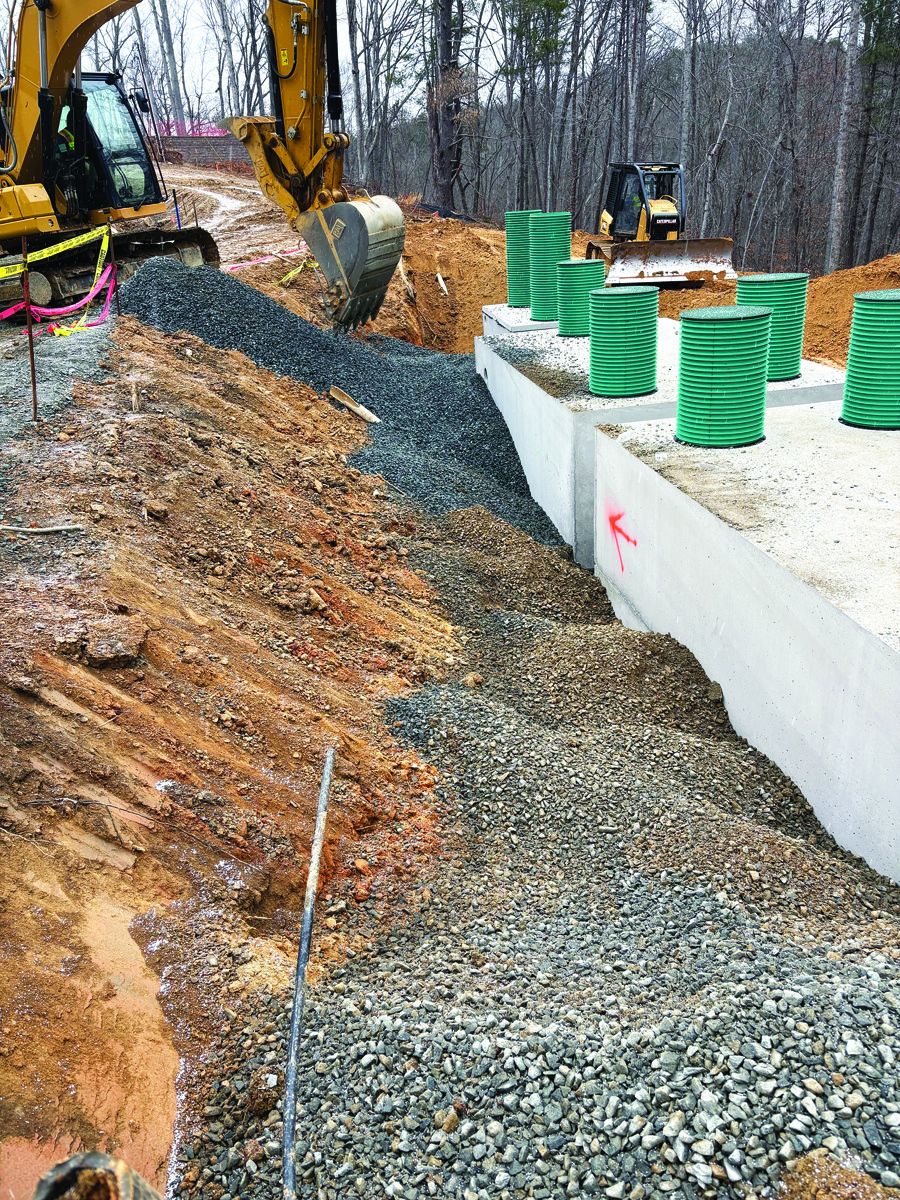
“Full Circle has a lot of experience with setting big tanks and treatment systems, and MHI, from the western part of the state, has a lot of experience working on slopes in five states along the Appalachian Trail,” Woody says. “We added our skill sets together and brought them both to the project.”
Ready to roll
Design and preparation for the job took about a year, involving frequent site visits to ensure the system would come together during construction. Work began in November 2025 after the tourist season ended with a goal of completing the system before the 2026 season began.
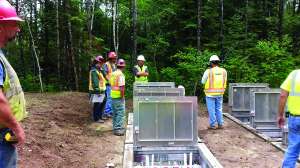
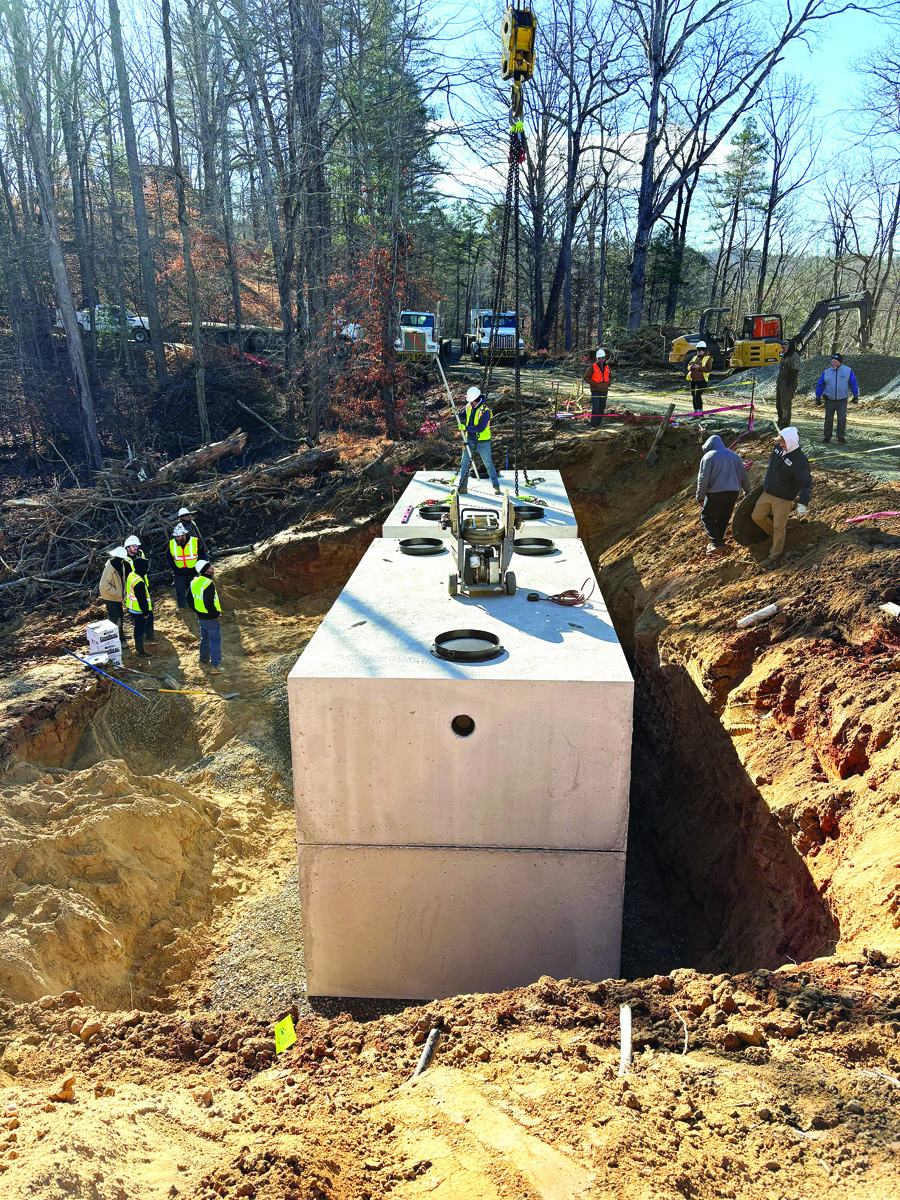
“We knew it would be a challenge working on the slopes, and the treatment area is so compact,” Woody says. “We had to deal with a large amount of dirt, bring in trucks full of stone, set up a crane and stage all of the tanks, working in tight, hot and heavily wooded areas.”
The contractors tag-teamed the project and split up tasks to work to each others strengths.
Larger equipment brought to the project included a Caterpillar 320 20-ton hydraulic excavator, a pair of John Deere mini-excavators (a 35G and 60G), a Bobcat T590 skid-steer/track loader and a John Deere 333G skid-steer.
Winter weather a challenge
While the early months of the job featured hot, humid conditions, the weather shifted in December.
“It was miserably cold,” says Woody. “The entire month was brutal, with ice and a lot of snow. The ground was frozen, and we had trouble accessing the site, which led to a couple of days of work slowdowns.”
Holden agrees. “Pipe just doesn’t like to go in the ground in the single digits,” he says.
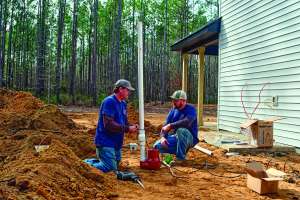
The drip tubing was placed 6 inches underground, but all of the force mains, supply lines and return lines were buried 18 inches or more.
Slippery slopes
Much of the terrain was sloped at 1.5:1, with some of the hillsides tilted at 1:1. Preparing the drainfields inside a forested area required the contractor to hand-cut a number of trees, all 4 inches in diameter or less, measured 3 feet above the drainfield.
The slopes and remaining trees prevented crews from bringing in any heavy equipment to trench out the driplines.
“I went out and purchased five handheld mini-trenchers by GeoRipper, and we georipped about 20,000 feet,” Holden says. “I’m 38, and I took six guys with me who are my age and older. We had a running joke, when we tallied our totals, that the senior citizen crew georipped more than the younger guys in their 20s.”
At its peak, the combined crew from both contractors totalled 18. The project was completed in March, in time for the park’s tourist opening.
“Looking back, this was not only the largest septic project Full Circle and MHI had ever taken on,” says Woody. “It may also be one of the most extensive septic systems in the state.”
Continue reading for free