
Luis Goncalves, owner of GroundStone Onsite Waste Water Services in West Kelowna, British Columbia, didn’t choose work in the septic business straight out of the gate, but once he recognized his calling, he brought all his energies to the field.
Goncalves and his family moved to Canada from Portugal in the mid-1970s when he was three years old. They settled in Penticton, British Columbia, where his aunt and uncle lived, and his parents quickly found employment in the modular home industry. Goncalves worked in the hospitality industry as a long-haul trucker and for a corporate security company. Then he answered an ad in 2007 for an excavator operator at a construction company that also served the septic industry.
“There was always something that made me feel good about working in the dirt, and I have a love of heavy machinery,” he says. “When I responded, the owner didn’t even know the ad had been published, so it was almost by fluke that I ended up in the septic business.”
An aptitude for the septic business
Under the mentorship of the company’s owner, Goncalves learned the septic trade, often putting in time without pay to advance his knowledge. He read any educational material he could get his hands on, including issues of Onsite Installer. He also became involved with the Western Canada Onsite Wastewater Management Association-BC, an organization established to educate, train and certify industry professionals.
GroundStone Onsite Waste Water Services opened for business in West Kelowna in 2016.

“I didn’t want to be a jack of all trades or offer anything that distracted me from septic,” Goncalves says. “Landscapers and excavators are plentiful here, and septic companies are scarce, particularly in the province’s north.”
He made his offer to customers simple — the company would quote on work anywhere in the province, a tall order for an area bigger than Texas. Remaining competitive after as much as a 15-hour drive requires careful planning.
Holding the line on supply costs
“There’s a higher cost to supplies when they’re sourced up north, and that’s one reason we’re competitive there,” Goncalves says. “We leverage our local supply chain so we can hold the line on fixed costs, and charge northern customers a comparable price to what we’d offer locally. We also pack our vehicles, including a trailer, an excavator and supplies so we have everything we need, ready for each project. (See the accompanying sidebar exclusively online.) We quickly started to grow in those northern regions through word of mouth.”
While GroundStone will drive anywhere, the farthest destination for septic work has been Fort St. John, a town of 20,000 people. Located halfway to British Columbia’s northern border, the drive totals almost 700 miles and takes as long as 15 hours by truck. Some complicated projects keep his crews occupied for weeks at a time.
The vast province spanning such a large area obviously features a wide range of soils, often deep clay with high water tables. Septic systems range from typical underground tanks and drainfields to drip systems and sand mounds. For properties of five acres or more with heavy clay soils, Goncalves constructs lagoon systems.

“They’re excavations that can be quite sizable, depending on how big the house is,” he says. “We size the lagoon according not only to flows, but also precipitation, evaporation and a bit of permeation through the clay. It’s normal to see something 80 feet by 40 feet and about seven feet deep with berms and fencing around the perimeter.”
Goncalves is a Registered Onsite Waste Water Practitioner, Planner and Installer with the Applied Science Technologists and Technicians of British Columbia, the organization governing the septic trade in the province.
“The hardest part of achieving the planner designation isn’t the education part,” Goncalves says. “They want to see a few designs that you’re capable of. To do that, you need mentorship. It’s very difficult to find a mentor, especially if they know they’re encouraging a competitor.”
Squaring off against blizzards
The climate of British Columbia ranges from temperate along the Pacific Coast to bitter cold with blizzard-like conditions.
“Where the weather’s mild, we work year-round, but we’ve installed systems at negative 25 degrees C [negative degrees 13 F],” Goncalves says. “I’ve also been caught in a few blizzards. Even while we’re doing the install, we’ve had flakes coming down so fast it’s hard to see in front of you.”
GroundStone operates from Goncalves’ home, with a large compound for construction equipment. His wife, Mary, is an integral part of the business.
“I rely on her to set up dump truck schedules, crane schedules and hotel schedules,” Goncalves says. “While I’m on a job site up north, she’s already preparing for another job somewhere else, putting together schedules and calling our distribution network to get supplies ready so that we’re prepared to hit the dirt running on the next project as soon as we get back.”
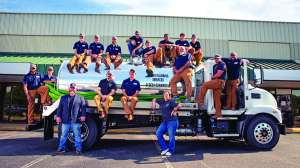
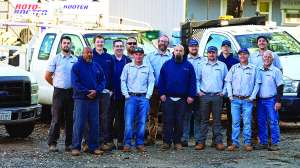
The company employs between three and four people, depending on how busy the schedule is. Goncalves is a big believer in employee training.
“I’ll be working on one section, and I have full confidence that the guys are doing a good job in another section,” he says. “It all comes together with synergy. We accomplish more with a limited number of employees than we might with a larger group.”
An extensive constructon fleet
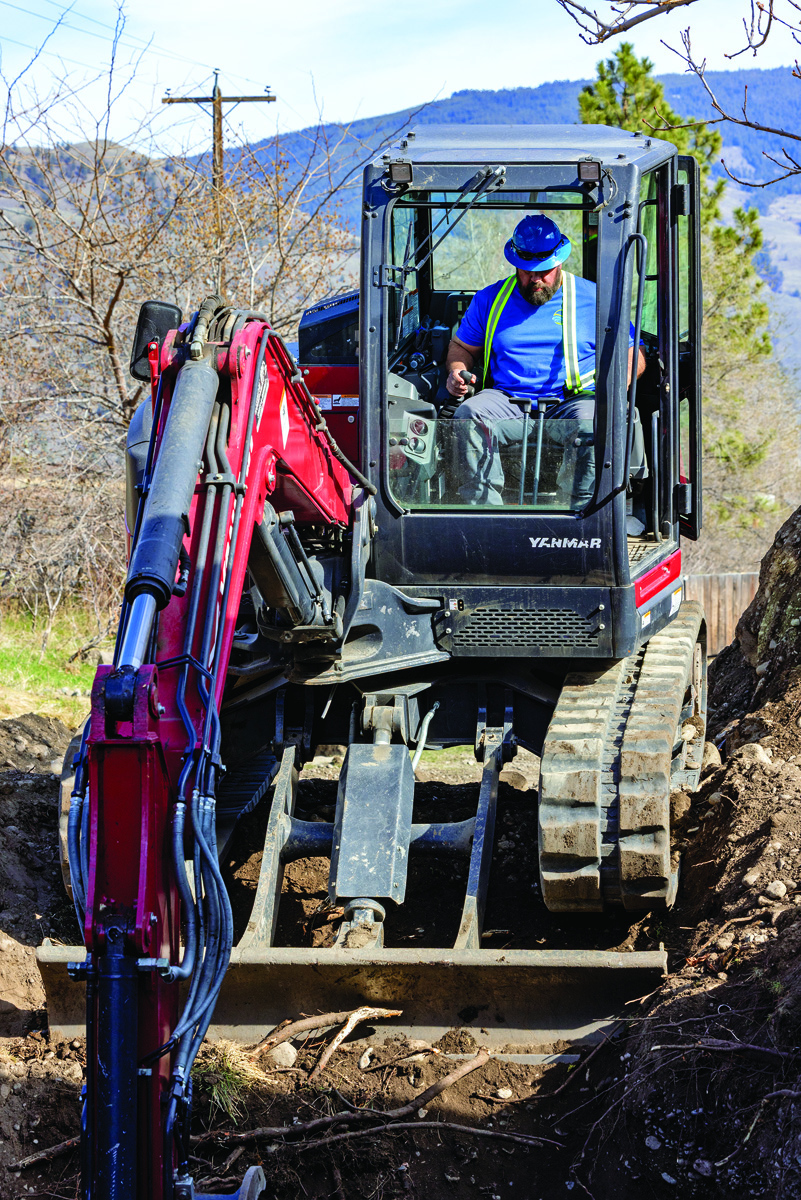
GroundStone operates five excavators: a 2022 SANY SY26U mini-excavator; a pair of Yanmar midi excavators, a 2021 ViO55 and a 2024 ViO100, both from Yanmar; and a pair of Hitachis, a 2022 ZX135US-6 and a 2020 ZX200-5G.
The company dump truck is a 2016 International WorkStar 7500 tandem axle. GroundStone also operates two track carrier/dumpers: a 1997 Kubota and a 2024 Yanmar C3OR-3TV. Transport vehicles include a 2020 24-foot tri-axle Southland flat deck, and a 2022 Ford F-550 flat-deck. They’re assisted by a 2021 JCB Teleskid 3TS-8T with a 17.7-inch track.
GroundStone uses LINKIT electric conveyors from INTERQUIP to move dirt and aggregate on tight job sites.
The company scopes out septic systems with a DEWALT DCT410 inspection camera, and a 100-foot pipe camera by Sewer Equipment Co. of Nevada.

For pipes and related products, GroundStone sources products from Delta Water Products and Southern Irrigation.
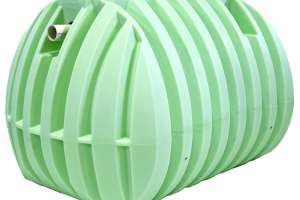
“We source all of our septic tanks from BC suppliers,” Goncalves says. Concrete tanks are from Leko Precast of Vernon, Kon Kast Concrete Products of Kelowna, and South Okanagan Concrete Products of Osoyoos. Plastic tanks are from Premier Plastics in Delta and Canwest Tanks in Surrey.
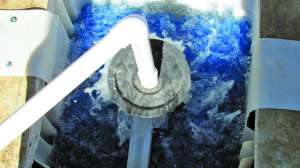
Treatment systems include residential moving bed bioreactor systems from Canwest, BioCycle aerated wastewater treatment systems and systems from FujiClean and Bionest.
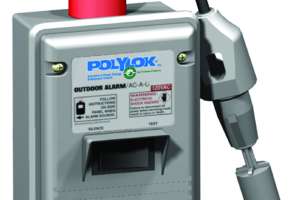
Control panels are supplied by SJE Rhombus.
Mastering online marketing
Strong web design and a mastery of search engine optimization generates most of GroundStone’s business.
“I learned everything I could about SEO because I wanted my website to be my sales team,” Goncalves says. “I started to post articles, containing a list of key words and phrases, and videos to hit every possible question and solution until finally I started to see results. I’ve also done Google AdWords and Facebook ads.”
About 70% of the company’s projects are currently “local” — within about 250 miles of the province’s southern border, and the remainder are in the “long haul” category.
At age 54, Goncalves is concentrating on developing a solid team that can allow him to concentrate on growing the business instead of working in it.
“We’re currently looking at opening another location in Prince George, about 400 miles north, and expanding to both Alberta and Texas,” he says.

Forming a succession plan
Goncalves has two children: daughter Catarina, age 15, and son Adam, age 13. Adam has taken a shine to the business and has enjoyed learning about septic installations while visiting his father’s job sites.
“I like to teach younger workers coming in, and I put a lot of energy into it,” he says. “But it’s gut-wrenching if you’ve molded an individual to take over your position and they move on. If my son is interested, I think that’s the way to go because he’s going to want to stay in the business and take over.”
Even after years serving the septic industry, Goncalves continues to be a lifelong student of his craft. He’s also ready to receive the inspiration that comes to those who are open to it.
“There are always going to be challenges on a job site,” he says. “Sometimes the thoughts may not be coming, and the creativity to come up with a solution isn’t there. I’ll ask myself at night, ‘what possible solution can I come up with,’ and just step away. It’s so strange how, the next day, we come back to the site, and the answers are all there.”
Continue reading for free