
A large, custom-built home is currently being built on the shore of the Indian River Lagoon in eastern Florida. Due to the property’s size and its location next to an environmentally sensitive waterway, the home needs an advanced septic system capable of meeting stringent state regulations.
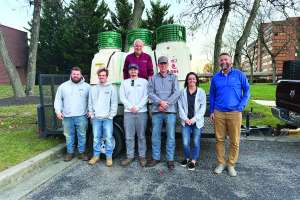
Tasked with the installation was Harbor Septic, an eastern Florida company operating since 2017. Keith Wessner owns and manages the operation — he has a Bachelor of Science in biology from Penn State University. Wessner previously worked for the State of Florida Department of Health in Brevard County as an inspector, and is a Certified Environmental Health Professional.
“We concentrate on new construction installation in Brevard County, and we also do service work,” says Wessner, who serves as Harbor Septic’s president. “We install a lot of ATUs, so we have a lot of ATU service work, and one pump truck as well.”
The specific project involved a two-story residential property featuring a main house over 5,000 square feet, a 2,000-square-foot workshop and garage, and an outdoor kitchen located by a pool on the north end of the house.
“All three have wastewater flows going into one single septic system,” Wessner says. “It’s not your usual installation. And it had to be done right to meet state regulations to minimize algae blooms.”
System components
- FujiClean CEN7 aerobic treatment unit (700 gpd)
- Infiltrator chambers
- Plumber’s pit and pump (for garage flow)
- Fresh septic sand
Site challenges
While the installation itself was relatively straightforward, the home’s location next to the Indian River added a layer of complexity. To stay within the law, the septic system had to be at least 75 feet from the river. As well, Wessner’s crew had to stay clear of an onsite well while working on a long, oddly shaped lot.
State environmental regulations also played a major role in the system’s design. “This big house is on the Indian River Lagoon, which is a large waterway that runs down the eastern coast of Florida,” says Wessner. “It is one of the most biodiverse places in the U.S., where algae blooms have become a problem in the last 15 to 20 years. As a result, there has been state legislation to address that, which requires ATUs that meet the NSF/ANSI 245 Standard for nitrogen reduction to be installed. This reduces the amount of nitrogen that ultimately ends up in the river, which reduces the algae blooms.”
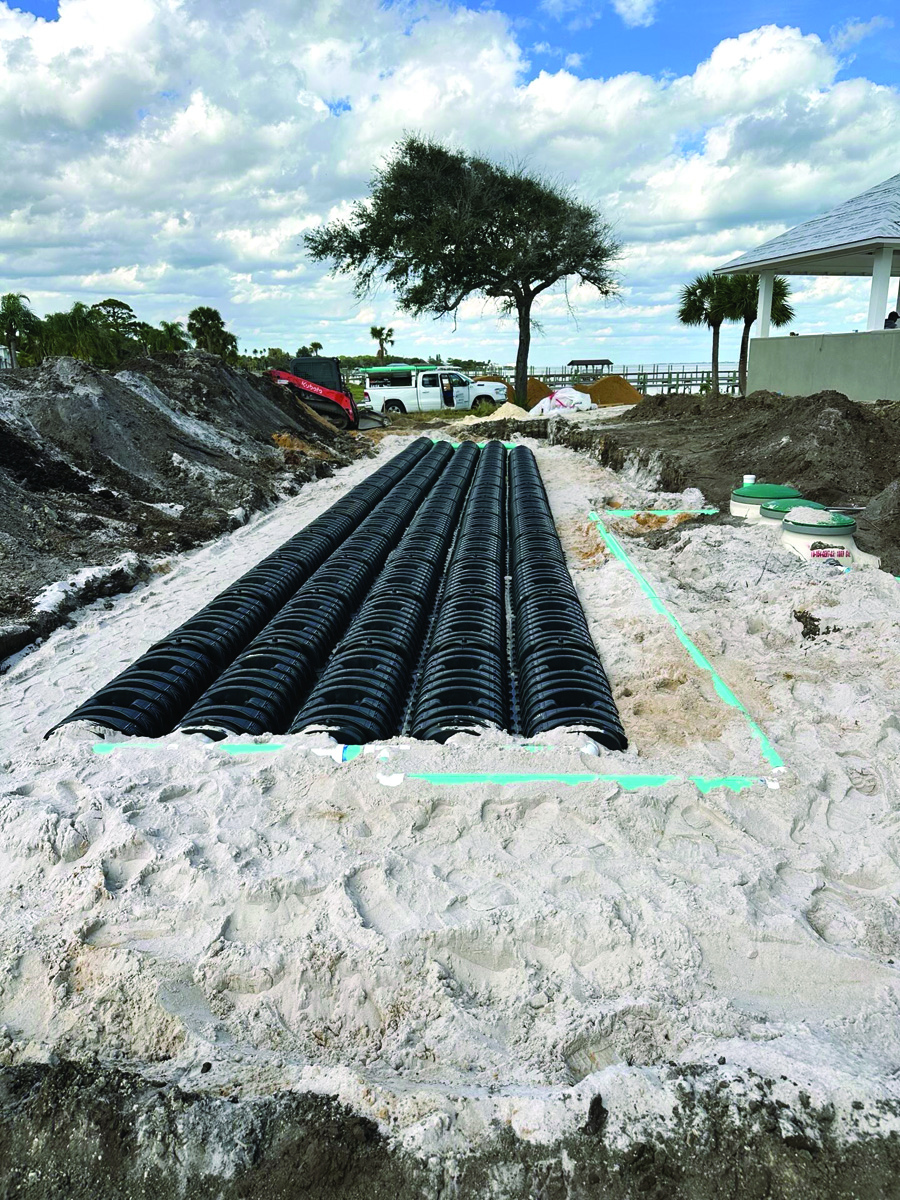
The area’s sandy soils also presented a challenge during the excavation process. “There was a hard pan layer about four and a half feet deep in the drainfield area that we had to take out,” Wessner says. “We replaced it with fresh septic sand.”
System operation
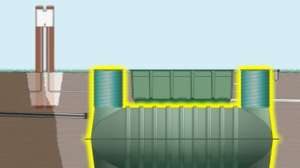
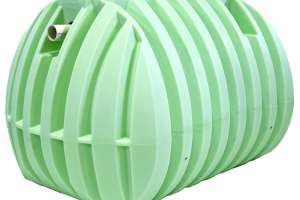
Wessner selected a FujiClean CEN7 ATU because it would fit nicely in the lot’s odd shape while its performance would meet the state’s NSF/ANSI 245 Standard for nitrogen reduction. The CEN7 is FujiClean’s midsize residential system for enhanced nitrogen removal in nutrient sensitive areas, designed to treat up to 700 gpd of domestic strength wastewater.
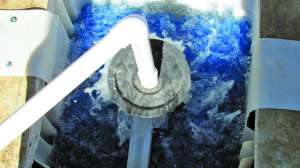
“The CEN7 has an aerator and media for hosting biological filtration, and the components inside it recycle the wastewater internally so it gets multiple rounds of nitrogen reduction treatment,” Wessner says. “It’s pretty interesting how they get it to recycle using the physics of aeration to lift the water up and then return it to the initial chamber of the tank for more treatment. There’s no actual pump or anything inside the tank. It’s just the air from the blower moving the effluent from the clarification chamber back to the trash tank chamber.”
Installation
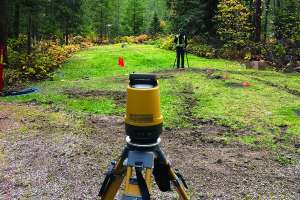
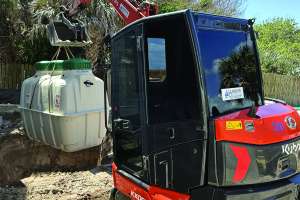
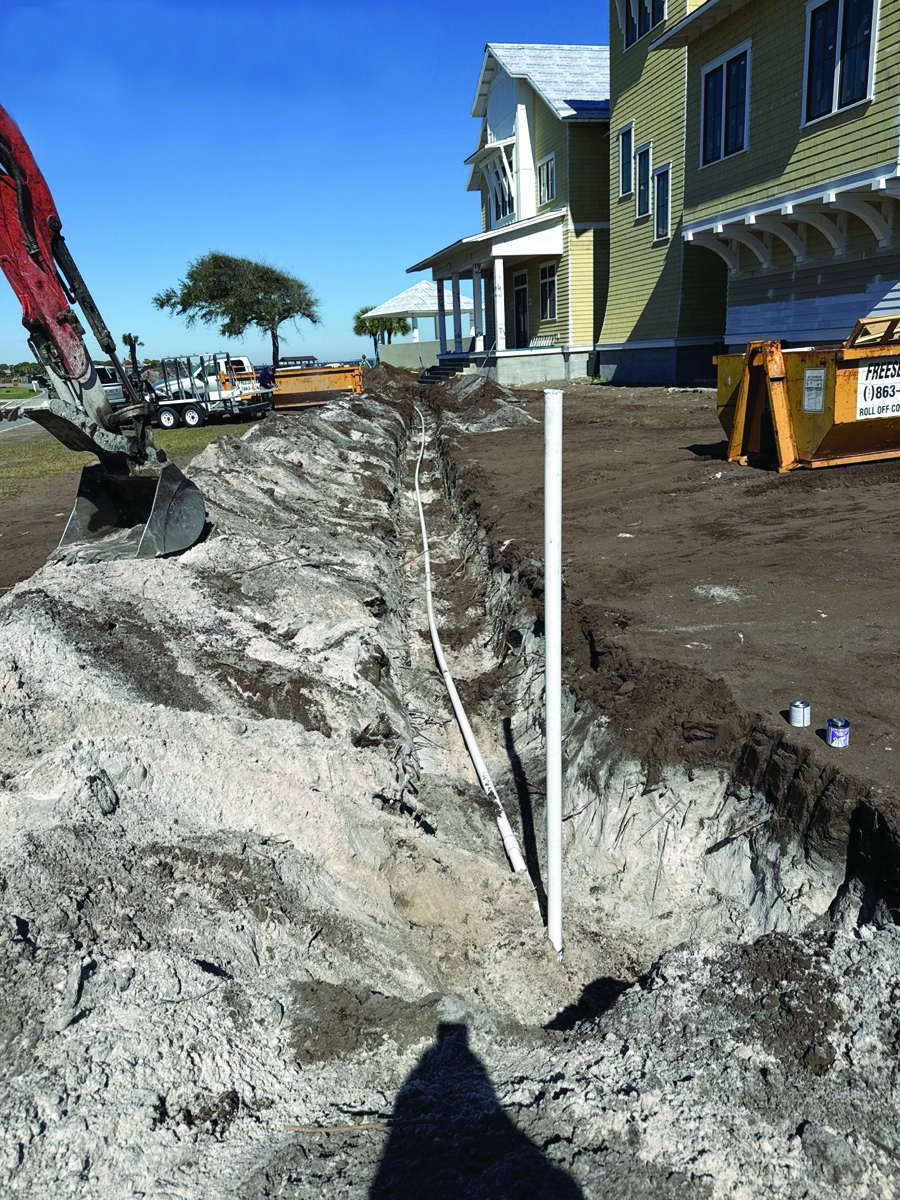
Using a Kubota KX057-5 mini-excavator, the crew first had to locate all the plumbing stub-outs to connect them to the system. “This actually took quite a while on this job because of the three of them coming from different parts of the property,” says Wessner. “Add the fact that there were minor changes made to the indoor plumbing plan, and they weren’t exactly where we expected them to be.”
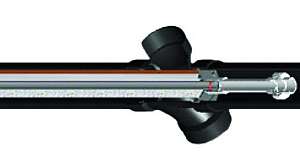
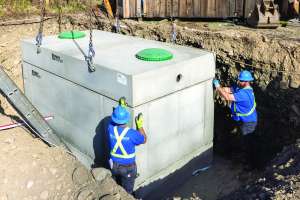
Once the stub-outs were found, Wessner’s crew worked the proper elevations to guarantee a gravity feed to the septic tank, and to meet the site’s wet-season water table separation requirement. With this data at hand, they excavated the hole, set the CEN7 ATU into place, backfilled the site and filled it with water. The system’s three distinct flows — from the main house, the outdoor kitchen and the garage’s plumber’s pit — were integrated into a combined pipe before entering the ATU.
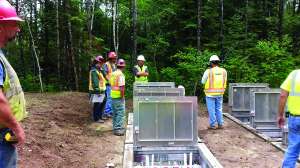
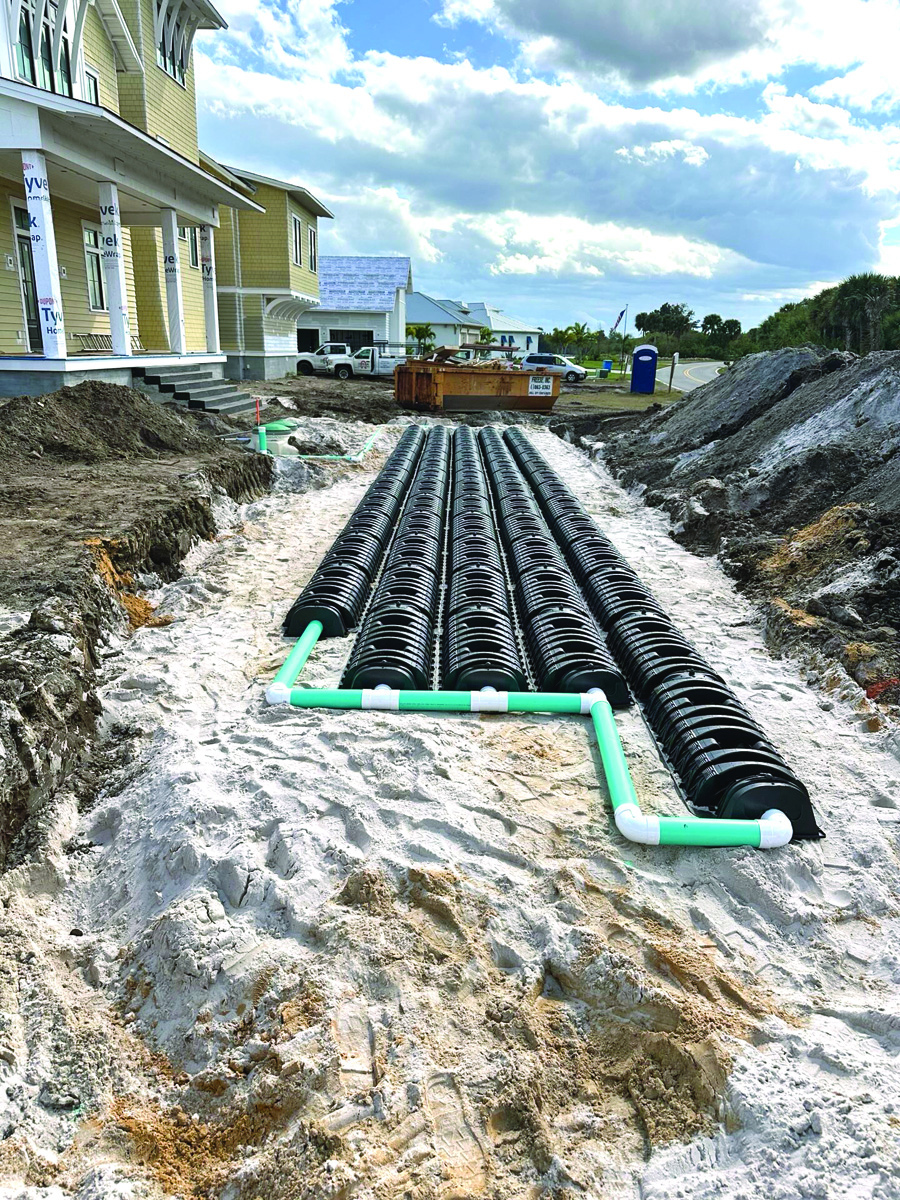
After removing the hard pan and grading the fresh sand in the drainfield, the crew installed a gravity-fed Infiltrator chambered drain system. “We had to stagger the footer end of them to meet our setbacks to the river because it’s a weird-shaped lot that angled in,” Wessner says. “So we had to use different length lines to be able to meet our 75-foot waterfront setback.”
Now that the CEN7 system is in the ground, the project has been registered as a success for Harbor Septic.
“It went well,” says Wessner. “We had a little slow start to it, I would say, until we got everything figured out. But once we had a plan together and knew where everything was located, the installation went well. In fact, we passed our inspection on the first try and got everything covered up and approved.”
Continue reading for free