
Troubleshooting issues for onsite systems is something we do a lot. There are some days where I spend all day meeting with people who are having issues with their systems and seeing how we can help.
The following are some of my must-have tools and why each is important.
1. Milwaukee Tool M18 searchlight
I’ve said it before, and I’ll keep yelling it from the rooftops. This amazing tool is by far my most used, and the best spotlight to light up the inside of septic tanks I have ever used. I’ve been through the rechargeable spotlights that big box stores claim are rechargeable and have a zillion lumens. They charge seven times then die. Lumens = lemons. I’m fairly certain this one doesn’t even mention lumens because it’s bright enough to light up a barn at 100 paces. I have never been happier with a more useful tool and it rides on my passenger seat at all times. A must.
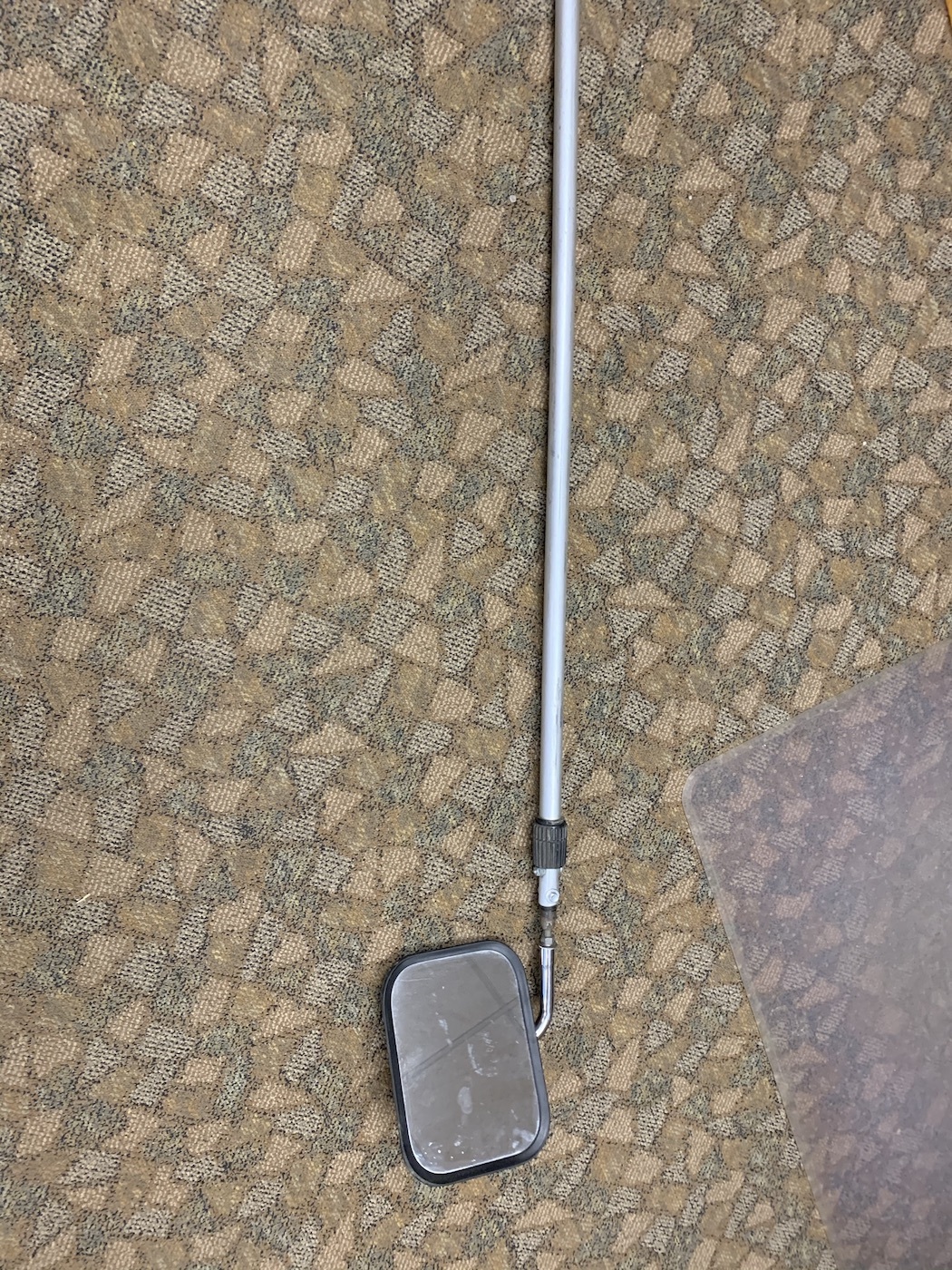
2. Long handle truck mirror
Yes, I said a truck mirror. The biggest rectangular one you can find. Put it on a long extendable handle with pivot capability. I like the extendable handles you can buy at paint stores. Don’t buy the premade cheap mirrors that if you looked at the reflection you couldn’t tell what you were looking at. Those mirrors are not worth two cents. They are obviously made by someone who has no idea why you are purchasing a mirror. Truck mirrors are big and bright, and stay flat and clear forever. It’s like buying the perfect visual device for evaluating the inside of septic tanks (in tandem with your Milwaukee M18 searchlight of course.) This tandem will leave no part of the septic tank outside your gaze.
As another option to evaluate the inside of some tanks (after they are pumped), if they have 1 foot of riser or less, I turn on the flash, and reach down into the tank and take a lot of pictures. Currently my phone is four years old and I’m over 35,000 pictures. (Yes, I do have to pay Apple each month for additional cloud storage). Pictures are worth a million words. When you have pictures, you can generate great reports that leave no doubt as to what you found. One of our excellent septage operators pumped a tank and took a picture of a large crack on the bottom of the tank. We informed the customer. A day later the customer called and said, “But Joe Pumper says there is no crack.” We emailed the picture to the customer — and the other pumper admitted to the customer they never looked in the tank.
Here’s more of the list without being so long-winded:
3. 5-gallon bucket tool bag. These are awesome and so easy to carry a lot of tools.
4. Sawzall or Hackzall Milwaukee M18
5. Cordless drill and hammer drill
6. Extra charged M18 batteries
7. Assorted size pressure couplings and / or PVC Unions, to reconnect the forcemain after you cut it and pull a pump up or test the pump’s pressure.
8. 7 mil nitrile disposable gloves. You know you’ll be pulling out plugged effluent filters.
9. Glue and primer (see previous)
10. Shovel
11. Pliers (regular and long nose)
12. Nut driver
13. Channel locks
14. Phillips and flat head screw drivers, preferably several sizes
15. Crescent wrench
16. Socket wrenches
17. Multimeter to test electrical voltage, amp draws, etc.
18. Heavy-duty, long extension cords. When the pump is not running and you’ve already checked the breaker, or the breaker keeps tripping, plug the pump into another outlet on the house. If it runs fine they could have a bad breaker. This also helps determine if the wire is bad between the pump and the house (if the pump runs fine using a different outlet).
19. Hammers: Claw, brick/mason, 3-pound
20. Tracing dye. Having this in my hoarder truck came in handy several times. Once while at a large commercial troubleshoot, the facility manager was complaining they never came up with a good way to test if their roof drain drained into a certain sewer pipe because there were so many other tenants in between. I grabbed a bottle of dye out of my truck and made his day.
21. Boxcutter-type knife
22. Electrical tape
23. Duct tape. This and some other MacGyvering helped me retrieve my glove out of a 20 foot deep manhole one time.
24. Float switches (120 and 240 volt). If the troubleshoot is this minor it would be a shame not to have one along.
25. Sludge judge
26. Pipe wrenches
27. PVC threaded plugs in different sizes (make sure to have a 3.5 inch) for when you have to chisel out their old brass clean-out plug.
28. Paper towel and citrus cleaning spray.
29. Clean, plastic garbage can. If you have to open the clean-out in the basement, have this under it.
30. Disposable shoe covers if you are going inside for any reason. ShuBee makes great ones for contractors’ boot-covered feet.
31. Flat sewer rod (50 feet)
32. Business cards. Be the professional you are.
Of course this is a partial list. Comment below with your must-haves.
Stay safe, and keep your customer’s house clean. Good luck!
About the author
Todd Stair is vice president of Herr Construction, Inc., with 34 years’ experience designing, installing, repairing, replacing and evaluating septic and mound systems in southeast Wisconsin. He is the author of The Book on Septics and Mounds and a former president of the Wisconsin Onsite Water Recycling Association.
Continue reading for free