It’s an interesting thing about necessities: We don’t appreciate them until we don’t have them. Many of us therefore never appreciate them. We always have enough to eat, a roof over our heads, warm clothing, a reliable car.
And yet, in our wealthy nation, many people can’t take the basics for granted. One of those basics is sanitation. There are whole communities in poorer rural areas where sanitary facilities — septic systems — are in deplorable shape. Isolated homeowners may have similar problems. Repairs are expensive, and the owners can’t afford them.
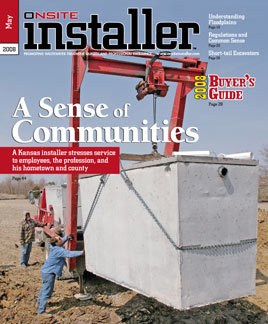
That’s where government programs and philanthropy come in. Helpful initiatives come in many shapes. Sometimes individuals step up. Mark Shepard, owner of Utilities Excavating Inc., Overland Park, Kan., and the subject of last month’s Onsite Installer cover story, has been know to take things into his own hands — with help from his state association.
Close coordination
A landowner needed a new onsite system. Working with the Kansas Small Flows Association, Shepard coordinated donations of materials and labor for the installation. The owner is paying KSFA for the work in installments lower than he could have arranged with a bank. As if that wasn’t enough of a win-win, Shepard invited area regulators to watch the installation, which included an advanced treatment unit.
Other initiatives involve non-profit agencies — often calling on volunteers for labor and donors for materials. One such agency is the North Carolina Rural Communities Assistance Project Inc. (NCRCAP), which recruits volunteers from all across the nation to install septic systems for low-income people in southern Appalachia.
Onsite Installer reported on NCRCAP in an article last year. In recent summers, technical assistance coordinator Rich Holder has worked with volunteers from a church in Asheville to install free septic systems — usually by hand.
Going to camp
Other charitable projects reported on these pages include the Minnesota Onsite Wastewater Association’s efforts last summer on behalf of the Singing Hills Girl Scout Camp, where volunteers installed six advanced treatment systems as part of the association’s annual summer seminar.
Besides helping the Scouts, the event gave onsite professionals hands-on training and experience installing new technologies. Many manufacturers and material suppliers donated to the project.
In April 2006, the Iowa Onsite Wastewater Association worked with Habitat for Humanity on a project to install an onsite cluster system with an aerobic treatment unit and drip irrigation for four homes on a property in Waterloo. Sanitarians, contractors, service providers, and pumpers from around the state earned educational credits by helping out.
Time may be right
Why mention this here? And why now? Aren’t times a little difficult in the industry with new housing construction in a slowdown? Don’t installers have enough to worry about just trying to keep their businesses healthy?
Well, perhaps so. On the other hand, what better time to invest some energy than when things are less busy than usual? Remember, too, that when the economy slows down, it’s often people at the bottom of the income ladder who feel it first, and feel it most acutely.
What’s more, as the projects just described demonstrate, charitable work can have tangible rewards for those who do it. Donating some of your time to the right project can mean a learning experience for yourself and your employees. Good publicity will probably go with the job.
The real reason to do it, of course, is to help someone in need. Whether or not a charitable project ever brings material benefits, at the end of the day you’ll feel good about the work you did.
So, give it some thought. Consider pitching in on your own for a worthy project. Join a larger initiative someone else is organizing. Or pull together something bigger and more ambitious yourself. Involve your association, local builders, material suppliers, and anyone connected to the industry who is willing and able to lend a hand.
Remember the words of Winston Churchill: “We make a living by what we get, but we make a life by what we give.”
Continue reading for free