
George Allen, owner of Desert Septic in Casa Grande, Arizona, reckoned the best way to improve relationships between onsite installers and inspectors in Maricopa County was to open lines of communication.
“Inspectors will inspect our systems and review our paperwork, but they’re never on site during the build,” Allen says. “What we’ve done to help both sides is to bring them on site during an installation, so we can answer all of the questions we have for each other.”
Inspectors, for example, asked Allen why a seepage pit was relocated after design paperwork was submitted. In many cases, inspectors want to see a new application to accommodate the variance.
“The inspectors explained that the primary reason they wanted to see new paperwork was to assure them that setback requirements were met,” he says. “We explained that, with the pace of construction in Maricopa, there might already be a fence or brick wall that wasn’t there when we designed the system. We would apply the same clearance, both to meet the specifications of the permit and to provide enough space to work.”
Allen suggested that many of these small variances could more easily be processed. While an email to the inspection department might typically take a day or more to generate an answer, a dedicated phone number would allow contractors to get approvals on a variance that maintains setbacks while the crew is still on site.
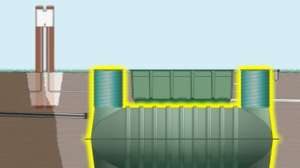
Inspectors also wanted to know why some installers insisted on backfilling precast septic tanks before they were filled with water for leak inspection.
“To them it looked like the installer was trying to hide a potential leak,” Allen says. “We explained that if you fill a precast tank with a volume larger than 1,500 gallons before backfilling, you risk breaking the tank, according to manufacturer recommendations.”
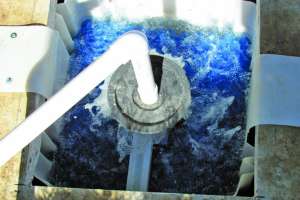
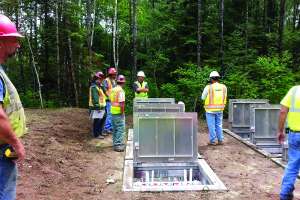
He also invited Maricopa inspection staff to view the installation of a seepage pit, as well as a drip system, while he explained the operation of the pump tank, floats, vacuum breaker and the importance of properly spacing the drip lines.
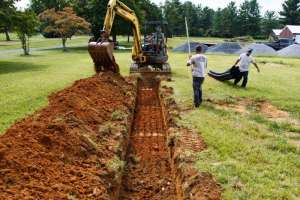
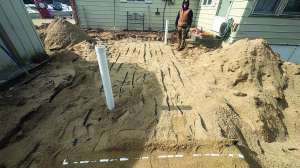
Inspectors told Allen they appreciate that his crew always digs a small ramp into the earth to allow inspectors to inspect a tank, without having to jump 3 feet into a pit or use a ladder. The contractor’s attention to details like these led to a suggestion from Maricopa County that Allen lead an onsite training class for other installers, so they can avoid common installation errors.
“Some installers find the inspection process in Maricopa very strict,” he says. “I would call it meticulous. Bringing us together on the job site has really helped us to understand each other’s jobs a little better.”
To learn more about Desert Septic, check out the profile story in the May issue of Onsite Installer magazine.
Continue reading for free