
One of the best ways a person can increase the longevity of their onsite system is by proper maintenance. How a system is installed can help or impede proper maintenance. The following are quite simple tips, but without these, proper maintenance could be harder to perform.
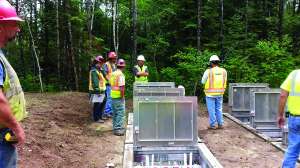
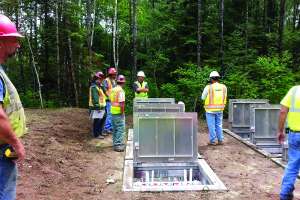
1. Location of septic and pump tank access covers. If tank access covers are 300 feet behind a house and downhill 20 feet, how is the pumper supposed to pump the system or clean the filter?
When possible, design and install systems with access covers as close to the road or driveway as possible. Vertical elevation is an important factor as well. Tanks located far downhill will be harder to pump, take much longer to pump, and in some cases not be able to be pumped. Pump trucks have vertical limits based on their pumps. I personally know of a pump truck that imploded while trying to pump too much vertical lift.
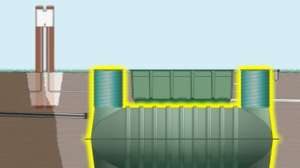
2. Tank access covers exposed. Do not bury tank access covers. Optimally, access covers should be at least 4 inches above grade to prevent stormwater from flowing into the tank. Covers flush at grade could allow stormwater in hydraulically overloading a system. Onsite system emergencies almost never happen on a Wednesday in July at 10 a.m. It seems that emergencies always happen on a Saturday night at 11 p.m. in January in minus 30 degree weather. If covers are buried that means (depending on your location) they are now under frost. Digging through frost to find a buried cover is ridiculous. Keep access covers exposed. Make certain all exposed access covers are chained and locked to prevent unauthorized access.
The other reason exposed access covers are so important is because out of sight is out of mind. Once covers are buried routine maintenance is forgotten. The next person buys the house and doesn’t know there is a tank buried there. It is critical to have tank access covers exposed.
3. Install pumps for easy removal. This might be common sense; however we find pump tanks all the time that require tank entry to remove the pump because the installer did not install the pump to be maintenance-friendly.

Instead of piping up from the pump and 90 degrees out of the tank 4 feet below the access cover, pipe from the pump up to within a foot of the access cover — 90 over, 90 back down to the outlet then 90 out of the tank. Typically the weep hole for drainback is drilled at the bottom of this last 90. This involves three 90 ell fittings but makes replacing the pump so easy. Have a separate float pole. Now to remove the pump just cut the PVC horizontal pipe with a Sawzall or hand saw. Lift the pump out and replace. Lower the new pump in and repair the PVC pipe with a pressure coupling or repair union. Some will say have the threaded union from day one. If the pump was sized properly it could be 20 years before the pump will need to be replaced. After replacing the pump do not connect the PVC pipe back together with a rubber hose clamp fitting. This pipe is under pressure — it needs a pressure PVC coupling or repair union. My company calls this the ‘gooseneck’ method. Even our state plan templates show this correct method of installation, so why some still put them in requiring tank entry is unclear; but I suspect a combination of laziness and saving a few dollars in fittings.
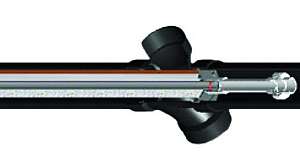
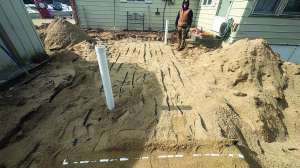
4. Tracer wire. The state I operate in does not currently require tracer wire for onsite systems. Why not? I am constantly called by people asking us to locate their buried in-ground onsite system distribution cells because they want to install an outbuilding, a second garage, or a pool. Their system was installed 10 or 20 years ago. Finding a long-lost distribution cell is expensive and time consuming, partially accurate and typically requires some excavating in the yard. Tracer wire eliminates this issue. If tracer wire is used when that customer calls it can be accurately located in minutes. Good, accurate as-builts could help also but I am not finding those for the majority of the systems that the owner wants located.
5. Flush-out valves. This is becoming way more common, but I think flush-out valves that come to the surface at the end of each pressure lateral are excellent for troubleshooting. The key phrase there is ‘come to the surface.’ I keep finding even newer systems where the flush-out valves get buried. The cover of the valve box should remain exposed at the surface. If a pump is not pumping down, we like to open a flush-out valve or two and see if the pump pumps down with the flushout valves open. If the pump now pumps down normally, we know it’s not a pump issue — the orifices in the laterals are plugged.

6. As-built plans. Provide an accurate as-built plan and pictures taken during installation. Both of these are valuable pieces of information that can save time in the future. Some installers and counties are now doing the as-builts using GNSS technology that locates the system with pinpoint accuracy and elevations. I’ve even seen some as-builts using drone views of the system prior to backfill.
7. Filter handles. Make sure effluent filter handles are easily accessible just below the tank access cover. Leaving them too deep to reach is not helpful for maintenance.
8. Homeowner education. The most important thing that can be done regarding planning for maintenance is to provide information to the owner of the system detailing the importance of properly maintaining their system and what exactly those steps are. Stress the importance of these steps and follow up again with the customer whether in writing, email or in person. Do not let them forget their system needs this maintenance for the longevity of their system and to minimize the potential for issues.
Install in a manner that makes proper maintenance of the system as easy and efficient as possible. I am certain there are more ideas where these came from, this is just the tip of the iceberg. Comment below if you have additional tips.
About the author
Todd Stair is vice president of Herr Construction Inc., with 34 years’ experience designing, installing, repairing, replacing and evaluating septic and mound systems in southeast Wisconsin. He is the author of The Book on Septics and Mounds and a former president of the Wisconsin Onsite Water Recycling Association.
Continue reading for free