I recently saw a question posed online by a homeowner who had opened the door of an electrical connection box on their dose tank and asked, how did this box cause my pump to stop working?
In Wisconsin, the code requires that our electrical connections are not made inside of a riser, but outside of the riser in a watertight junction box.
This junction box must be "all-weather" to protect the connections from moisture. Typically the hole in the riser that the cords run through gets sealed to prevent the moisture from the dose tank from following the cords into the box.
Several responses to the person who posted the question were correct: There was merely a loose wire in the box that shorted out the pump. Once the wire was properly connected, the pump ran fine.
But did anyone mention or even notice the label that was clearly photographed on the inside of the open door of the junction box in question? The label clearly said that the box was designed for pumps up to 15 amps. What was the amperage of the pump connected in this junction box?
There was a time when I constantly had the outlet in junction boxes melting and burning out the brand-new pump and float switches. After a while we came to the conclusion that this occurred when we used a specific 1/2–horsepower, 110-volt pump. Reaching out to the vendor who made the junction boxes, we found out the outlet in the box was not capable of handling that size pump. We kindly asked them to increase the amperage capacity of the outlet in their boxes, which they did and everything eventually worked out.
So make certain that the junction box you are using is designed and manufactured for the pump you are using. There are a lot of options for junction boxes now.
For onsite systems we are not always able to just use LB type boxes for the electrical connections.
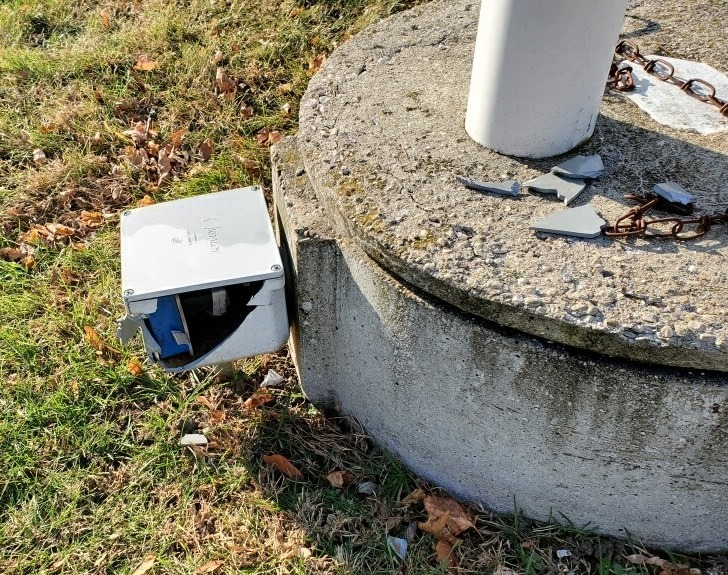
The typical small, square junction box can get broken off or cracked when hit by a lawn mower. And we know they all get hit by a lawnmower. If it cracks or breaks and is no longer weathertight, corrosion happens which does burn out pumps and float switches.
Although anecdotal, I’ve seen enough times that if the junction box gets buried (even with the top flush at ground surface) corrosion seems to happen faster inside the box than if it’s above grade. The other thing I keep finding on buried junction boxes are surprises when you open one. We were called out to a customer having a problem, and when we opened the junction box, it was completely filled with mud that had solidified. No idea how it got in there, but there was no way for this box to work. The way the mud was packed in did not leave a millimeter of room anywhere in the box.
We also find mouse nests, insect colonies and debris left by who knows what packing the boxes. These finds occur more frequently if they are buried than if they are above grade. I recommend the bottom of the junction box be at least 1 inch or more above grade.
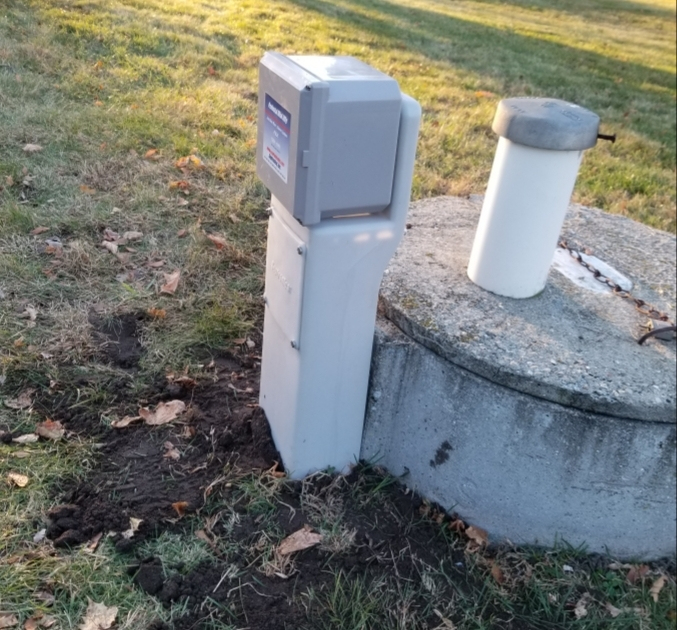
My company long ago changed to only using the taller pedestal-type junction boxes. These seem more robust and hold up better to the lawnmower hits than the smaller square ones. Also, just based on their height and where the electrical connections are made, the connections stay higher and drier and, in my experience, the pump and float switches last longer also. If there is any price difference between the smaller boxes and the taller pedestal style, the reduced callbacks we’ve had since the switch to all pedestal-style has made up for the price difference many times over. We used to always have problems with boxes getting broken when we used the smaller ones, and that issue has really been reduced with the taller boxes.
Some brands are getting really creative with their boxes; some, such as Alderon, have different colored lights across the top of the pedestal. Their selling pitch is if you pull in your driveway and the light on the pedestal is green, everything is normal. Red means high level (alarm) and no light means no power. They also have other colors for other symptoms.
No matter what electrical connection box you use, make certain to write on the inside with a sharpie what pump was installed and when. This will save a lot of time for a service provider when coming out to replace the pump. While you’re at it, write the TDH and gpm in there also — now that would be impressive!
About the author
Todd Stair is vice president of Herr Construction, Inc., with 34 years’ experience designing, installing, repairing, replacing and evaluating septic and mound systems in southeast Wisconsin. He is the author of The Book on Septics and Mounds and a former president of the Wisconsin Onsite Water Recycling Association.
Continue reading for free