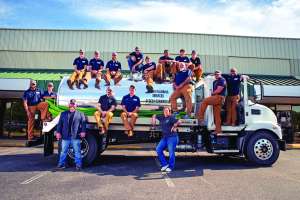
Contractors should strongly consider implementing a mentorship program within their companies, not only to build valuable skills, but also to foster strong relationships that can benefit the entire organization.
Good colleagues, good friends
A large driver of employee wellbeing and retention in the workplace is having a good friend at work, says Julie Silard Kantor, founder and CEO of Twomentor, a Florida-based company in Boca Raton that offers managed mentoring services and training.
“Having a mentor — someone who has your back — is so important to get people wanting to suit up and go to work. Where they can feel confident that they can do the job and that they're in a good culture where they could see themselves staying in for many, many years,” Kantor says.
Formalizing dynamic mentoring programs does wonders for employee wellbeing, retention and productivity, she says. It also increases safety in the workplace, especially in the construction industry. Employers can appropriately customize the program against those needs.
Next-level mentors
“Next-level” mentoring with an immediate supervisor can help employees better understand their career trajectory in construction and also better finesse their skills, Kantor says.
“But there's also real power in having the executive leaders in mentoring relationships with people in other roles because they're going to have a much better grasp on how the company's doing and what the issues are, like safety or morale issues,” she says.
It’s imperative that mentors are formally trained in the initiative and have a road map, and that the mentees equally are trained and have goals, Kantor says. “Mentors really need to identify what their mentee’s goals are and see how they can best help them to grow — not just survive, but thrive. Building personal rapport is also really important.”
The greatest benefit of mentorships is to build relationships. The more relationships that an employee can form and nurture, both formal and nonformal, is crucial, says Kim Davids, president and CEO of Arizona Builders Alliance based in Tempe, Arizona.
Sharing the journey
This is especially true in the construction industry, when employees often work on multiple projects with different teams, so the ability for people to be able to adapt to different audiences is important, Davids says. Being mentored by somebody who's gone through the ranks can really help people understand what's expected.
“Also, when executives share their journey though construction with newer managers, it can really humanize them as an individual,” she says. “That can help pave the path for those within the company as they're trying to figure out which role and which trajectory they're looking for within their career.”
A word of caution, though: Not every mentor wants to be a mentor or should be a mentor, and not every mentee wants to be mentored or is ready, Davids says.
“I think there's a time and a place and when it happens organically. It's when two people are really coming together because both parties need it and want it,” she says. “And that’s where the magic happens.”
Gaining interest in the trades
Contractors can participate in the ACE Mentor Program of America, a free after-school program designed to attract high school students into pursuing careers in the architecture, construction and engineering industry, including skilled trades, says Diana T. Eidenshink, president. ACE is a Philadelphia-based federation of more than 70 chapters, operating in 37 states.
ACE operates under a group mentor model, in that volunteers are assigned to a team of mentors that go together to high schools, Eidenshink says. In the after-school meetings, volunteers explain the different parts of the industry, and then the students do hands-on activities like building a bridge out of pasta and gumdrops.
Students also work on real-life projects, where they can do estimating, budgeting and design, and they visit at least one active construction site a year just to see it in action, she says. In addition, ACE offers high school externships and summer classes. Once students have completed the program, they're eligible to apply for college scholarships. The nonprofit has given $37 million worth of scholarships to its alumni.
“This is a wonderful career exploration opportunity for high-schoolers,” Eidenshink says. “If this is a career path they're interested in, we're also helping them start their network, so they can identify other professionals in the industry who can support them into coming into the industry.”
Mentorships also benefit mentors
Firms get involved because workforce development is the No. 1 issue facing most industry partners, and the ACE program helps them develop a well-prepared, diverse workforce, she says. It also provides their own employees, especially younger people, an opportunity to become a mentor, develop a network with other people in the industry and develop skills to be a good manager or leader.
“If someone can come in and keep teenagers entertained and teach them about their industry, they probably have a really good future in managing a workforce,” Eidenshink says.
One construction manager involved in the ACE program is Christi Sova, a project manager for Rosendin Electric Inc. headquartered in San Jose, California. Sova is based in Goodyear, Arizona.
“For me personally, it just absolutely fills my cup,” Sova says. “It's just a way to give back and a way to help people in the community. I especially have a soft spot for helping young adults and young kids in any way that I can, and mentoring is a great way for me to do that.”
As a woman leader in construction, Sova especially wants young girls to know that they, too, can have a worthwhile career in the industry.
Working with high school students actually is a gift to her, she says, as it forces her to work on being patient, understanding and being open to new ideas.
“It's so interesting when we're working on a project together and to hear some of their ideas that I would have never thought of,” Sova says, “Sometimes they work out and sometimes it's an opportunity to talk about why they won't work.
“It helps grow the mentor as much as it helps grow the mentee because it just opens your eyes to different perspectives.”
About the author
AEM is the North American-based international trade group representing off-road equipment manufacturers and suppliers, with more than 1,000 companies and 200-plus product lines in the agriculture and construction-related sectors worldwide. AEM has an ownership stake in and manages several world-class exhibitions, including CONEXPO-CON/AGG.
Continue reading for free