Onsite system dosing requirements seem to be getting smaller and smaller.
In the state of Wisconsin, our designs have a strict limit of a dose being equal to or less than 20% of the design wastewater flow. There are times where the design flow does become a slight issue and design parameters have to be changed.
An example of smaller doses is when using certain media chambers a dose is limited to 4 gallons per chamber. If the system is designed with only 16 chambers, that’s only a 64-gallon dose (plus void volume of the force main, of course). Recently, I’ve been having to answer to regulators who are reviewing plans for regulatory approval about what float switch I am using because the dose seems too small for a typical switch.
Achieving these smaller and smaller doses requires changing what float switches are used and how the doses are generated. In some cases, float switches aren’t even the answer.
Different options for smaller doses include the following:
Typical float switches have minimum tether length requirements; the average seems to be about 3.5 inches. These are typical, but the 3.5-inch minimum tether length is too large for many new types of applications.
For a while, some installers were told they had to spec a double float for more accurate dosing settings. Double float switches have been used for a long time and some installers prefer using a double float switch. Double float switches still can’t get down to the low dose restriction that some systems require.
Float switch manufacturers do have "narrow angle" switches to reduce tether length requirements to a 2.5-inch tether length.
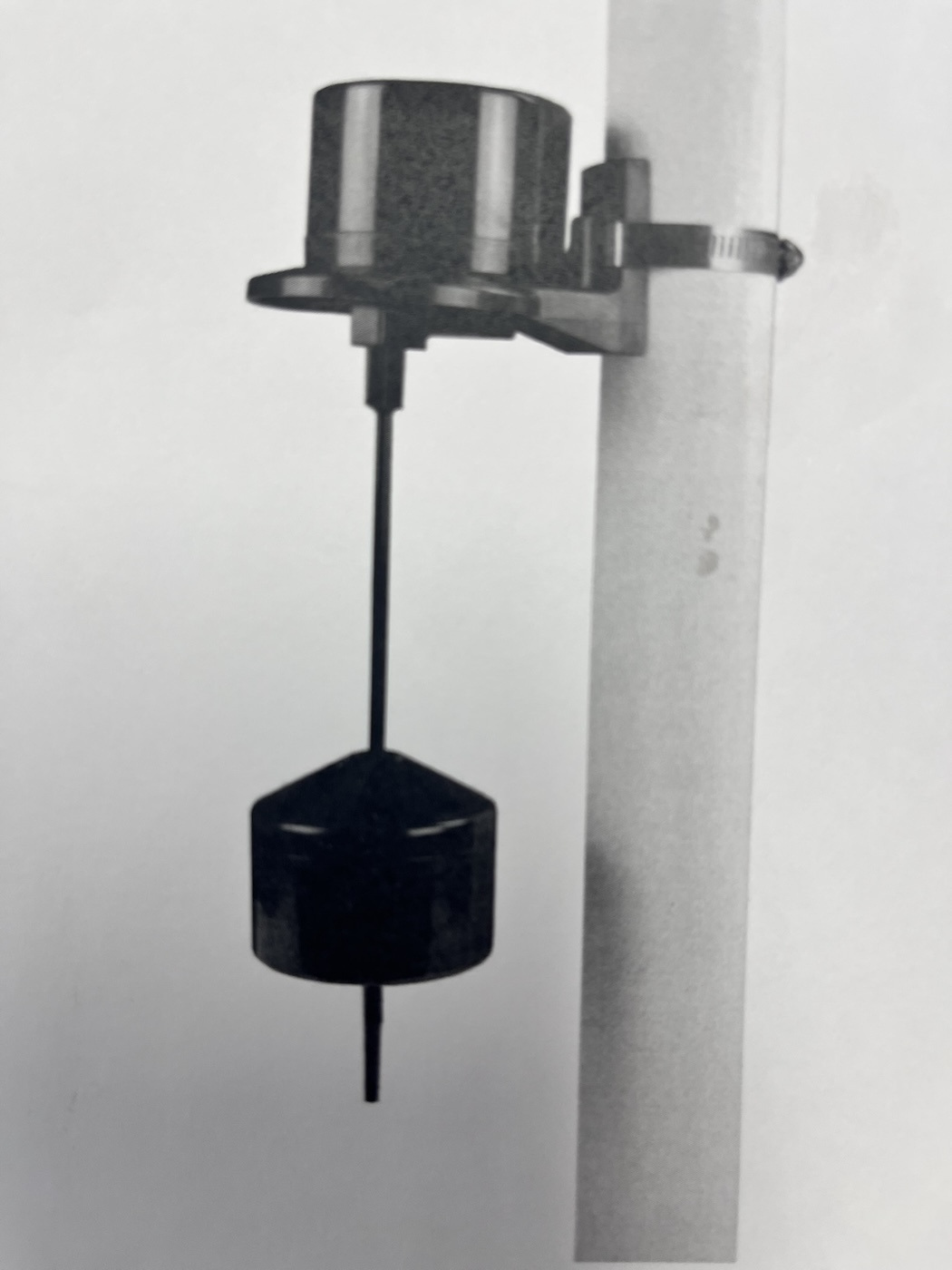
Recently, due to an extremely small dose restriction on a system, I actually had to spec a vertical float switch that is similar to one you’d see on a sump pump. The one I spec’d was an SJE Rhombus Vertical Master switch. With a vertical switch you can actually get down to less than an inch (0.75 inch) of pumping range.
Another method we’ve used for a long time that really allows small doses is time dosing. But time dosing comes with a lot of pros and cons. Time dosing really flattens off the peaks of hydraulic and organic surges by feeding the system in small, specifically sized and timed doses. This allows better treatment, as the bacteria are not overwhelmed hydraulically nor organically. But in most cases (but not all), time dosing usually requires additional capacity in the form of a flow equalization tank. It sends out small doses, but you get a large surge that water has to go somewhere — typically extra capacity in a flow equalization tank, or a float switch that doses a larger dose to prevent an overflow, but now that defeats the purpose of the time dosing to prevent large surges.
Time dosing also requires an additional control panel that you typically would not have due to using the timers.
One of the proven best ways to manage the smallest doses is also the most expensive. It involves using a submersible pressure transducer that hangs inside the tank instead of a float switch. The pressure transducer measures the pressure inside the tank. This allows very small doses of a fraction of an inch. Another great benefit is many of the pressure transducer systems are controlled right from your smartphone or computer.
Pressure transducers have been used in municipal sewer systems for many years. Using them in residential and other onsite applications brings many benefits, but also higher cost.
Some systems that are controlled by pressure transducers use float switches as redundant backups for a high water alarm and/or to activate a pump once it reaches a level higher than the transducer is set for.
I am noticing both regulatory and vendor requirements limit doses to smaller and smaller total dose volumes. A lot of times, you can make design changes that aid in allowing the dose to increase a little; however, where a dose is very small, the typical float switch just doesn’t get you there. Alternate float switches and other options have to be used.
Several vendors are now coming out with variations of the siphon idea with chambers that build up a certain amount of water and automatically dose to the system without use of float switches. Although these are dosed, it does not appear as though they would pressurize a system where needed unless the vertical elevation difference is high enough to achieve that. We will take a look at these new products soon in an upcoming article to also determine the size of their doses.
About the author
Todd Stair is vice president of Herr Construction, Inc., with 34 years’ experience designing, installing, repairing, replacing and evaluating septic and mound systems in southeast Wisconsin. He is the author of The Book on Septics and Mounds and a former president of the Wisconsin Onsite Water Recycling Association.
Continue reading for free