
I’ve received questions lately about setbacks to trees. A cursory look at regulations show some states have setbacks to trees (at an average of 10 feet) and some have no setbacks to trees. Here in Wisconsin we do not have setbacks to trees.
The first time I was involved with a root issue was a long time ago when I was called to a system that had been installed six years prior. A septage operator told the homeowner that there appeared to be an issue with their tank.
Upon arriving and looking into the tank, I saw there was a very large root that appeared as though it was coming from the top or side of the tank. We excavated on the outside of the tank to determine the extent of damage, and to determine how the root got in.
A silver maple root had gotten through the butyl sealant at the top of the tank. The root pushed into the tank and upon reaching nutrient rich water grew rapidly. The size of the root was enormous for only having the tank in place for six years. In our area willows and silver maples are by far the worst tree culprits, as they will find water however they have to.
The current questions coming in about roots in most cases really aren’t about roots impacting the tank, but about the soil absorption component.
The concern my company has about proximity to trees is more about safety during excavation — Is that tree too close and might tip over into our excavation? I am way more concerned about that than whether roots will adversely impact a system.
I have evaluated and replaced many failed systems and frankly roots, at least in my area, are a very minor cause of failure. Where I see the most substantial root issues are in older clay sanitary sewer pipes for homes on municipal sewer, not onsite systems. Clay pipe typically has joints every 20 or 30 inches; the joints degrade over time, allowing roots in. Once in, roots will completely fill a sanitary sewer pipe. I have seen this a lot and in many instances of sewerlines blocked by roots, there isn’t a tree close by and sometimes no tree on the lot.
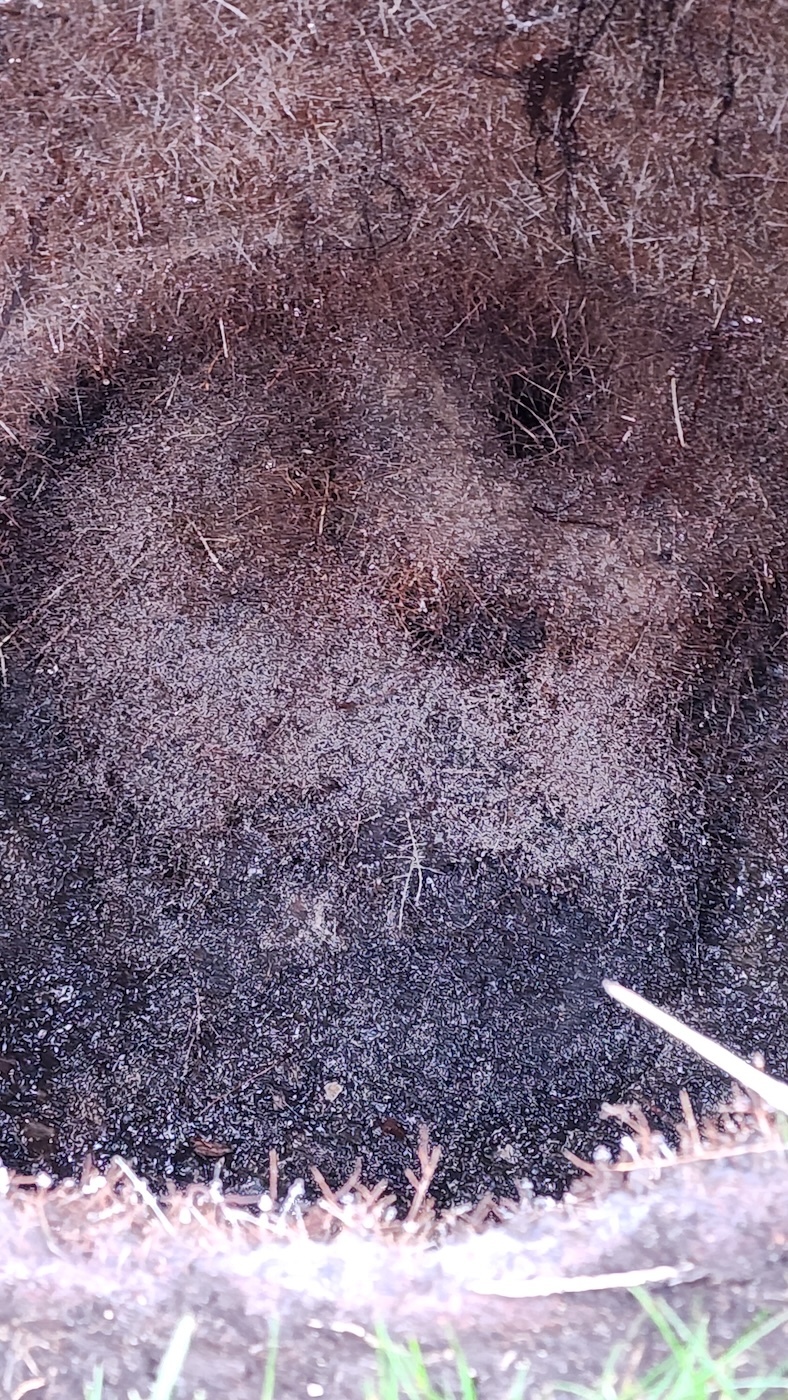
In onsite gravity systems I have only seen a few that were compromised by roots. In mound systems I’ll see many systems that are plugged from inside the laterals with hair or fabric wound tight under pressure into the orifices. The other substance we have found causing blockage of pressure orifices is metal fragments from steel tanks. The steel tanks corrode, and the steel goes into pressure pipes and settles on the bottom of the pipe into the orifices. We have found several systems completely plugged from metal in the orifices from corroding steel tanks. The other main cause of mound failure that I see is biomat or clogging mat at the sand/stone interface.
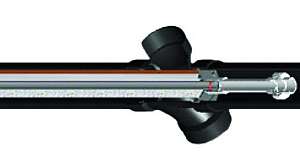
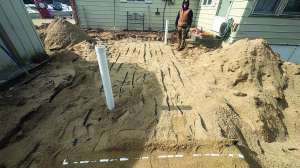
In mounds I’ve seen roots be an issue only a handful of times. In the root issues I’ve seen in mounds, the roots work their way up just to the orifice and almost gently plug the orifices. Unlike blockages from debris inside the pipe, roots barely get to the orifice (just enough to block it) but stop right there. When we lift the laterals off the twisted roots are merely sticking straight up where each orifice was.
I have a lot of mounds that were installed in wooded areas that have never had a problem.
Once I was standing in a person's very wooded backyard discussing options of where to go with a replacement system and they said isn’t that a little close to that mound? They were pointing at a mound I did not even see, it was so overgrown with forest vegetation and trees. The other embarrassing thing about not seeing the close mound was the fact that my company installed it. I have many mounds in wooded areas completely grown over by vegetation and in some cases trees. I think the biggest negative about trees growing on mounds is that performing a recore/rebuilding the mound once it does fail is obviously much more difficult when there are trees to remove and not just layers of soil. But the trees were not affecting the function of the mound.
There was a retirement home I visited to evaluate their mound system. The mound was tucked into the woods and the mound was completely covered in 6- inch-diameter trees. Again, this would make it difficult to rebuild this mound; they would be better off installing a new mound elsewhere as opposed to rebuilding it because of the dense population of trees on the existing mound.
Late in his career I attended a presentation by instructor Jim Converse where he mentioned it was no problem allowing mounds to grow wild in vegetated areas including wooded areas. He went on to say that mounds being overgrown with vegetation and trees should not really be an issue for the mound. I was nodding in agreement, knowing I had many mounds that were by then at least at year 15 or 20 in wooded areas, well overgrown and still operating normally.
I realize there are many variables that determine whether roots will plug off a system. Types of trees such as silver maples and willows are the worst in our area. Soil conditions and other available water sources for the trees could be variables in whether trees would plug up an onsite system.
But of the thousands of systems I’ve personally been involved with, roots are not the main factor of eventual failure of most systems. I’ve actually been surprised at the few we have found lately because it’s just that rare in my experience to find roots to be the cause of a system failure. Maybe we are just lucky in the area I work in that we have the right soil, water and tree conditions to minimize tree root impacts. I’m sure this could be much different in other areas.
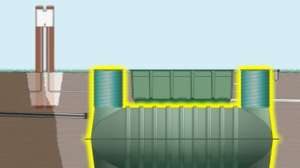
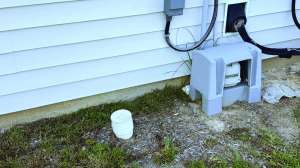
I see far more septic tanks with root infiltration than I see soil components with root impact. The goal then is root removal, and sealing whatever entry point the roots used. Roots will come in right under an access cover straight down the risers and into the tank. Those roots will grow fast.
My other concern about the setbacks to trees is how effective setbacks really are. If a tree wants to get to water, 10 or even 20 feet is not going to make a difference. In the two most recent mounds where I found root issues, the closest tree was 30 to 40 feet away.
Most failures and system blockages I find are caused by what the user is flushing into the system, and by poor maintenance practices such as not pumping enough, or not maintaining a filter properly. It doesn’t hurt to be cautious of setbacks to trees. But I still think the best preventive maintenance is a well-educated homeowner.
About the author
Todd Stair is vice president of Herr Construction, Inc., with 34 years’ experience designing, installing, repairing, replacing and evaluating septic and mound systems in southeast Wisconsin. He is the author of The Book on Septics and Mounds and a former president of the Wisconsin Onsite Water Recycling Association.
Continue reading for free