Kim Clark, a Princeton University grad and founder of Engineered Septic Systems, says he “stumbled into the onsite installation business” when he was faced with an onsite treatment challenge that no one could help him overcome.
An attorney for more than 45 years, Clark owned a tract of land in California, which, he was told, could not support conventional onsite systems. “If I had not found a permittable solution to the problem, I would have wound up owning a park,” he says.
To overcome his problem, Clark tapped long-time business associates Blue Miller, a contractor, and Terry Craven, a professional engineer, to identify innovative technologies that would let him develop the property.
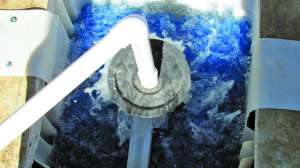
The project team selected a three-chamber fiberglass aerobic treatment unit (ATU), Model SM-500, made by Southern Manufacturing Company of Port Arthur, Texas. Their success, and the realization that there was a need for onsite solutions for challenging properties, led to the formation of Clark’s business in 2003.
Original partners Clark, Miller and Craven were joined by Clark’s son Josh, now project manager. Located in Santa Rosa, Calif., the company works in the five counties north of the San Francisco Bay, serving an area within 100 miles of the office.
Engineered Septic is a design-build enterprise, and the company Web site captures the concept in a single sentence. “We engineer it, we install it, we maintain it and we stand behind it.”
Growing awareness
Engineered Septic recognizes the green movement in California, where innovations like solar and wind power and energy and water conservation are popular and becoming more so. “Advanced treatment systems appeal to many homeowners and communities as a modern way to protect the environment and the limited groundwater supplies. It’s very trendy to offer green technology,” Josh Clark observes.
The company builds awareness of alternatives to the standard mound systems that so many designers present to landowners as the only option. “Kim spends a lot of time teaching landowners that they do have a choice,” Josh says. “He delivers a better mousetrap that costs less to install and operate and is better for the environment.”
Father and son agree that customers need not understand the science to appreciate the higher treatment levels and reduced environmental impact the systems achieve.
Kim, also a successful real estate broker and land developer, says he “helps the lost through the wilderness of property development.” For contractors, spec builders and individual property owners, he simplifies onsite permitting, design and installation by offering all those activities in a complete package.
Always adjusting
Putting the word “engineered” into the company name and having an engineer on staff gives the company a leg up on the competition. Josh, as project manager, has daily contact with every project. “That continuity sets us apart from good installers who must work with outside design engineers,” he says.
The company has never lost money on a job, and Kim attributes that to Josh’s day-to-day roles of materials purchasing agent, work scheduler, equipment rental agent and billing clerk. Damon Clark, Kim’s other son, serves as an on-call employee supervising subcontractors and doing hands-on work.
Reacting to recent economic conditions, the company has reduced its labor force and consolidated from two offices to one. But there was no need to reduce the already trim equipment fleet.
“From the outset, we decided we did not want to own big pieces of equipment,” Kim says. “There are a lot of good, skilled equipment owners with whom we do business.”
Josh adds, “These folks want our business and will be at our jobsite on time with reliable machinery. These are good partnering relationships.” Depending on the season and economy, the company fields three to six subcontracted installation teams.
The equipment inventory includes one Ford 250 and two Ford 350 diesel pickup trucks, a Mitsubishi model MM30 tracked excavator, a Ditch Witch trencher and two dedicated transport trailers.
Benefits of diversity
When it started in business, Engineered Septic could not handle all the business that came. As the market changed, Kim and Josh saw many first-time installers competing for work. While experienced installers recognize costs that first-timers may not, “We have found that customer education is the most effective way to overcome the challenge of a competitor’s unrealistically low pricing,” says Kim.
The pace of business is steady, and that lets the company be selective in the projects it accepts. The partners seek out challenging sites where they can help people by offering viable solutions. Larger installations are also more desirable.
“But, there is no single magic fix for every site,” Kim observes. “To say there is would be like selling snake oil, and we won’t do it.” To address the challenges of difficult terrain, shallow soils, or the effluent of an affluent lifestyle, the company always looks for emerging onsite technologies to add to its problem-solving portfolio.
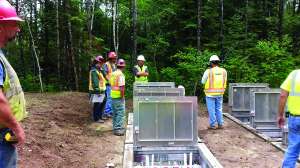
The company has become a stocking distributor for two onsite technology manufacturers. “We maintain a storage yard where we stock various parts and major components,” Kim says. Buying in truckload lots brings the best possible pricing and cuts per-unit shipping costs. Another of Josh’s duties is inventory control. “With a well-stocked yard, we can deliver units to other installers and be sure that our own needs will always be satisfied,” he says.
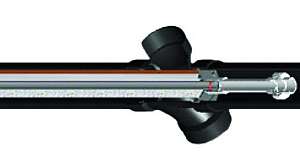
The company installs, services and is a dealer for Hydro-Action Industries of Beaumont, Texas, which manufactures the Hydro-Action AP500 treatment unit; and for the Southern Manufacturing Co.’s SM-500. The firm also installs the AdvanTex AS20 made by Orenco Systems Inc.
Engineered Septic designs specify FRALO plastic septic tanks for most installations. The company also stocks and distributes these tanks, made by Roth Global Plastics, Inc.
Educating all
Kim Clark believes installers should learn from each other and that regulators must be open to new technologies and concepts. From greater knowledge and skill, rewards flow to three beneficiaries: the client, the installer and the environment. “I offer encouragement to and help other installers learn about new technologies,” Kim says.
County-to-county variation in regulations is a challenge. “If we were building the same system in adjacent counties, one would require two inspections, the other six,” Josh says. Other impacts on system pricing include greater regulator oversight during site evaluation and more detailed design requirements.
The impact on cost can be dramatic. The price of a system serving a four-bedroom house in one county could be in the $50,000 range, while across the street in another county, the same installation would cost about $20,000. “These variations are without any change in effluent quality or treatment or absorption technology,” Josh says.
The company is regularly represented at California Onsite Wastewater Recycling Association (COWRA) meetings, and at NOWRA events. “But membership in onsite organizations is not enough,” says Kim.
In the company’s service area, each county health department convenes an onsite advisory committee, and Kim or Josh attend those meetings regularly. “We want to know the regulators on a first-name basis and we want to be known in the regulator community as a strong and positive voice for constructive change,” Kim says.
Caring for their own
About half the company’s customer inquiries result from Internet searches. Other marketing tools include a Web site and the Yellow Pages. “We have one phone number and it answers 18 hours a day,” explains Josh. Kim handles most incoming calls.
With firm control of costs, in-house design and a thorough understanding of onsite projects, “We can answer questions that site evaluators, system designers or installers who work alone cannot or will not answer,” Kim says. The most frequent question is: Which system costs more? Josh ranks engineered mounds as most expensive, followed by at-grade mounds and then drip systems.
After installation, Engineered Septic provides two years of monitoring and maintenance. Two years is also the warranty window for the firm’s installations. While after-care is a requirement of the various technology manufacturers, it is also a business practice the partners believe in.
The company’s post-warranty management program includes periodic hardware inspections and equipment checks and filter cleanings or replacements as needed. The company has relationships with several pumpers and makes referrals when appropriate. “A homeowner interview is part of our management program,” Josh says. Long after the sale, the company creates opportunities for owners to continue to ask questions and build their knowledge levels.
Making a difference
The partners of Engineered Septic have done things differently since day one. None was searching for a new job and none wanted a new career. They wanted to find a solution to Kim’s problem.
Along the way, they realized that his problem was not unique and that they could help other landowners with similar issues. Their vision has shaped a design-build service package that meets the needs of the sites and the cultural expectations of the market.
Not content to sit back and wait to be regulated, Kim and Josh take new system technologies to the regulators, encouraging them to learn about them and include them in the regulatory scheme. “We may have stumbled into the business,” says Kim, “but we have never stumbled in our efforts to help clients meet their unique disposal needs.”
Continue reading for free