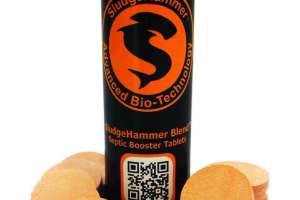
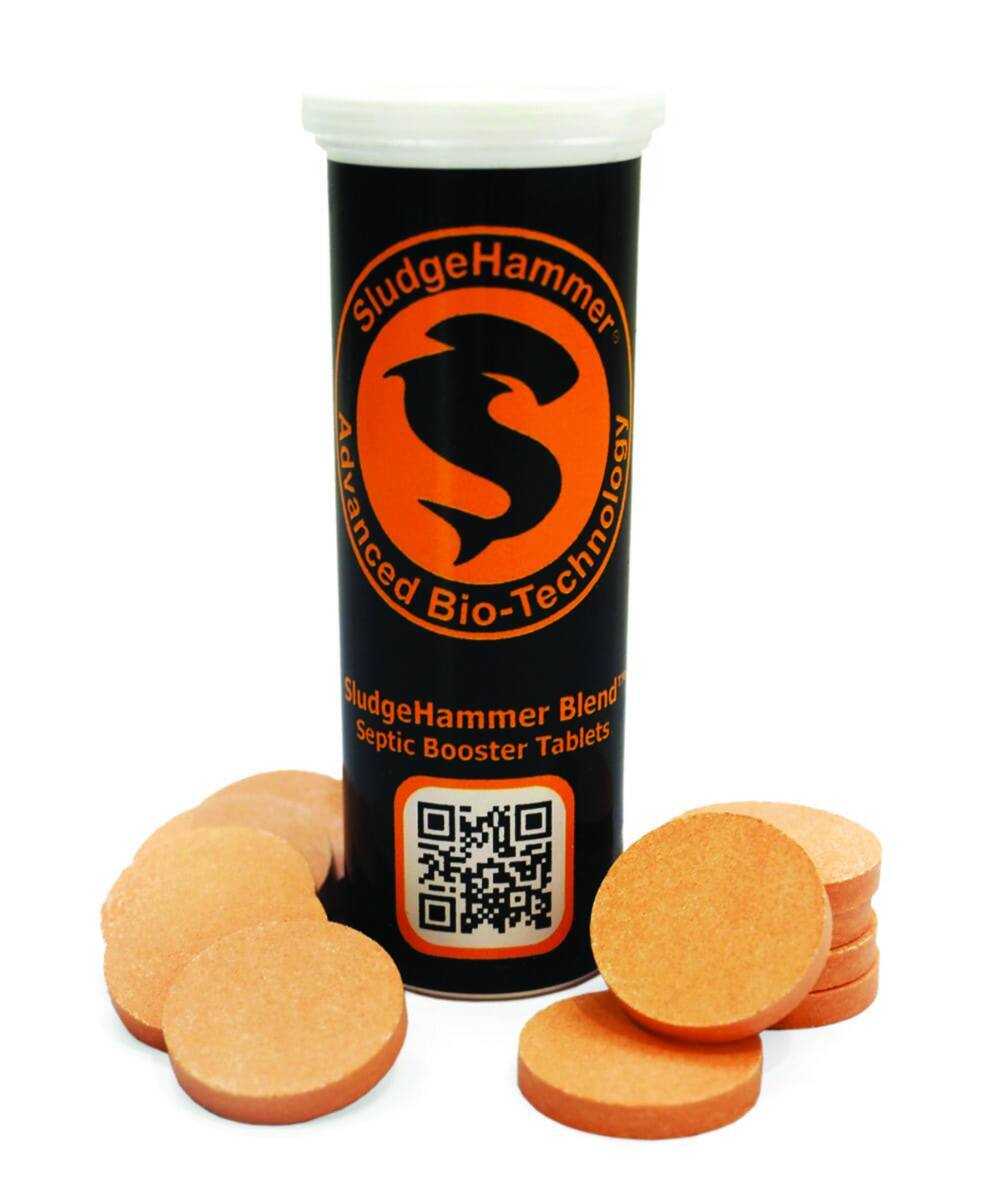
Powered by a legion of beneficial bacteria, SludgeHammer’s Septic Booster Tablets support a healthy drainfield for conventional systems and ATUs, while heading off costly repairs down the line. All it requires is one extra flush per month.
“It’s all naturally occurring, very safe, but it’s the most proactive bacteria,” says William Stoddard, SludgeHammer president. “Our bacteria come from the leaf litter zone of the forest where there’s no living host. That means they’re designed to eat as much as possible.
“Just drop one of the flushable septic booster tablets into the toilet and send it on its way.”
Septic Booster Tablets, also known as SludgeHammer Blend, were developed in the early 2000s alongside SludgeHammer’s Aerobic Bacterial Generator, which can be used to convert failed conventional systems into ATUs or proactively in new installs. One tablet, once flushed, introduces bacteria that double every half hour, culminating in billions of spores that digest waste to reduce drainfield strain and help produce clear effluent.
While designed to efficiently germinate spores in SludgeHammer’s ABG, Stoddard says it’s a strong fit for any ATU, while also working with conventional anaerobic systems.
“These bacteria will always be most successful in an aerated system,” Stoddard says. “However, in a conventional system, we’re providing better biology to manage the waste process, to reduce maintenance frequencies, and to send that healthier type of bacteria out to the disposal fields where it’s able to help us manage biomat.”
As with biomat, algae blooms are also no match for Septic Booster Tablets, according to Stoddard.
“It’s Department of Natural Resources approved, and very safe for water quality management solutions in lakes. It’s actually a proactive bacteria that will help us manage algae blooms,” Stoddard says.
The technology was successfully used in California at a concentrated animal feeding operation, whose freshwater source developed a heavy algal bloom. Tablets were loaded into a SludgeHamer PondBot, which aerated and inoculated the operation’s 30-acre rain catchment pond. Three weeks later, the pond cleared.
The company distributes Septic Booster Tablets to onsite contractors via its SludgeHammer Direct Program, which are ultimately sold to end users. Each tablet container includes a QR code, which Stoddard says helps with public outreach.
“It just gives them that instant digital connection to more information and education to take care of their wastewater, to reintroduce it back into the environment,” Stoddard says. “When it is discharged at the distribution point, we are going back into the environment very safely and in a sustainable way.”
231-348-5866; www.sludgehammer.net
Continue reading for free