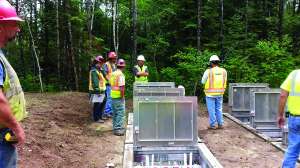
The crew places the metal plates on the GST units and pack in washed gravel in to the compartments while another GST section waits to be placed. (Photos provided by Knight and Son’s Construction, Robert DeLuca and Geomatrix)


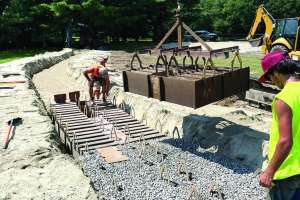
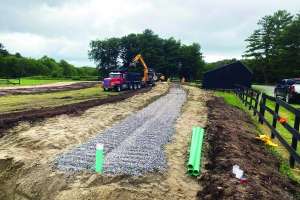
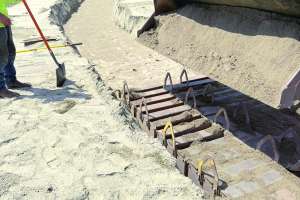
The crew places the metal plates on the GST units and pack in washed gravel in to the compartments while another GST section waits to be placed. (Photos provided by Knight and Son’s Construction, Robert DeLuca and Geomatrix)
Falls Creek Farm is a beautiful 300-acre horse farm located in rural Sterling, Connecticut.
Given its enchanting location, the farm’s owners are building a large enclosed venue onsite to host weddings and other events. “It’s a wood structure building about 6,000 square feet, designed to look like a barn,” says Robert DeLuca, principal of CLA Engineers in Norwich, Connecticut. DeLuca is the engineer who designed the venue’s new septic system. It is designed to support a seating capacity of 200 people with a design flow of approximately 4,000 gpd. His firm is based in Norwich, Connecticut, with about 20 employees serving the eastern part of the state.
Because of space limitations on the Falls Creek Farm site, and in line with health regulations, DeLuca has decided to install a 630-foot Geomatrix Systems GST leaching system on the site. This system will allow the septic system’s liquid wastewater to seep safely into the soil away from the venue.
“The GST leaching system has been designed with the use of a removable form to accurately shape and construct leaching fingers along the sides of a central distribution channel,” the Geomatrix Systems website says. According to their website, the fingers are constructed with the use of 1/2- to 3/4-inch washed stone and are surrounded with ASTM C-33 sand. These fingers serve to increase the sidewall surface area by more than six times that of a traditional stone leaching trench.
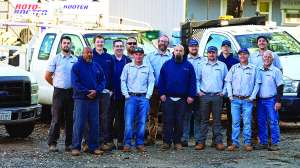
The installation of the Falls Creek Farm septic system, which has been completed, was managed by Merritt Knight. He and his brother Robin Knight co-own Knight & Sons Construction in Willington, Connecticut. “We’re just a family-owned business,” says Merritt Knight. “My brother and I started running it back in 1985. My father was in it a little bit. He just had a bulldozer and an old backhoe. We’ve worked our way up into a decent-sized company with ten employees and a secretary. I have two boys that work at the company and my brother has one boy that works here.”
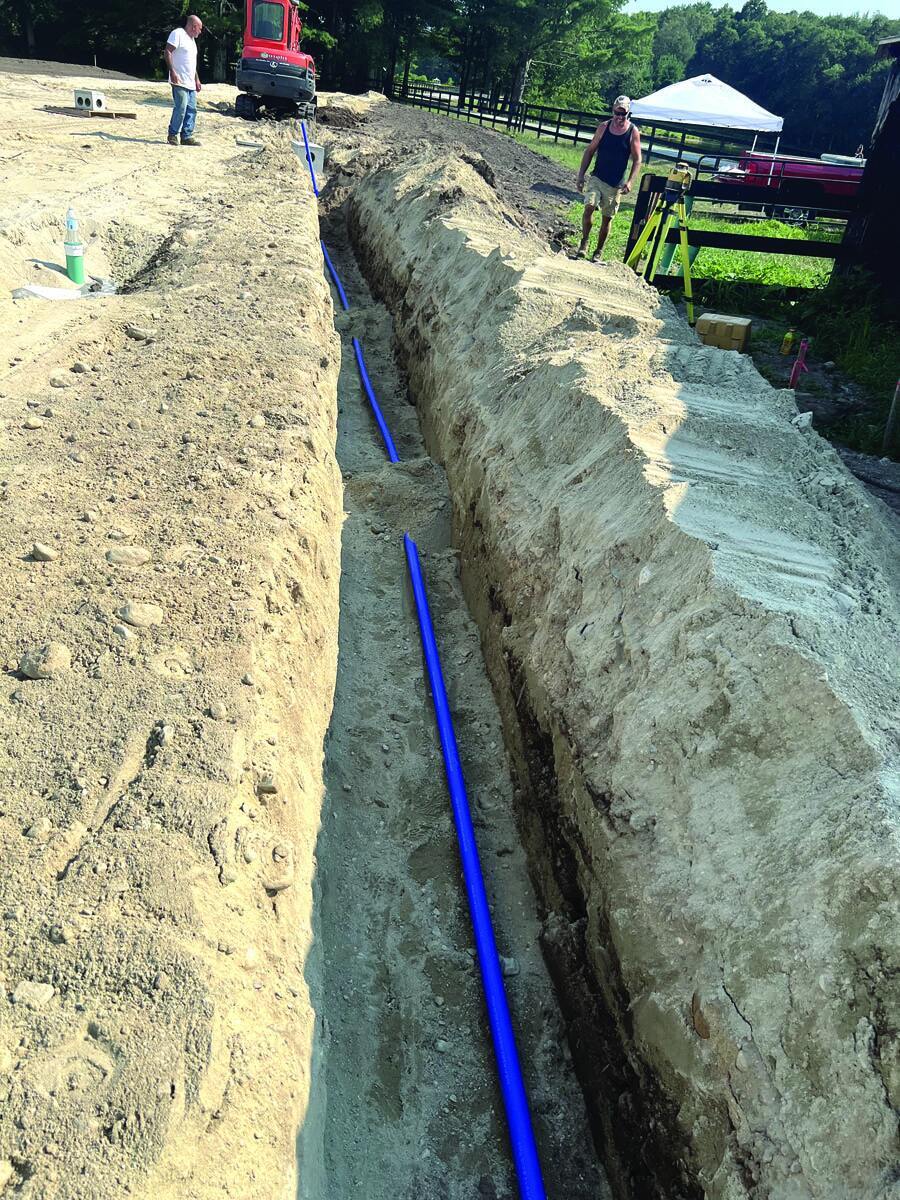
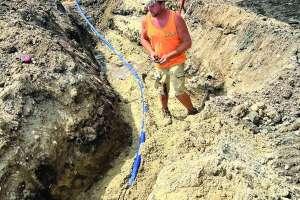
In terms of the Falls Creek Farm itself, installing a septic system was straightforward. The site was farmland, so Knight and his crew simply had to dig out the septic site and install the equipment.
What posed a challenge was the lack of space for a traditional stone leaching system. This is precisely why Bob DeLuca opted to install the proprietary Geomatrix GST system. For the same wastewater load, “a standard stone leaching system is more than three times the size of a GST system,” DeLuca says.
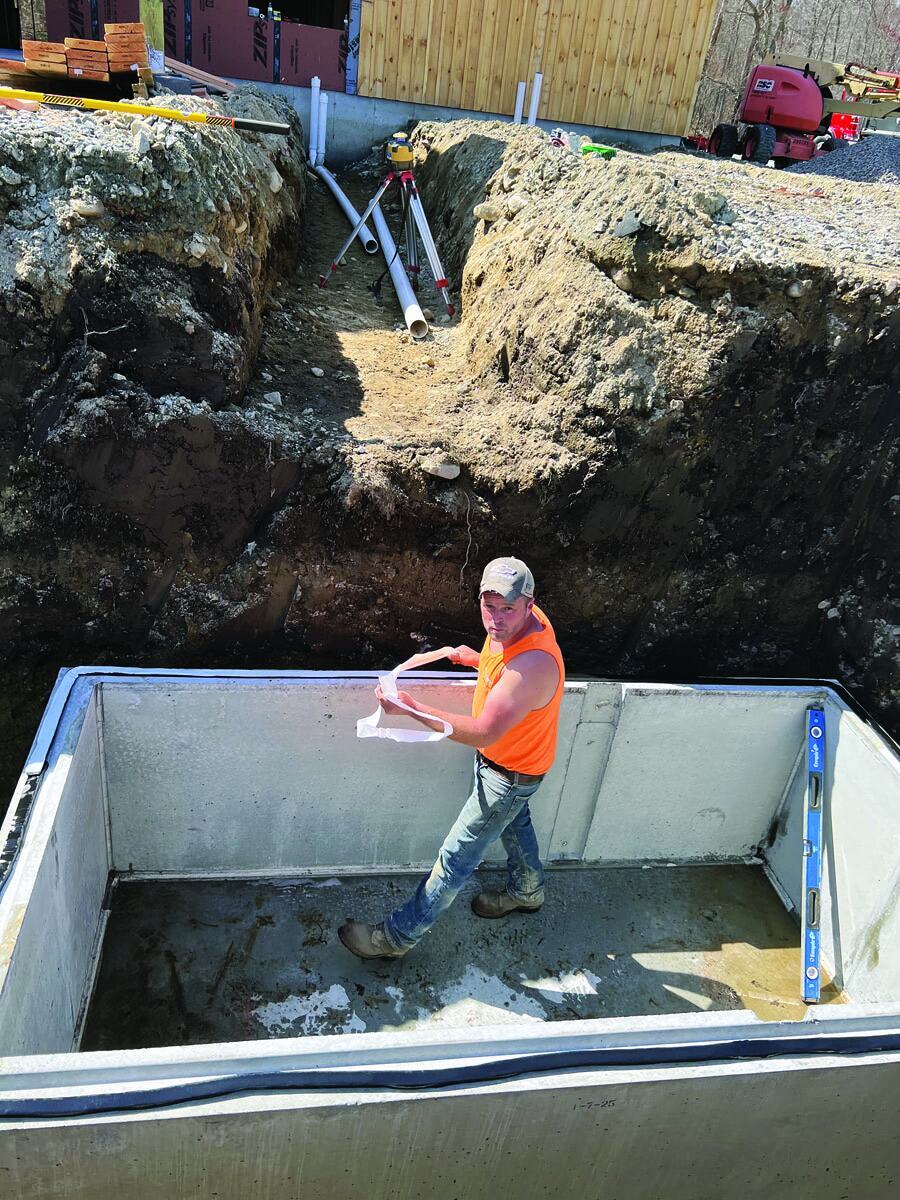
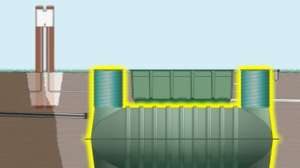
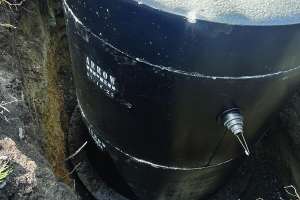
The system carries wastewater directly from the washrooms into a 2,500-gallon single compartment septic tank via a 4-inch PVC sewer pipe. This same tank receives wastewater from the kitchen, which first flows through a 2,000-gallon grease trap (also via 4-inch PVC). The effluent from that tank flows into a second 2,500-gallon, single-compartment septic tank (again via 4-inch PVC). Its effluent is then sent into a pumping station that sends it through a 2-inch PVC force main into a settling chamber. From there, the effluent travels by 2-inch PVC to the 630 feet of GST leachfield, where it is added to the system at various points using 10 distribution boxes. The wastewater then leaches through the GST system into the soil.
The Knights mainly used a skid-steer and a backhoe to install the system. This being said, the site was so easy to work with that “you could have done everything with a track excavator,” Knight says.
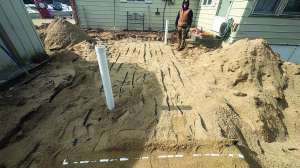
To do the job, his crew first excavated the site to a 6-foot depth, then filled the bottom with C-33 septic sand. They then installed the steel forms for the GST system. “The forms are 6 feet wide,” says Knight. “You put these plates over the top, so it covers one section of the form. You sprinkle C-33 sand over it and use a two-by-four to poke it through the system. When that’s done, you pull the plates off and then you use the 3/4-inch wash stone that has to be very clean. You just sprinkle it in there. The way the forms are set up, they have it gauged as where to stop the stone and in the center they have a slot where the perforated pipe goes in.”
To prevent the leaching system trench from collapsing, Knight made sure to always have one form remain in place as he added the next one. “Then you put your distribution boxes in, set your grade for the pipe and lay it in, and then cover everything with 3/4-inch stone and fabric paper.”
Now that the installation has been completed at Falls Creek Farm, Knight is satisfied with his work. “It went well,” he says. “It’s just labor intensive, that’s the only way you can describe it. But otherwise the installation was pretty basic.”
Continue reading for free