By the time Rob Scott took over running his grandfather’s septic company, he had installed hundreds of systems and was, frankly, starting to find it a little boring. His solution? Take on the tougher jobs.
“Around 2010, I branched out and started doing more of the site work, bigger systems and more difficult ones,” he says. “I’ve gotten into more of the technology. I like a challenge. And I like the difficult jobs other people don’t want to do.”
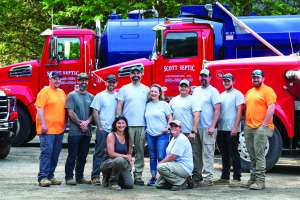
Scott and his mother Dottie are co-owners of Scott Septic in Hopkinton, Massachusetts, a full-service septic company. Dottie, who’s been there over 40 years, oversees office functions — phones, bookkeeping, scheduling, customer communication, insurance, licensing — along with Scott’s wife Melissa who does payroll and billing.
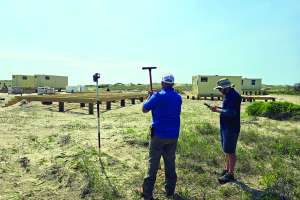
Scott’s typical day includes getting the guys on the road in the morning, checking on sites, troubleshooting, walking new sites, meeting customers, working on bids and proposals, and returning calls. Nights might be spent working on the trucks.
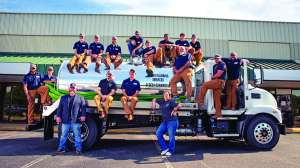
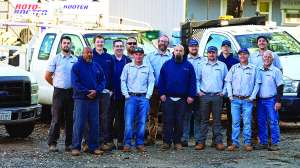
The pumping side of the business is handled by Scott’s sister Stacey who’s been doing pumping, inspections and repairs for over 20 years. The installation/construction side includes eight technicians. And Scott’s 16-year-old son Robbie helps out in the summers.
The bulk of the work is septic-related — “It’s the door-opener,” Scott says — but they also do electrical and water trenching, water installations, water main repairs, sewer installation connections and repairs, and site work developing house lots or smaller roads.
GETTING STARTED
Scott’s grandfather Rob Scott (known as Don) started the business in 1968. While working for a town sewer department he bought a truck and pumped out septic tanks after work to make extra money to help support his four kids and other family members.
His business grew and he eventually left the sewer department. His son “Big Rob” (Scott’s father) took over in 1983 when Don no longer wanted to run the company, although he stayed on for another 10 years before retiring.
“Then my dad had to expand the company so it could support my grandfather, my dad and my uncle,” Scott says. “He bought his first machine in 1988 doing repairs, then got into installations, which soon became a more consistent part of the business. He worked with a subcontractor friend to do the backhoe and excavation work and he would do the labor.”
Scott started working summers in 1994 then went full-time in 2001 after high school graduation. In the early 2000s they bought a full-sized backhoe, a dump truck and an excavator. By then they had five employees, including Stacey who hadn’t really worked in the business before. But when her father took her out in the vacuum truck, after she graduated from high school, she got hooked on driving the truck and doing the work.
In 2007 Scott took over day-to-day operations — about the same time the recession hit. His father stayed on for a few years then retired, but continues to help as needed.
PUMPING SERVICES
By 2010 the economy picked up, the housing market started to move again, and the company hired a full-time excavator operator. Today they run two installation crews every day and one pump truck.
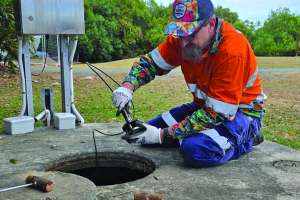
For pumping they primarily use a 2015 Western Star built out by Andert with a 4,250-gallon waste/250-gallon freshwater steel tank, Masport pump, RIDGID camera and a jetter system. Their backup is a 1995 Freightliner built out by Andert with a 4,000-gallon steel tank and Masport pump.
It’s difficult to dispose of waste in Massachusetts, Scott says, especially grease which they do a little of. “Not every town has a designated place to get rid of waste,” he says. “In the 20-plus towns we service we go to two treatment plants.”
To solve some of the difficulties, the company has a 10,000-gallon trailer in an industrial park to empty their loads into. Then two or three times a week they call a company with a vacuum trailer who comes and takes it out of state. “We only do that for towns where it’s difficult to get rid of the waste,” Scott says. “And we put most of our grease in there as well because the treatment plants we deal with don’t accept grease any more.”
Scott says he would love to grow the pumping side of the business a bit more. “Not a lot — I don’t want to be a big big company — but I’d like to run one more pump truck.”
INSTALLATION WORK
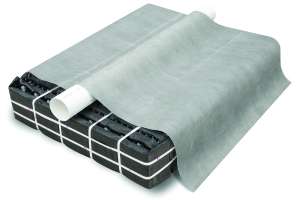
The company installs 30 or 40 systems a year, mostly residential. They do a lot of standard stone-and-pipe systems, Scott says. “We also do a lot of Eljen GSF, two or three Infiltrator chambers a year, two or three drip irrigation systems for really challenging sites with high-water tables or challenging topography. I got very big into drip systems and am one of the preferred installers in the area for Geoflow and Perc-Rite [American Manufacturing Co.].” In 2025, they did three Infiltrator Enviro-Septic systems.
Scott says they don’t get a lot of very simple systems any more. And engineers like working with them because when problems turn up in the field they know how to fix them. “They trust us,” he says. “We’re not cutting corners or hacking things.”
All equipment is from Caterpillar — seven excavators (various sizes), two loaders, one backhoe, three skid-steers. They also have five dump trucks (Western Star and Peterbilt) — two one-ton units and three 18-20-yard units — and five GMC 3500 service trucks with utility bodies, outfitted with tools.
The company does its own concrete coring, Scott says. “We’ve got walk-behind saws and wall drills. We have rock hammers fitted for some of the excavators because we have a lot of ledge up here and massive boulders, and we’re able to get right on it and handle it in-house and minimize downtime.”
In the winters they do repairs and also snowplowing. “We spent a lot of time last winter jackhammering frost, fixing pipes and dethawing sewer lines,” Scott says.
TOUGH JOB
Scott says he’s a problem-solver and likes the difficult jobs. As an example, in 2024 they did a Jet replacement system at an old summer cottage with an addition on a tiny lot, which Scott says was the most expensive project he’s done.
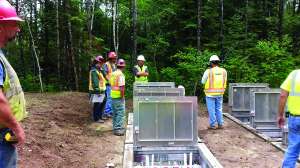
The site had groundwater a foot below the surface and slow-draining clay-silt soils. There was a retaining wall on three sides. The tank was five feet from the house. Access to the property was so tight the local board of health made them add a reserve system. The project included 12 80-foot, two-by-two stone trenches with pressure dosing lines and Infiltrator arched chambers. They brought in 2,000 yards of septic sand.
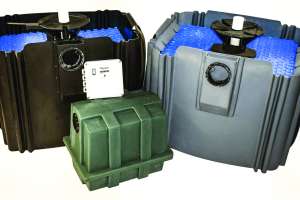
“The worst part was it was such a sandwich job that we had to do temporary tanks with pumps in them to charge the field, to dial them all in, because if something wasn’t right it was a problem,” Scott says.
The company deals with a lot of groundwater and changing soils. “We’ve got streets where one house can be solid ledge and the next sand,” Scott says.
CARING FOR EMPLOYEES
Scott says the company has become a place where people enjoy working. “We’ve fostered a very good working environment and treat everybody with respect. We’re very family-driven. I have an incredible group and we would not be able to do what we do without them.”
He usually finds people through word of mouth or from existing employees. Training new hires involves having them ride with either him, Stacey or the foreman for a couple weeks.
Benefits include good pay, overtime hours and flexible schedules so employees can meet family obligations. In return, employees tend to stay for a long time. “And we have a lot of fun,” Scott says.
“When it’s somebody’s birthday, instead of just going directly to the site in the morning, everybody comes to the garage. Either my sister or my cousin [one of our truck drivers] will bake cupcakes and brownies. We sing ‘Happy Birthday’ to them and embarrass them. They can turn a little red — a bunch of grown people singing ‘Happy Birthday.’”
He says he does a nice Christmas party every year and enjoys coming up with different gifts for everybody such as company-themed items like Carhartt jackets, clothing, YETI mugs and coolers.
REWARDS AND CHALLENGES
Scott says his biggest stress is making sure there’s plenty of work to keep everyone busy. “I’m very aware that I’m responsible for feeding 10 families. That’s what drives me every day.”
The most rewarding aspect of the business is knowing his employees and their families are happy, and that their customers are happy and eager to refer him to their friends. He takes pride in being a “quality over quantity” company and that they are the ones people call if they need something done that’s not easy. “This is a great industry,” he says. “It’s been really good to us. We enjoy what we do. It’s challenging but it’s rewarding.”