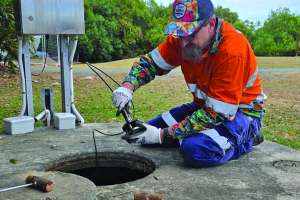

Gravity can’t do it all, making pumps a critical component of many onsite wastewater treatment systems. They are incredibly useful, but not without controls for turning on and off. Pumps have no way to think for themselves, so if a tank is rapidly overflowing or if it has completely run dry, the motor will simply continue to spin until it receives a signal to stop.
That critical signal relies entirely on the sensor. When a sensor device fails, the consequences are immediate and expensive. If the system fails to turn the pump on, you face flooding and potential health and environmental hazards. If the system fails to turn the pump off, the motor runs dry and natural cooling and lubrication provided by the fluid are lost.
Gaining control
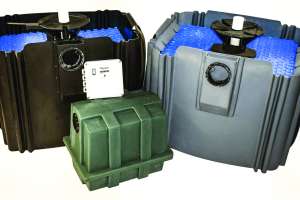
Therefore, pumping systems include a box or control panel. The control box/panel can be quite simple or more complex based on the functions it must perform. Electrical components respond to water level sensors in the tank. Sensor is the general term used for all the different devices used to sense water levels in the tank and activate the pump. The sensors are typically float switches, but other devices are also used, such as pressure transducers and ultrasonic water level sensors. They are adjustable, and each is set to operate specific components in the tank. The sensors trigger the operation of system components to:
- Activate and deactivate a pump
- Activate an audible/visible alarm to indicate a malfunction
- Monitor and record events (counters) and time of operation (meters)
- Initiate telemetric notification of system malfunction
- Activate remote system equipment operation
- Perform other functions as needed.
Floats
Control switches (floats) sense the water level in the pump tank and signal the pump or alarm system. Some switches provide power to the pump directly, while others require a relay. The electrical circuit can be set up in one of three ways:
- Normally open – Circuit is open when float is in down position; circuit closes when float is in up position and remains closed until the float returns to down position (two wires); used to sense increasing effluent levels and send a signal to a motor contactor to activate the pump; may also be used to activate an alarm to signal excessive effluent levels.
- Normally closed – Circuit is closed when float is in down position; circuit opens when float is in up position and remains open until float returns to down position (two wires); used to sense when water should be pumped into a tank or when water level rises too high and a circuit needs to be opened to sound an alarm.
- Double acting – Float closes a different circuit when in the up or down position, requiring three wires.
They can be active with a narrow angle, which is commonly used to activate alarms and timers, or with a wide angle where the switch is used to turn the pump on/off and deliver a large dose.
Float switches are not as accurate as other options available. They can get damaged, collect debris or be moved by high-flow events, which can result in a lack of pump and alarm activation. Float switches have a lower initial purchase price, but pressure and ultrasonic controls may offer a lower total cost of ownership due to reduced maintenance. Pressure and ultrasonic sensors are also increasing in use and are valuable since they can read out the actual depths with more accuracy.
Pressure sensors
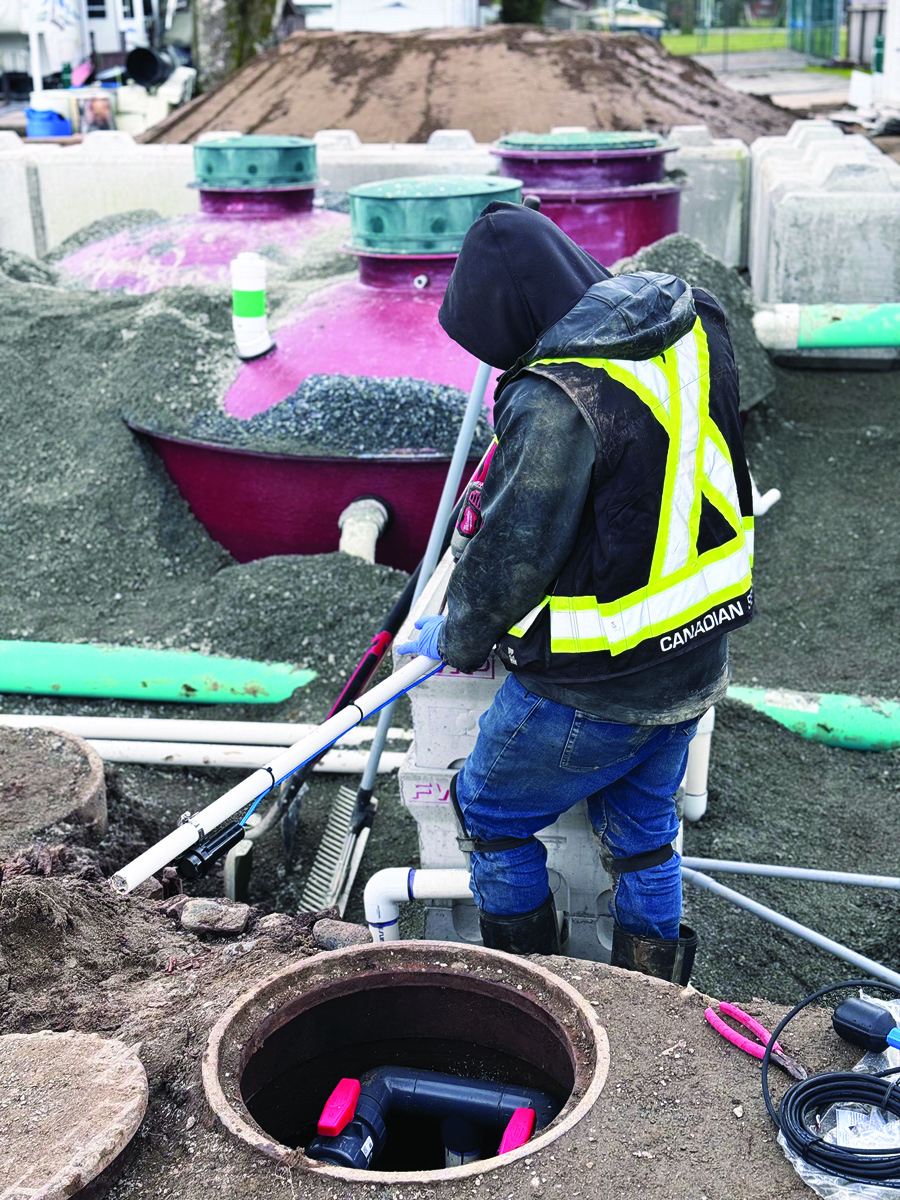
Pressure sensors use the pressure created by the water to determine the depth in the tank.
Submersible pressure transducers are specialized pressure sensors that measure liquid levels in septic tanks, lift stations and wastewater applications by converting hydrostatic pressure into electrical signals. They are placed at the bottom of a well or tank, offering continuous level monitoring without being affected by agitation, solids or foaming. They measure the weight of the fluid from the bottom and convert the pressure into a 0-5 volt analog signal.
Their electrical circuit remains closed, and the electrical current passing through the circuit fluctuates with changing effluent level above the submerged pressure transducer. They are activated by variations in electrical current, which are detected by a programmable controller and correlated to the effluent level. When activated, they can then signal the pump to turn on, as well as many other activities, such as timer enable, peak enable, alarm override, timer override, pump out and others as needed. They are mounted similarly to a float tree, are easy to install and have no moving parts. They are commonly tied to data logging panels and assist with troubleshooting, as you can quickly tell when water levels are increasing.
Due to their operation, they are more susceptible to lightning strikes and should have a surge protector to mitigate “dirty” power. They can be sensitive to air, especially micro-bubbles, suspended in the water. So, they work best in a chamber that is not actively aerated.
Ultrasonic sensors
Ultrasonic sensors use sound waves to detect distance (top-down). They work best for measuring levels in open or low-pressure tanks and measure distance by sending high-frequency sound waves to the top of a liquid and checking how long the echo takes to get back. By measuring the time-of-flight of this echo, the sensor calculates the distance to the surface and determines the liquid level, providing noncontact, continuous monitoring.
Ultrasonic sensors are usually mounted at the top of the tank, looking down and must have a clear, unobstructed view of the liquid surface. One of the advantages of ultrasonics is minimal maintenance due to no moving parts. They are ideal for dirty liquids because the sensor does not touch the material. Grease traps and septage processing tanks are good candidates for the use of ultrasonic controls.
The bigger picture
Pressure and ultrasonic sensors can provide additional useful information via remote monitoring systems, which will assist maintenance staff in troubleshooting. There is an increasing number of remote monitoring systems that provide information for maintenance staff and homeowners, often through an app.
For example, if the level of a tank is increasing when people are not home, it indicates either infiltration into the system or a running leak within the house. You can also see if a pump is losing performance by the amount of time it takes to lower a tank. This can also indicate if the lines in the dispersal system are clogged. If staff are called out to fix a system, having this information can reduce time on site and help ensure that the right equipment is brought to fix the problem.
Float controls are simple, cost-effective, mechanical devices best for straightforward, low-cost switching. Transducers offer precise, real-time level monitoring, allowing for optimized, automated operation compared to mechanical switches. Key advantages over floats include high accuracy, improved reliability, resistance to turbulent environments and seamless integration with programmable logic controllers. Ultrasonic sensors provide noncontact, accurate level monitoring with no moving parts, ideal for complex, dirty applications requiring low maintenance.
Continue reading for free