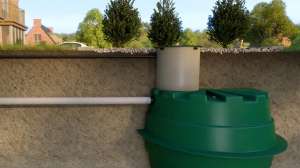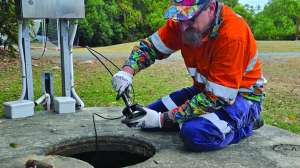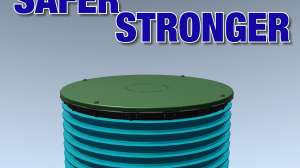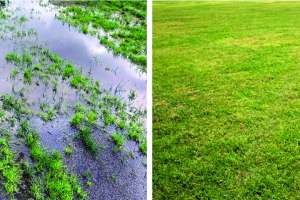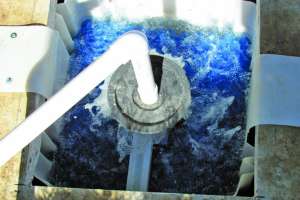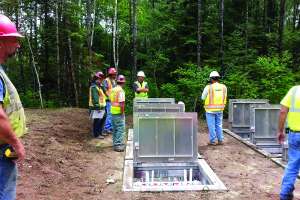

A recent residential onsite project my company worked on was going to have to pump the wastewater 250 feet horizontally and up a 25-foot vertical lift. The site was heavily wooded. The septic tank would be at the top of the hill, so the system would have to be designed to take everything — water and solids — up a 25 foot lift through a pipe that would have to be directionally drilled.
Back in the day, grinder pumps would be considered, due to being able to pump through a small-diameter, directionally drilled pipe.
But if a grinder pump is used, the solids are indeed ground up into a slurry, making settling of solids in the septic tank less likely. This would increase waterborne solids to the distribution cells. System longevity would be compromised.
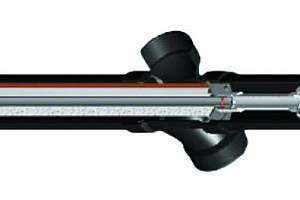
In this instance, the system was designed with a vortex pump. The pump was able to achieve the TDH required while pumping through 250 feet of 2-inch directionally drilled HDPE pipe without grinding the solids into a slurry.
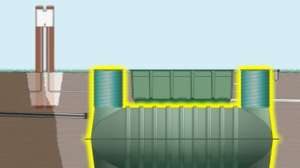
The existing septic tank was retrofitted to house the vortex pump. The benefit was that the vortex pump does not grind the solids into a slurry, but passes the solids through more easily so that there is a better chance of the solids settling out in the septic tank. This septic tank has two compartments and an effluent filter.
Unlike an effluent pump or sewage pump, the vortex pump has a recessed impeller, reducing the chance that the solids will come in contact with the impeller, which in turn reduces the chance of pump blockage. (And for the record, a vortex pump is a type of sewage pump.)
As with all projects that require pumps, making certain the pump is sized properly to meet the gallons per minute required and the total dynamic head is critical to project success and pump longevity.

Let’s review some of the different types of pumps typically used in onsite systems and some of their differences.
Effluent pumps are meant to be used after a septic tank or other form of primary treatment. This pump is not meant to move solids larger than 3/4-inch, but to pump water after the majority of the solids have already been removed.
A sewage pump is similar to an effluent pump but will pump larger solids, typically up to 2 inches in size.
A vortex pump is a type of sewage pump that places the impeller farther from the incoming water, thereby reducing risk of pump blockage. The solids should not come into contact with the impeller as easily as they do in the other type of pumps.
A grinder pump does exactly what the name implies: grind up the solids so that the water coming out of the discharge of the pump is a slurry of water and fine bits of solids. Although this pump is useful in a lot of applications, pumping from a grinder to a septic tank is not recommended due to the amount of waterborne solids that will still be in suspension and hard to settle out of the water in the septic tank.
I know of some existing facilities that have high residential use (multiple residential units) that flow untreated into an initial lift station. In two of the instances, the lift stations have duplex grinder pumps. In both of these facilities the grinder pumps keep getting plugged up with underwear, dress shirts and other thick fabric-type blockages. Putting aside the question of who is flushing underwear and dress shirts, in both instances chopper pumps would be an even better option. The grinder pumps have a small blade on the exterior of the bottom of the pump. The fabric in question has been found jammed in these grinder pump blades. Obviously some type of screening should be installed if possible.
Chopper pumps have exterior blades that chop solids into smaller sizes but not a slurry like a grinder. With some chopper pump brands, the solids will never come in contact with any impeller as they are pumped through the pump. This is an excellent option for both of these facilities. However, both facilities have run into the same issue with replacing their grinders with choppers: as far as the distributors and pump companies I have talked to, chopper pumps only come in three-phase and neither of these facilities have three-phase. They are looking into getting three-phase power.
Larger pumps (3 horsepower and larger) would benefit from three-phase power. Single phase is fine for smaller pumps, but for pumps with a larger horsepower three-phase is more efficient.
There are a lot of other kinds of pumps than those listed here. Twenty-plus years ago, I sat in an engineering class in Dallas that discussed different types of pumps and pros and cons of each for an entire week. Some of the types of pumps, we will never use in onsite systems. But it’s good to know there are different options for different applications. Using the right type of pump for each application will result in better longevity and fewer maintenance issues with the pumps.
About the author
Todd Stair is vice president of Herr Construction, Inc., with 34 years’ experience designing, installing, repairing, replacing and evaluating septic and mound systems in southeast Wisconsin. He is the author of The Book on Septics and Mounds and a former president of the Wisconsin Onsite Water Recycling Association.
Continue reading for free