
A residence in the Malvern area of Pennsylvania needed a replacement septic system due to a failing cesspool. Easy enough, right? Not exactly.
The project involved a four-bedroom home’s existing system that was failing. Delaware Valley Septic, Sewer & Storm was brought into the project for the installation, but prior to that, it took the engineers two years to get permit approval, mostly due to a stream in a not-so-ideal location.
The home is located on a hill overlooking a creek. Site conditions would not allow a standard system to be used. To make things work, it required crossing the stream and placing a drip irrigation system on the opposite side from the home.
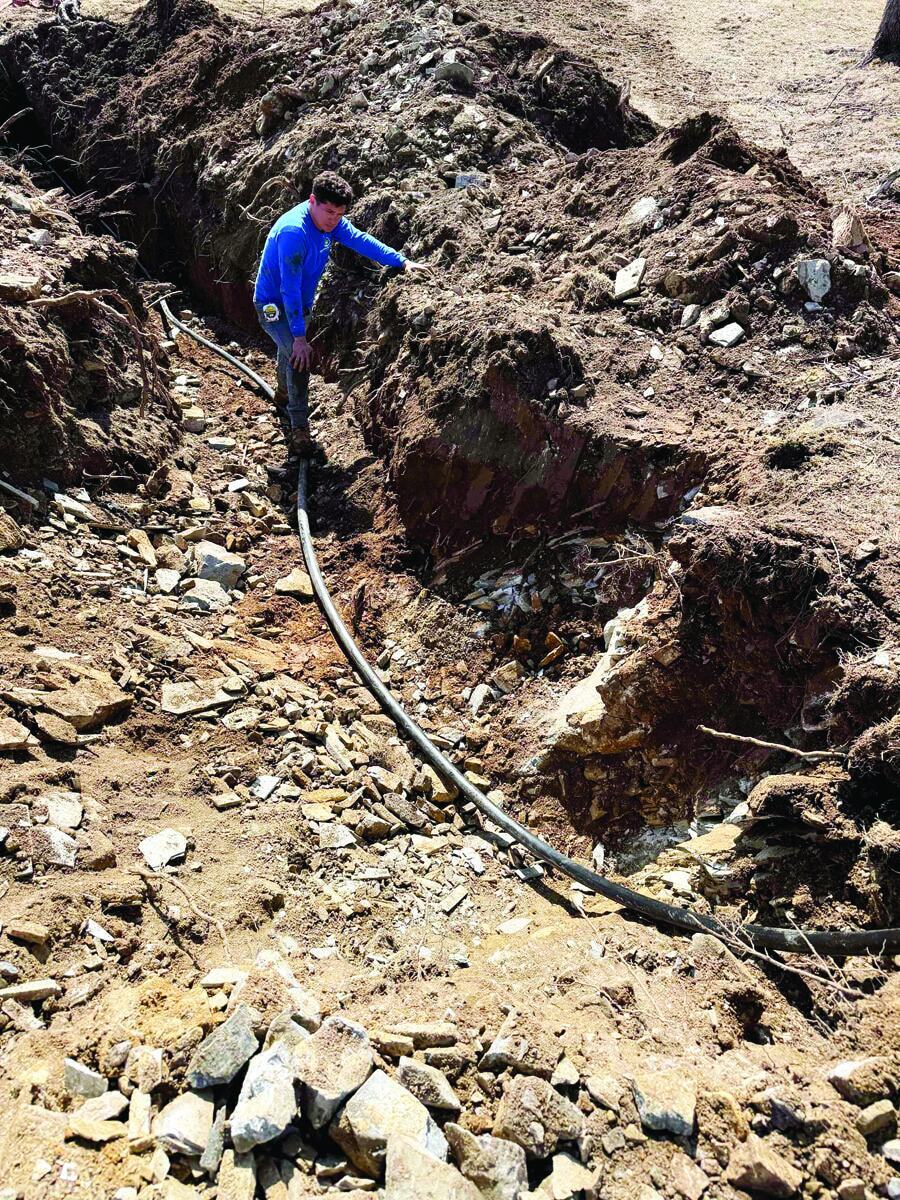
“Crossing the stream was the biggest issue with this project,” says Dave DiGregorio, co-owner of Delaware Valley Septic, Sewer & Storm. Add in an immense amount of rock and hills limiting equipment accessibility and you have the project DiGregorio and his crew took on this past year.
“You know, nothing today with what we do is easy,” he says. “Everything is second or third systems or the customers have a pool, a tennis court or patios and other features on their property. And we always want to be respectful and put everything back the way it was before or even, even better.”
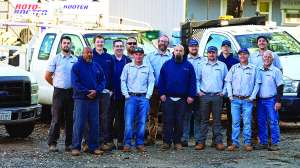
Delaware Valley has built a name on taking on the tough jobs and getting them done right, but also through how they treat those they work for. “We’ve been around since 1986 when my dad started the company,” DiGregorio says. “We just have always had a good name for how we handle situations. We’ve been blessed to have a good name and we always treat every customer like their family.”

Site conditions
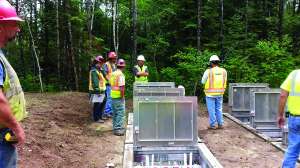
The site is very sloped and soils are extremely rocky. A creek separates the drip irrigation system from primary treatment components.
“It was a lot of rock, a lot of jackhammering,” DiGregorio says. “We actually got rid of all the dirt from the excavation because it was so rocky and brought in good fill material to protect the tanks correctly.”
System components
- 1,250-gallon dual-compartment concrete septic tank from M&W Precast & Construction Supply
- 500-gallon concrete pump tank from Monarch Products housing a Goulds Water Technology, a Xylem brand 3885 submersible effluent pump
- Environment One A.R.I. D-025 air release station and valve
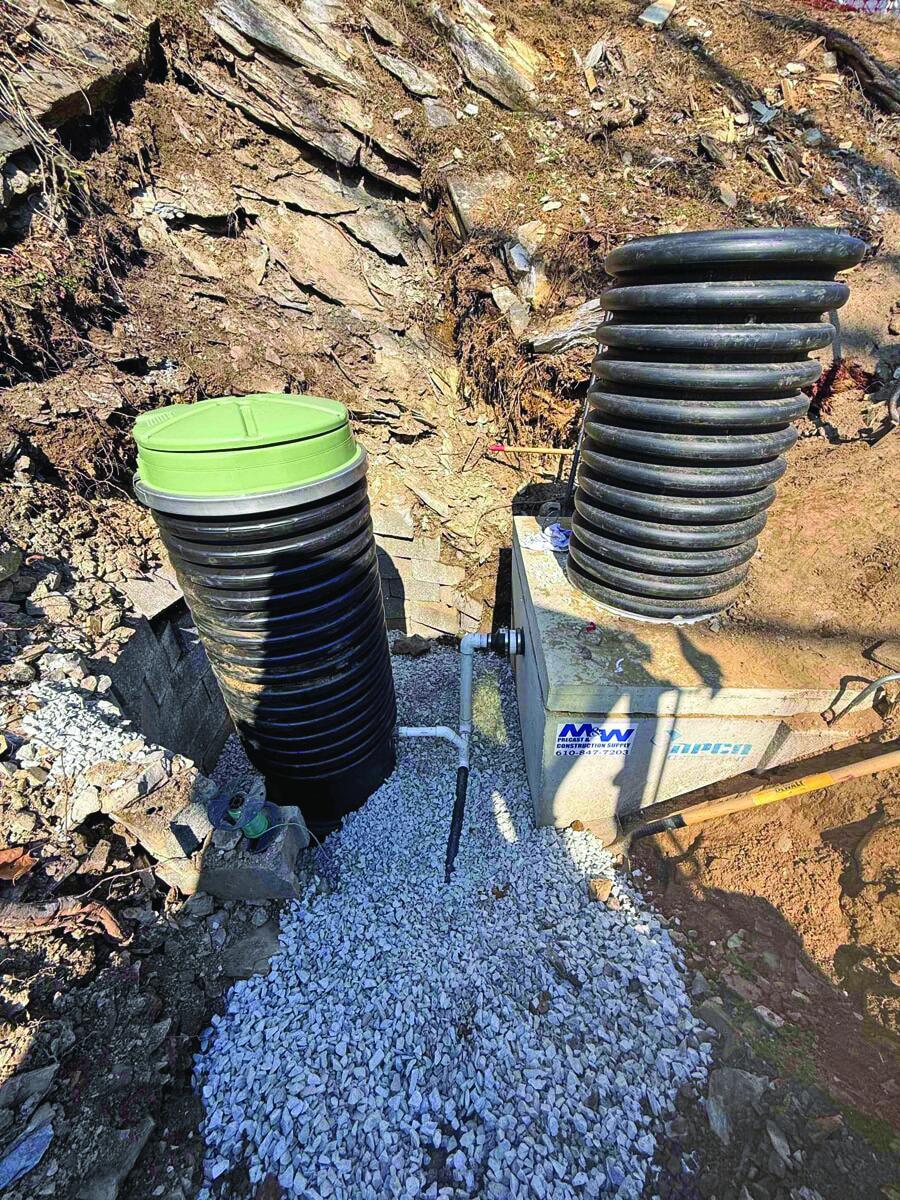
- 1,250-gallon dual-compartment M&W Precast septic/surge tank with PolyLok PL-68 effluent filter
- 1,500-gallon Roth drip dosing pump tank
- Goulds Blaster filtered effluent pump with cooling jacket
- 1,600 total linear feet of American Manufacturing Perc-Rite drip irrigation — 800 feet in each zone

System flows
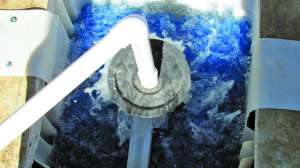
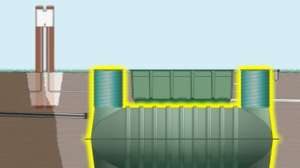
Wastewater from the household flows roughly 30 feet to the first 1,250-gallon dual-compartment septic tank. From there, water flows into the pump tank where it is pumped into the air release tank.
“We needed an air release valve because the tanks on the house side were higher than the drip irrigation,” DiGregorio says.
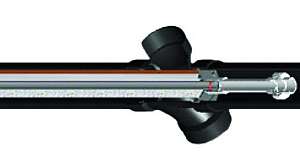
From the air release tank, water flows through roughly 300 feet of 1.5-inch HDPE pipe, under the creek and into another 1,250-gallon dual-compartment tank/surge tank. The 1.5-inch pipe was converted to 4-inch PVC before entering the septic tank on the irrigation side of the creek. After settling in the septic tank, water flows into the 1,500-gallon drip dosing pump tank where water is pumped to the Perc-Rite distribution system and sent to the drip irrigation zones.
Installation
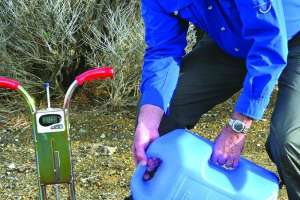
The project kicked off for Delaware Valley in August of 2024. “We did a soil moisture check in August with the county inspector and were approved to install the drip tubing,” DeGregorio says. “We installed it right away that day.”
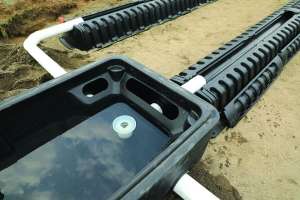
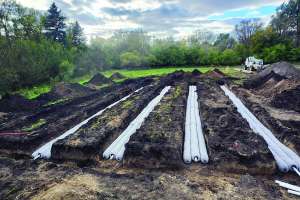
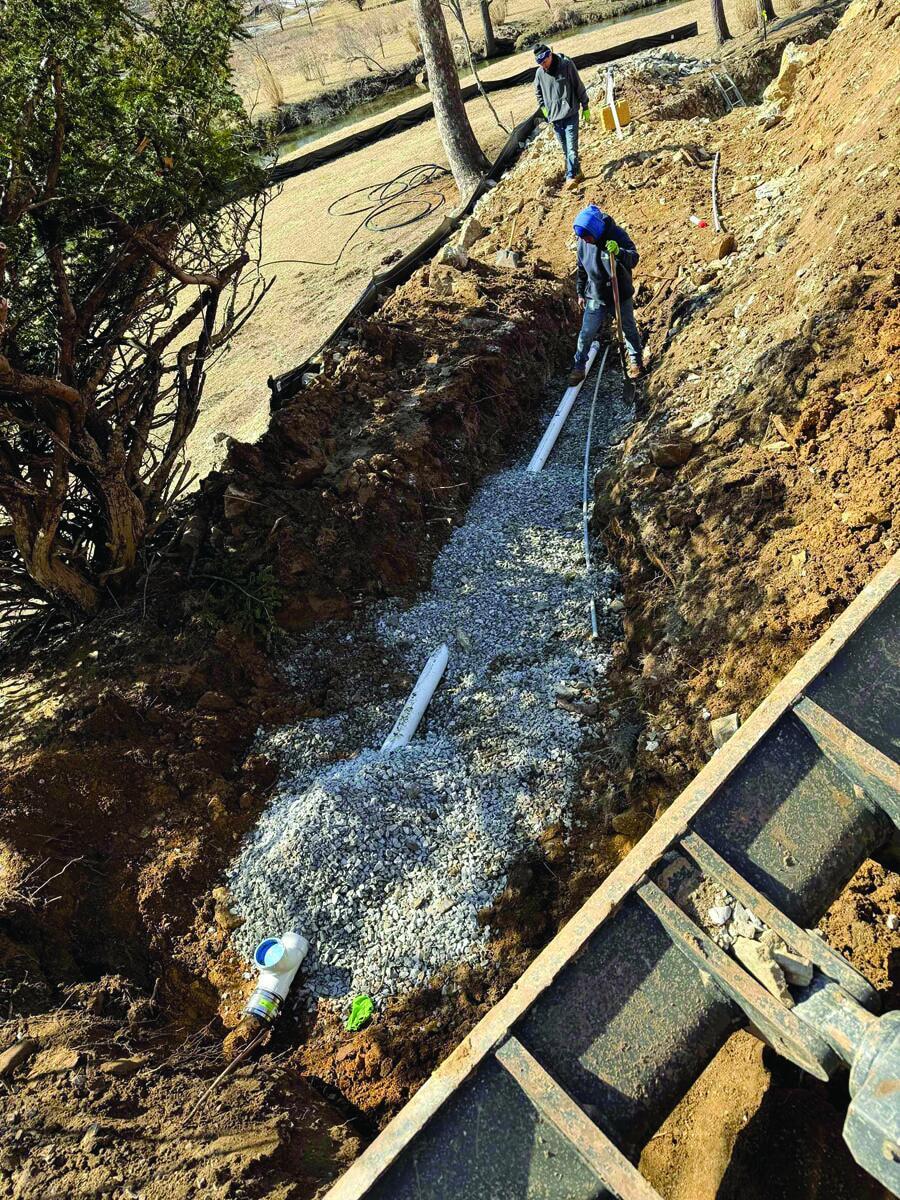
The drip irrigation was laid out in two zones with each zone containing 800 feet of tubing.
The crew worked from the drip system backward toward the home. “We went back in December of 2024 and installed the septic tank and pump tank [Roth] on the drip side of the system, which were plastic tanks.”
Once the tanks were set in place, it was time to install piping from the drip system components, under the stream and up to the household. “We started drilling under the creek in December and we’re not able to get through the rock on the first try,” DiGregorio says. “A specialized driller was brought in, in February to complete the drilling.”
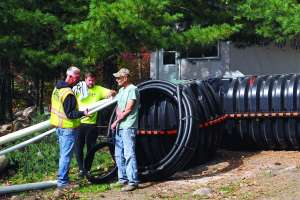
The drilling company was able to successfully bore under the stream, and DiGregorio’s team ran a 1.5-inch HPDE pipe through the hole that was converted to a 10-foot section of 4-inch PVC before the holding tank on the drip irrigation side to control flow going in.
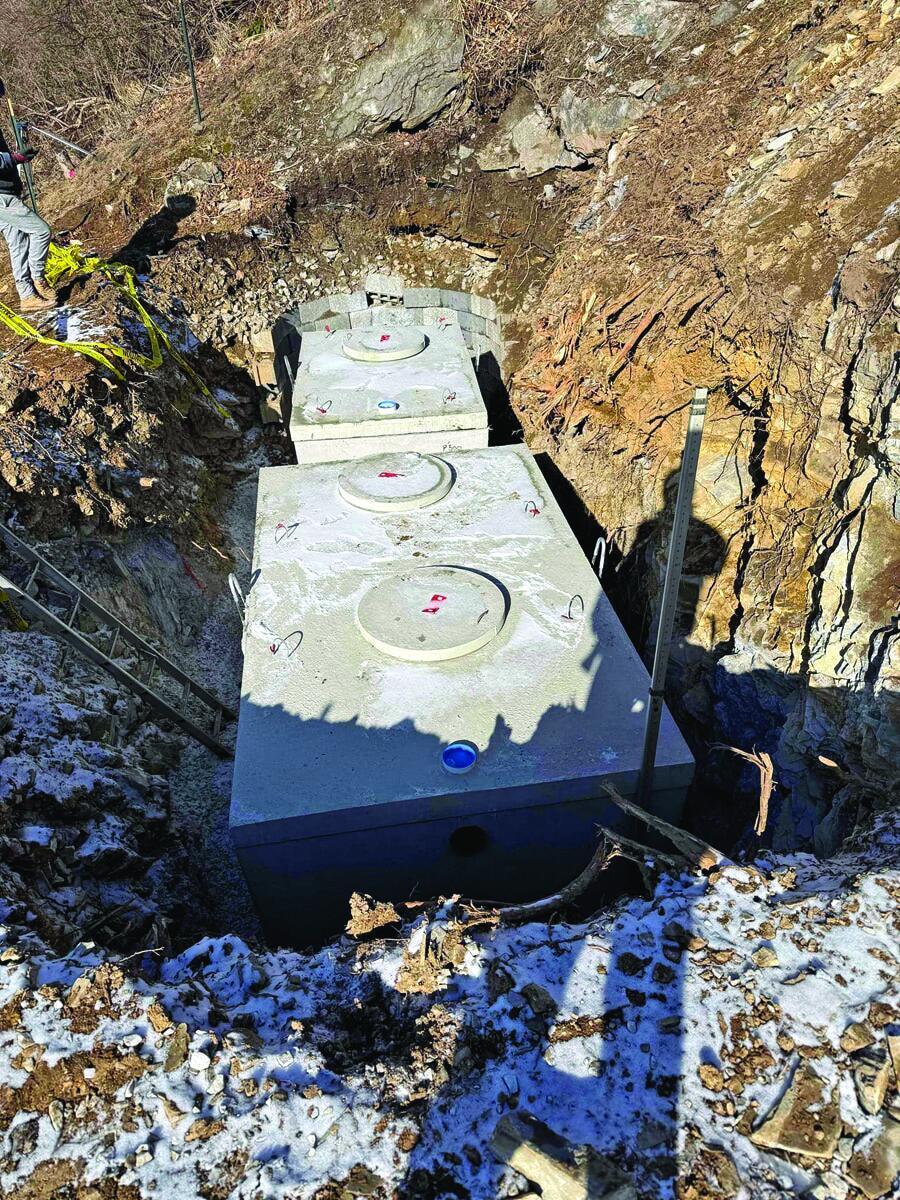
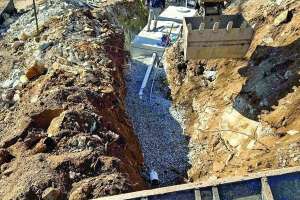
On the house side of the creek, getting the septic tank and pump tank in was no picnic either. Using their 2017 Caterpillar 304E mini-excavator, they moved as much material as the machine would allow, but the rock required something bigger. They ended up renting a full-size Yanmar excavator with a jackhammer attachment to get the holes dug properly.
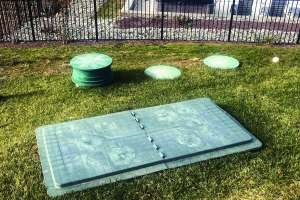
Placement of the tanks was another obstacle. There was a hill in the way making it impossible for them to set the concrete septic and pump tanks using their equipment. DiGregorio called in a crane to lift them over the hillside and set them into place.
Depending on the day and what needed to be done, the company had two to five people on site and due to the necessary pauses caused by site obstacles, rock and weather, the project took a few months to wrap up. But in March 2025, the Delaware Valley team had everything buttoned up and the system operational. “So far it’s been great,” DiGregorio says. “Every year these dispersal systems need to be cleaned and maintained, but when that’s done properly, they are great systems.”
Maintenance is something Delaware Valley takes care of as well. They believe strongly in taking care of the customer during the install and beyond.
“This is a client that we’re hopefully going to service through the whole time they’re living at the house with the system. We’ll do the best we can do. It’s never about just getting the install done and moving on.”
Equipment
A 2017 Caterpillar 304E mini-excavator was used for the majority of the digging work. However, the team required renting a Yanmar full-size excavator to get through some on the rock. The rental machine came with a jackhammer attachment on it.
When it was time to tidy up and smooth things out at the end, they put their Takeuchi TL8 compact track loader to work.
Continue reading for free