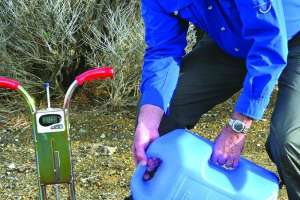

Name and title or job description: Robert Sweeney, M.S., registered environmental health specialist, president of Environmental Management Systems Inc.
Business name and location: Environmental Management Systems, Portland, Oregon (Also serve Washington and Nevada)
Services we offer: Siting, design, inspection, and operation monitoring, maintenance and reporting
Age: 76
Years in the industry: 48
Association involvement: Washington Onsite Sewage Association, president, 2003-04; Oregon Onsite Wasetwater Association, board member, 2016-20; National Onsite Wastewater Recycling Association, board member, 2023-25.
Benefits of belonging to the association: Connection with knowledgeable professionals. Resources for learning and problem-solving.
Biggest issue facing your association right now: Legacy systems. Even though we have all the knowledge, skills and abilities to treat wastewater as clean as needed for the receiving environment, we are still viewed by many as no different than cesspools.
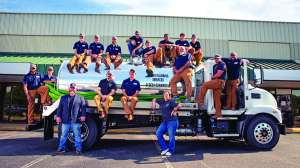
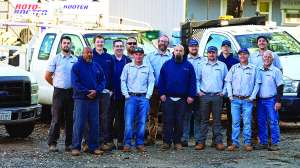
Our crew includes: Environmental health specialists; CAD technicians; operation, monitoring, maintenance and reporting specialists; erosion and sediment control leads; wetland specialists; project managers; and project coordinators.
Typical day on the job: Putting out fires and trying to grow the next generation of professionals to take over the business.
The job I’ll never forget: As a former regulator, the first large onsite sewage system I inspected used lasers to level the site and drainfield (approximately 1980). I advised the crew members, “Don’t walk through the beam.” Why not? “It’ll cut your legs off!” I said. Not sure whether they thought it was funny.
My favorite piece of equipment: Internet Mapping of Sites: The ready availability of soils, geology, wetlands, topography, zoning, water bodies, lidar to see through the tree canopy, all make our site evaluations so much more complete and provide a starting point for the project.
Most challenging site I’ve worked on: Challenges are bureaucratic and economic. Modern onsite wastewater treatment and recycling systems are as effective as the municipal systems and present a much smaller impact than seen from the massive public sewer discharges. Technologies and practices are constantly evolving and robust. Yet we don’t get the respect needed to allow effluent to be considered as “No longer sewage” and therefore, suitable for any site, given the ability to monitor and maintain quality discharges.
The craziest question or most insightful comment from a customer: Why don’t you know what the regulator wants? As a former regulator for 20 years and a private sector designer for 28 years, I could and sometimes do over-design systems. Time is money, so does it make sense to throw everything you expect the regulator to want at the project? It still may not be enough. For example, I had to design a gravel berm around the plastic treatment pods because “someone might shoot them with a rifle through the cyclone fencing.” Well, what if an alien spacecraft crashes into the system?
If I could change one industry regulation, it would be: Prescriptive codes should be loosened to allow easier use of modern technology. Currently, there is a mindset that, “If it isn’t on our list, you can’t do it.” Performance codes allow innovation, while incorporating a learning experience in the process. Justify, test and require long-term monitoring. New technologies are plentiful, if allowed to be used in a cost-effective manner.
Best piece of small business advice I’ve heard or came up with: You can make money or excuses, but you can’t do both. Small businesses are not like a government jobs program. Owners and staff actually need to provide value to your clients and bring in more money than you take out the door.
If I wasn’t working in the wastewater industry, I would like to: Science fiction writer. With the advent of the internet and artificial intelligence, or what I like to term “augmented human awareness,” there are tremendous opportunities for us to explore. I am writing a series now and am looking to crowdfund it.
Crystal ball time – This is my outlook for the wastewater industry: With the advent of online learning, we can and should avail ourselves of this tool. All too often, training sessions and conferences rely on talking head presentations from whomever is available and do not effectively incorporate the experience of the audience in the event. Additionally, we rarely see testing or any proof of having “got it.” We sit through the same boring slides of tanks and trenches and collect a certificate of education units.
Continue reading for free