
In Wisconsin, the water entering an onsite system shall not exceed monthly averages of:
- BOD (biochemical oxygen demand) – 220 mg/L
- FOG (fats, oil and grease) – 30mg/L
- TSS (total suspended solids) – 150 mg/L
Anything that exceeds these numbers is considered high-strength waste and should not go into an onsite system unless pretreated to come down to these numbers.
Where do we typically find high-strength waste?
Typically, high-strength waste will come from food preparation — school kitchens, church kitchens, commercial kitchens, food manufacturing plants, etc. And high strength is not always food-related. If a building will service vehicles, Wisconsin does not want the waste from the floor drains and catch basins to go into an onsite system, in order to protect the groundwater from oil, fuel and other contaminants that might drip onto the floor while servicing vehicles. Vehicle servicing buildings’ sanitary lines (bathrooms and sinks) can go into an onsite system, but a separate sewer line from a catch basin in the vehicle servicing area must go to a holding tank.
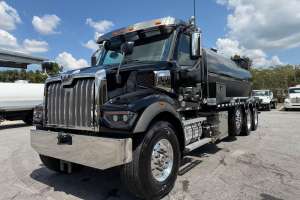
When a holding tank is used for “other than residential” strength wastewater, we need a letter from a treatment plant accepting the water from the holding tank. So for vehicle servicing, the treatment plant just wants to make sure the catch basin is designed properly to keep the grease and oil within the catch basin. For a facility with food preparation or food manufacturing, the treatment plant will want lab analysis for, at minimum, FOG, BOD, pH and TSS. Some treatment plants require significant additional testing for other parameters.
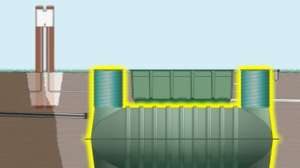
At a very minimum, food preparation or manufacturing will require a grease interceptor prior to the holding tank. Some treatment plants do not accept grease, so the grease will have to be pumped separately and taken to a different treatment plant. The FOG is really a big deal. Some treatment plants want to test for FOG every time the holding tank requires pumping, to determine if they will take the wastewater or not.
I am currently working with a small food manufacturing plant. The county did tell the owner that the food processing wastewater will require a holding tank due to the assumed high-strength waste, combined with a very small lot that would have no room to install a soil component. But as I reached out to treatment plants for an acceptance letter, it was obvious that depending on which treatment plant accepts this water, some of them would require additional pretreatment prior to the holding tank. This small food manufacturing plant might require a grease interceptor, and then at a minimum aerobic pretreatment prior to the holding tank in hopes we could bring down FOG and BOD. Treatment plants are heavily regulated and don’t want a load of extremely high BOD or FOG to disrupt the levels they need to maintain.

I mentioned Wisconsin considers 220 mg/L (monthly average) to be the acceptable BOD limit for wastewater going to an onsite system. In food processing plants, I’ve seen BOD as high as 13,000. That project required us to build an entire treatment plant (sequencing batch reactor) in their parking lot to pretreat the wastewater before it got to the lot line. The municipality installed a testing manhole at their lot line, to test levels as the water reached their lot. Fines were high if the levels weren’t normal. It takes significant treatment to lower BOD from 13,000 to 220, let alone its associated FOG and pH issues.
So the small food manufacturing plant I’m working with has to simulate their wastewater stream so we can get samples tested prior to the company getting approval to start up.
One other thing that might help slightly is the company’s preference to apply for a "comingled" holding tank of both the process water and their sanitary in the same system. Maybe we get some dilution from that. There’s a saying, dilution is the solution. But when working with food-grade BOD and FOG, there’s only so much the dilution can really do, if anything.
So, back in the day I would recommend that churches and schools and other facilities with commercial kitchens “just” put in a holding tank for that kitchen wastewater separately. Treatment plants taking that water have tightened their acceptance rules and really tied what they will accept to the strength of the FOG, BOD and other parameters. Pretreating prior to holding tanks was not as much of a requirement as it is becoming.
When pretreating wastewater coming from commercial kitchens or food plants, one of the main problems we run into is the quat-based cleaners (quaternary ammonium compounds) that these facilities use frequently. The facilities will always say that this is what they have to use. I know a person who has managed two of Wisconsin’s largest and most successful dairies in the time that I’ve known him. His response to me when I asked about pretreatment, is that all problems stem from the cleaning chemicals. Quat cleaners do a great job of disinfecting but also do a horrifying job of killing off all bacteria in pretreatment processes.
It is extremely important to work closely with the customers’ chemical provider to find alternatives to quats if pretreatment is going to work.
The misconception that almost anything can go into a holding tank just doesn’t ring true anymore. That water has to go somewhere and whoever is responsible for where it is going will have certain parameters they must meet. There are a lot of things to consider anytime you are designing and installing an onsite system. When high-strength waste is involved, it adds more variables and options you’ll need to provide your customer.
About the author
Todd Stair is owner and president of Herr Septic and Sewer, Inc., with over 35 years’ experience designing, installing, repairing, replacing and evaluating septic and mound systems in southeast Wisconsin. He is the author of The Book on Septics and Mounds and a former president of the Wisconsin Onsite Water Recycling Association.
Continue reading for free