
Problem
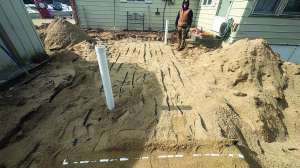
The Derby Meadows Residential Development required a wastewater treatment solution capable of supporting a full buildout of 304 homes while meeting strict regulatory and environmental standards. Traditional wastewater approaches in the region, primarily septic tank effluent pump systems combined with large sand filter beds, created significant limitations for developers. These systems required extensive land, with drip-irrigated fields spanning up to 16 acres, reducing the amount of usable property available for development. They also entailed high installation and long-term maintenance costs, making them inefficient from both financial and operational standpoints. In addition, traditional systems only achieved moderate effluent quality, limiting opportunities for more sustainable discharge methods.
Beyond treatment performance, the project also presented logistical challenges. The need to manufacture, transport, and install large precast components across state lines required careful coordination to avoid delays and inefficiencies. Maintaining quality throughout production, shipping, and installation while staying on schedule was critical to the project's success.
Solution
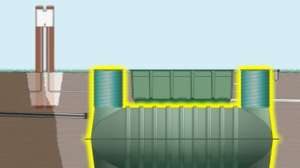
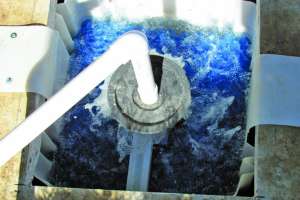
To address these challenges, Gainey’s Concrete implemented a 120,000 gpd extended aeration wastewater treatment plant utilizing an advanced activated sludge process. This centralized system eliminated the need for individual septic systems across each property, immediately reducing infrastructure redundancy and preserving valuable land within the development.
Through a strategic value-engineering process, the design significantly reduced the treatment system's overall footprint by approximately 75% while still exceeding regulatory effluent standards. This approach enabled the project team to maximize land use while delivering a higher performing, more sustainable wastewater solution.
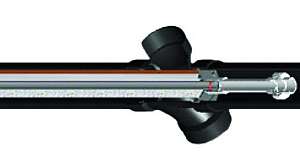
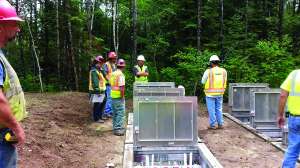
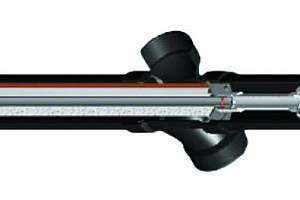
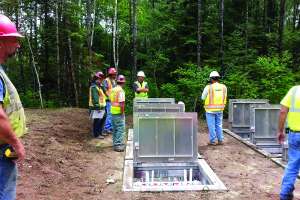
The project's execution was supported by a series of innovative quality-control and logistics strategies. Custom inspection checklists were implemented throughout production, shipping and installation to ensure consistency and reliability at every stage. Detailed, project-specific piping diagrams were developed to guide installation crews and minimize errors in the field. Additionally, an advanced scheduling system was used to coordinate the production and delivery of 80 precast tanks, which were shipped in reverse installation order. This strategic sequencing simplified on-site handling, reduced the need for larger cranes, and improved overall installation efficiency.
A structured on-site storage and staging plan ensured that materials were handled safely and efficiently upon arrival, preventing delays and keeping the project on track. The use of high-strength precast concrete components provided durability and long-term reliability, supporting a more efficient life cycle for the system.
Result
The Derby Meadows project successfully delivered a modern wastewater treatment solution that met both immediate development needs and long-term sustainability goals. By eliminating individual septic systems and reducing the system footprint, the project saved the developer millions in infrastructure and land costs while increasing the amount of usable property.
The extended aeration system produced higher-quality effluent than traditional methods, allowing for more efficient and environmentally responsible wastewater management. Installation timelines were improved through strategic scheduling and logistics planning, reducing complexity on-site and minimizing the need for additional equipment.
Long-term performance was also significantly enhanced. The durability of precast materials and the efficiency of the system design lowered life cycle costs and reduced maintenance demands, while also contributing to a smaller environmental footprint. The final system delivers performance that can outperform traditional solutions by up to 2-to-1, providing a more robust and reliable wastewater treatment approach.
Overall, Derby Meadows sets a new standard for residential wastewater infrastructure by combining innovative engineering, efficient construction practices, and sustainable design. The project demonstrates how modern treatment solutions can reduce costs, optimize land use, and improve environmental outcomes, creating a scalable model for future developments.