
I remember 30-ish years ago when using drip dispersal for onsite systems was new and all the rage. I work in Wisconsin and we planned and designed several systems. It was going to save systems on small lots, as drip allows a unique method of being very flexible (literally speaking) and could fit in areas other systems couldn’t.
I’m not certain if it is because of the climate here in Wisconsin and how shallow those systems are installed, but while doing thousands of system installations, repairs, maintenance and system evaluations for real estate transfers, I’ve never come across one installed in southeast Wisconsin. There must be some, I’ve just never come across one.
When Wisconsin updated its code-derived design component manuals a few years ago, they didn’t write a drip dispersal component manual that I’m aware of. Maybe there are proprietary component manuals approved for drip systems made by certain brands; if there are, I haven’t seen them.
I know of one installer still installing them in Wisconsin. I have a customer from many years ago who wanted a drip system; they called me back recently and want to finally move ahead with their project. I wanted to discuss drip systems with an expert, so I contacted Kyle Shern, president and owner of Bio-Gard in Columbia, Missouri. Shern has been installing subsurface drip irrigation (SDI) systems for over 30 years, installing millions of feet of tubing during that time.
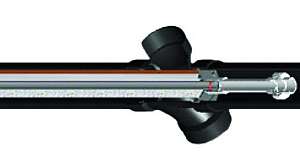
Back when we were looking into installing drip systems here in Wisconsin, it was required to aerobically pretreat. Shern says that SDI systems are considered “engineered systems” and that engineered systems do require to be aerobically pretreated in his area. It makes sense to want to treat the water as much as possible when working with pressure-compensating emitters, to prevent emitters from becoming clogged or have the diaphragm become compromised in a manner that does not allow it to properly regulate the amount of flow.
Shern has dug up tubing that has been in the ground for 30 years. He says, “Systems that do not have aerobic pretreatment, there may be around a quarter inch of anaerobic biomat in the soil surrounding the tubing in proximity to the emitters, but that is about it. On systems with aerobic pretreatment there is typically no biomat.”
Shern also uses 120 micron disc filters to further remove solid particles that could otherwise cause issues with the emitters. Netafim/Arkal is the brand of disc filters that he prefers. This seems to be a preferred brand among several people I talked to.
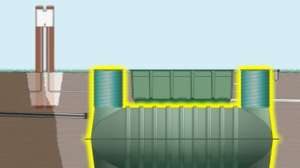
I think most installers are familiar with the benefit of SDI — the remarkable ability to be installed in locations and configurations that typical soil distribution cells just can’t do. It really frees up some sites that don’t have room for a typical system. Shern also mentioned that due to the extremely shallow depth of their systems (less than 30 inches below grade), there is another benefit of being in the aerobic zone for some of their shallower systems.
In a discussion I had with Shern on the average lifespans of onsite systems differing widely in different states, he said that he “…contend[s] there is no lifespan limit to the SDI soil absorption system because if properly designed, installed and maintained it never becomes hydraulically saturated, thus never becoming anaerobic.” He says with the use of the 120 micron disc filter, “plugging of soil pores just simply doesn’t occur.”
I’ve always liked the potential benefit of no biomat forming if an aerobic system is robust enough, and designed, installed and maintained properly; but adding the 120 micron disc filter is another step in the attempt to alleviate the forming of a biomat. The 120 micron disc filters are considered to be tertiary filtration or polishing, which means septic tank treatment and secondary treatment, aerobic or other pretreatment are required prior to the disc filter. The disc filter will require constant cleaning if there is not enough solids removal prior to the disc filter.
Other considerations when using subsurface drip dispersal systems:
- As with all system designs, make certain the proposed system location has good soil analysis performed to assure the soil is a good fit for an SDI system. Make sure there isn’t bedrock nor high groundwater right below the surface.
- As with all system designs, make sure to analyze and quantify the source of the water: What is the hydraulic flow and what has to be treated prior to the drip portion of the system.
- The design should include an air and vacuum release valve for air to exit and enter the system as needed.
- The system has to be designed so that the system flushes out to the original pretreatment.
- Many installers and designers are using time dosing which, as in all time dosing systems, reduces hydraulic and organic peaks.
There are many benefits of a subsurface drip system. I’ll have to research the methods used to protect systems from freezing in climates such as Wisconsin as I look into the use of these systems further.
About the author
Todd Stair is owner and president of Herr Septic and Sewer, Inc., with over 35 years’ experience designing, installing, repairing, replacing and evaluating septic and mound systems in southeast Wisconsin. He is the author of The Book on Septics and Mounds and a former president of the Wisconsin Onsite Water Recycling Association.
Continue reading for free