
When I started writing articles for Onsite Installer and Pumper, I began with the topic of safety. Safety should be the paramount focus for every company in our industry.
Recently, southeast Michigan had three trench cave-ins, one fatal, within a matter of days. I know one person in their twenties died and at least one article said his father was part of the crew.
There is obviously nothing good about any trench collapse. I don’t know the specifics regarding these trench collapses other than they occurred, one person died, and two others had to be extricated by emergency crews.
Our industry needs to understand and continually focus on this underlying truth: What we do is inherently dangerous, but there are ways to mitigate the danger and these methods are required.
- There are ways to protect our co-workers and employees from danger. OSHA requires that anyone excavating 4 feet deep or deeper have a person on the site (competent person) designated and trained to perform daily safety inspections and to stop any work or function that they feel is unsafe. The competent person plans how the tasks will be performed safely and what steps are required to assure hazards have been eliminated. The competent person must be able to stop any job function they deem to be unsafe; but every member of every crew must know that they too have the authority to stop any work or function they deem as dangerous.
- In trench safety, some of the hazards can be eliminated by use of protective systems such as trench boxes and shoring. Excavation that includes proper sloping of the sidewalls is another method to protect those entering trenches.
- The competent person is supposed to check for water in the trench and check the type of soil to determine the best method of protecting the workers.
Companies should have other policies in place that on the surface sound like common sense, but unfortunately are not followed in a lot of instances. Policies include:
-Prohibit workers from standing underneath tanks being swung in the air to the excavation. Discuss the dangers and make this prohibition policy. The other side of this policy should be to prohibit operators from swinging any tank or heavy object over any persons on or below the ground surface.
-Have the competent person fill out a daily checklist of their observations on the site each day. These reports should include a list of potential hazards the job entails and how to best eliminate each hazard. Keep records of each daily safety checklist from every job.
-Have a brief team huddle, whether in the shop before heading out for the day or at the site once everyone has arrived, to stress the importance of safety and to discuss specific steps that must be taken to mitigate hazards on that day’s job.
Not to be a commercial for United Rentals, but that’s who my company uses for trench safety and competent person training as well as certification for confined-space entry. The reason I feel good about mentioning United Rentals is twofold.
- United Rentals has thousands of locations, so most readers should have access to their classes.
- They rent trench boxes and tank boxes customized for each and every job you have. They have been a great partner of ours, even getting custom trench boxes and tank boxes to jobs on very short notice in emergency situations.
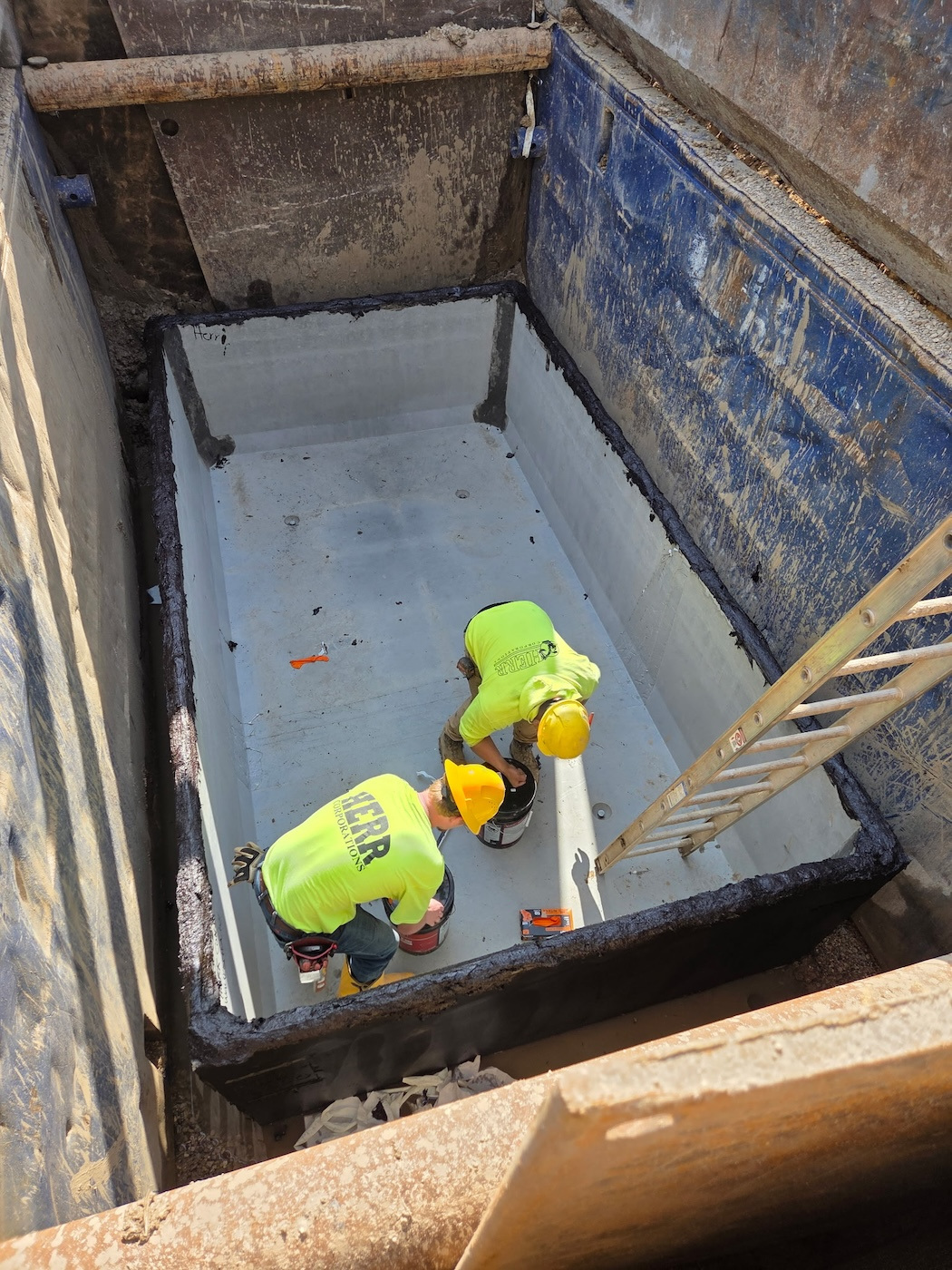
When performing the types of projects that we do, planning is key to safety and success. Gone are the days of just showing up, digging and hoping for the best. Projects must be evaluated for potential hazards and a plan must be developed to protect the crew from those hazards.
Making trench safety a priority
- Have a competent person (OSHA designation) determine the potential hazards each and every day the crew is working at a site.
- The competent person is to fill out a comprehensive safety checklist that proves hazards were evaluated and a plan was generated on how to keep the entire crew safe from each of the potential hazards.
- One example is a company policy for every project that involves installing tanks 5,000 gallons or larger; a larger excavator will be used (rented if the company does not own one large enough). Make sure this is included in the bid. A tank box will be ordered for rental also.
- Get comfortable using tank boxes; if you are just digging giant excavations and expecting people to get in them, shame on you. Tank boxes are an excellent way for a more difficult and dangerous job to go smoothly and safely. Bid the box into the job; yes, they are expensive, but if you bid it in like all your other costs the customer is paying for it as part of the job. Do not skimp on safety because it is more expensive; be smart and bid the necessary safety measures into the job.
- I saw a presentation recently by a company proud of their work and their tanks. But each and every slide showed tanks being installed in excavations 12 to 15 feet and deeper without any shoring nor any tank boxes. On the slides presented there were guys standing down in the bottom of each. I wondered why the companies were shown putting their employees and coworkers in harm’s way.
- Larger tanks equal larger excavations. Larger excavations require larger excavators and tank boxes at a minimum. We’ve all had jobs where our excavator was on its toes as the excavation was just at or beyond its limit. But that’s a learning experience. It teaches us that next time we have to dig that deep, we better have a larger machine or at least a way to excavate so that the area is shelved down in a manner to make the site safe.
I know a sewer and water company and have watched their crews in action. Every time their trucks pull up on a site, the first thing they automatically do is pull out the hydraulic shoring and get it set up. That is how comfortable everyone in our industry should be with shoring and safety measures.
I received a call from a crew lead on a job that was not going well. The sanitary sewer started deeper than we originally thought; it had to be dropped to go under another utility, and they wanted their new, very large holding tank in a hill so now everything was really, really deep. The crew lead said this could not be done with the equipment on site. With a tank on its way, we called for a larger excavator and ordered a deep tank box, and the job was saved.
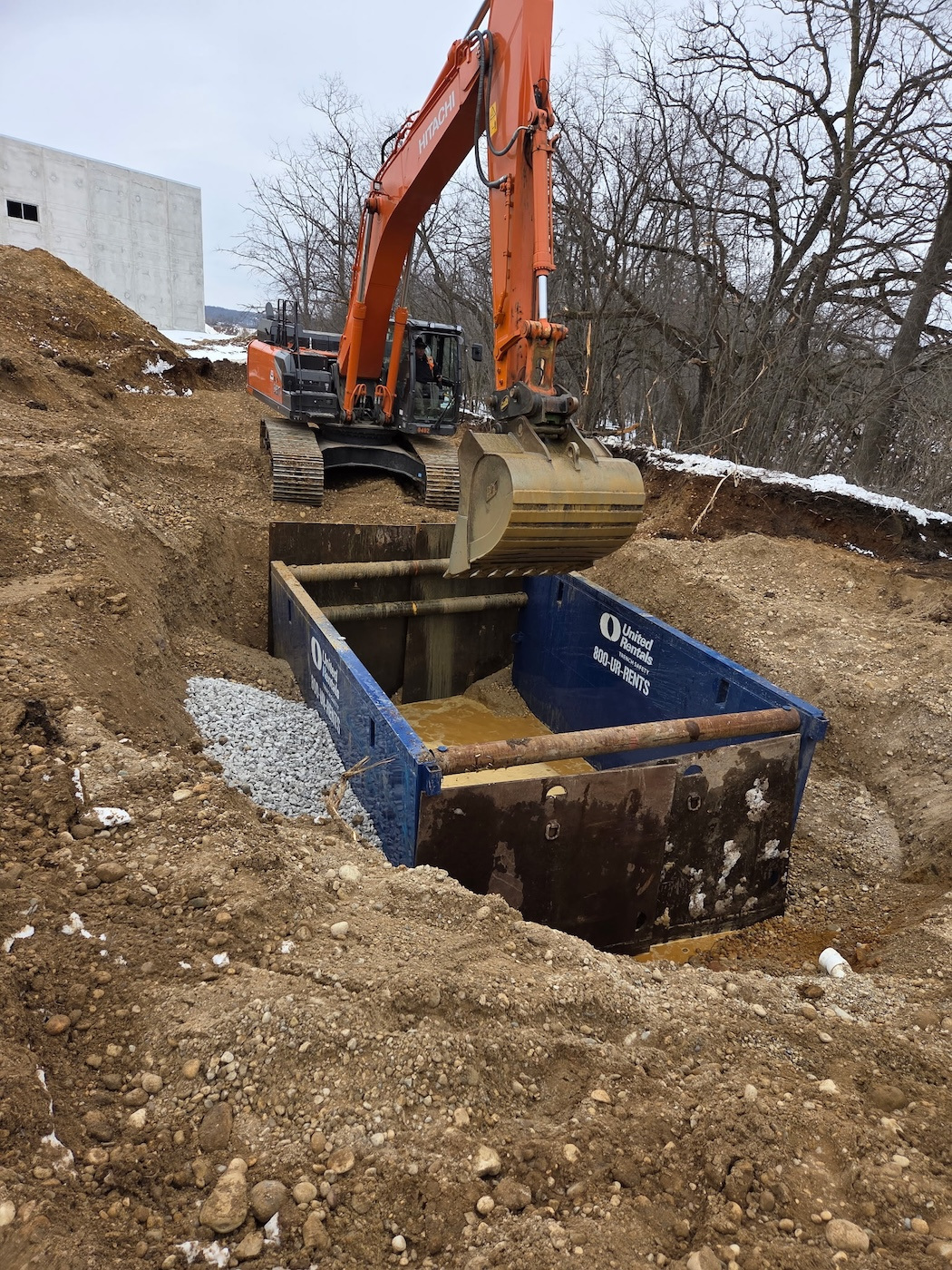
Yes, difficult jobs can be done — and can be done safely. It takes a little more effort and having the right equipment on site. Instilling a culture where safety is the No. 1 priority also helps; then everyone is on the same page and does not let anyone on the crew step into harm’s way without mitigating the hazard and making it safe to proceed.
The fact that Michigan had three trench cave-ins in one week unfortunately tells us we have a long way to go.
About the author
Todd Stair is owner and president of Herr Septic and Sewer, Inc., with over 35 years’ experience designing, installing, repairing, replacing and evaluating septic and mound systems in southeast Wisconsin. He is the author of The Book on Septics and Mounds and a former president of the Wisconsin Onsite Water Recycling Association.
Continue reading for free