The local inspector is working on a small lot system, and in the course of discussion the idea of using a single-pass sand filter is chosen as the design alternative. The system will incorporate pressure distribution into 24 inches of a clean sand media.
The effluent will move through in an unsaturated flow pattern and will be drained out of the media filter through a 12-inch layer of pea rock, drainfield rock and slotted 4-inch piping. All of this is installed in a watertight liner. Installation of this liner is the component of the system that we will explore here.
Liner applications
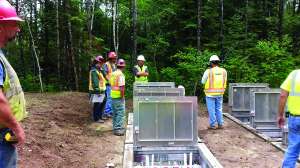
All media filters incorporate some type of liner. Many times the liner for a smaller filter is a manufactured container of plastic or concrete. Installations of these components require similar procedures to installing any other type of sewage tank. These include making sure that the tank is in the right direction, that the bottom is level, that the soil is well compacted, and that the unit is installed in a manner to prevent floating.
The first purpose of the liner is to hold the effluent inside the filter for discharge to the final soil treatment area. This allows the treated effluent to be delivered to the correct location on the site.
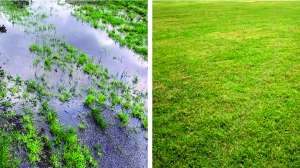
A second and just as critical requirement is to keep clean water out of the media filter. The introduction of uncontrolled clear water to the system will overload the filter, which then will not provide proper treatment. We have seen too many sites with unlined filters where water enters the system and is delivered to the treatment area, causing hydraulic overload
The actual design of the filter doesn’t change the requirements of the liner. The flow pattern in the system may affect installation steps. All recirculating filters need a drain, and this requirement has pushed a number of manufacturers to use solid boxes to make this drain easier to install. As the filter gets larger, synthetic liners are used.
Liner materials
The choice of the liner material is often made by the media filter manufacturer. Many licensed filters have gone to the container design as a quality-control feature for ease of installation and the ability to maintain water tightness.
Other public-domain filter designs (such as sand filters and constructed wetlands) are larger and tend to use liner materials such as PVC, rubber and clay. Each has different characteristics and different concerns for use.
For PVC, it is critical to use a material thick enough to handle and manipulate without damage. A thickness of 30 mil seems to be workable for most applications. Thinner material is available (20 mil is typically used for swimming pool applications), but it is easier to tear during filling with media, and on many sites the repair time for the liner minimizes the cost-saving element of the product. Thicker liner material is also available, but it is more expensive.
One important care step for the installation of PVC liners is protection from sunlight and UV radiation. These liners can break down from extended UV exposure.
EPDM materials — rubber roofing products — tend to be a little more expensive but are more UV-resistant and easier to order for the site and easier to work with. These products meet the ASTM standard D-1418.
Clay liner materials are available in commercial-grade products. The key for their application is that the soil surrounding the materials should be unsaturated. The typical clay material used in media filter liners is bentonite. This material swells in contact with water to the tune of 900 percent by volume or 700 percent by weight, forming a low-permeability clay layer.
Access to any of these products depends on availability at suppliers in your area. Check around for materials and prices.
Liner installations
There are a couple of key factors in ordering liner components. Make sure the liner is the right size. It is critical to have at least a foot of extra material for securing the liner. When using clay, a shortage of material will allow leaking of effluent into the soil.
PVC and EPDM liners need to be moved around the site. They should be stored and shipped on a pallet for handling and to protect the liner from other damage, such as punctures. These liners should not be stacked, as that can cause damage. In removing the binding of the liner, take care not to puncture it with the cutting tool.
The liner should be accordion-folded in two dimensions to make it easier to install. Some rubber liners are delivered as a roll. Many manufacturers include directions for unfolding the liner. Following these will make the installation easier and quicker. Liners typically are factory-seamed to avoid the hassles of seaming in the field.
All liners are harder to handle and move around in cold weather. Wind can also create problems, putting stress on the edging and causing tears. Care is also needed when placing filter materials, as falling rocks can cut the liner. Dropping the drainage material on a material such as plywood can reduce that risk.
Before adding filter materials, make sure the base of the liner is compacted and free of any objects that could cause a puncture. Over-excavating and backfilling with sand can create a protective layer that is easier to level. In a bedrock site, the use of sand as protection can be critical. If the system will use a container for the liner, the long-term support requirements are similar to those for synthetic liners.
Liner sidewalls also need to be protected. If the soil has few rocks, the soil itself can be used. In rockier soils or sites with large roots, a plywood box may be needed for protection. This box can be framed and sided with a variety of materials. Long life is not necessary, since after installation the potential for damage to the liner is minimal.
Boot installations
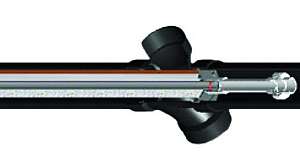
Drainpipe installation needs to include a watertight seal. If the liner is a concrete tank, this boot needs to be cast into concrete. The boot must maintain a watertight connection even in the event of shifting. A rubber product with a stainless steel band creates a great seal for a drain. In plastic or fiberglass containers, the drain seal is typically a glued fitting. Make sure the piping is properly bedded to avoid movement.
In installing the drainage system in synthetic liners (PVC or EPDM), a hole must be cut in the liner and the pipe boot installed to create a watertight connection. Here, the boot is glued (seamed) to the liner, and a stainless steel band seals the boot to the piping.
The cut in the liner should be as small as possible. Do not guess at its location. Be sure you know where the piping will enter the filter. Also check the elevations for the pipe to ensure that it will drain properly to the next component. Standing water in the drainage system will significantly reduce the filter performance.
The seaming then proceeds by adding the chemical fusing agent (CFA) to both surfaces. Make sure to bond at least 2 inches of material. The boot material should have rounded edges, and the surfaces need to be clean. Work the seam on a flat surface.
Be sure that both the liner and boot are wet with the CFA. Add pressure to both layers and hold them until the CFA has set. CFA materials have a specific curing time. Any spilled CFA must be removed from the liner, since it can create a weak spot. Check the material safety data sheets for these products for guidelines on exposure and other safety requirements.
Pump installations
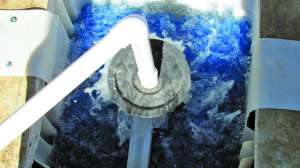
When a system uses a pump for dosing the soil treatment area, a boot at the bottom is not necessary. Often a pump is used to avoid the need for a boot. The pump needs a basin and a little deeper drainage material to allow for storage of the effluent to be dosed. Pump floats need to be installed to avoid saturation of the filter media.
For all liners, long-term watertightness means making sure trees do not intrude. Roots on the outside are not the problem, but growth inside the filter can be. Constructed wetlands in particular must be protected from tree growth in the wetland. Regular removal is important to avoiding system failure.
The use of media filters may seem like a long way off in your area, but trends in treatment make these technologies valuable for solving site issues. It is important to understand the various materials and their proper application. Appropriate installation of the liner or container is a critical contributor to long-term performance.
Continue reading for free