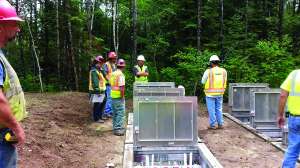
As we move ahead with discussing the various components of an onsite wastewater treatment system, I want to emphasize the importance of a systematic approach of review and evaluation.
In the past two articles we discussed the source of the wastewater and the pretreatment septic tank. Now we’ll cover the final treatment and dispersal component of a standard system: the gravity soil treatment area (drainfield).
The gravity drainfield is possibly the most critical of all final treatment and dispersal options. With only the assistance of a septic tank for primary treatment, the natural soil bacteria have to do the balance of the work in reducing nutrients and harmful pathogens and viruses.
These bacteria depend on the best of conditions to perform their job. The key factors are plenty of oxygen in the soil environment — meaning relatively shallow, unsaturated conditions — and adequate detention time in the active soil zone. For this to happen, a well-developed but not restrictive biomat at the bottom of the media is important. So, how is this all determined, monitored and maintained?
What is underground
First off, service providers must know what type of drainfield is in the ground. There are a number of options: seepage pits, rock-filled beds or trenches, recycled media, graveless systems, chambers and others. Next we should know the flow configuration: Parallel or serial? With distribution boxes, drop boxes, or overflow lines?
All this information should be available from the plan drawings of the system and will help us understand what’s happening underground.
For older systems with no documentation available, a bit of exploratory work may be required. It’s necessary to determine the configuration and current condition of the drainfield. Identification methods include electronic location, probing and augering.
Tracking with an electronic locator from the septic tank outlet, we can determine where the dispersal component begins. Probing from there will help determine the perimeter dimensions and whether it is a pit, bed or series of trenches. Probing will also reveal the cover soil depth.
Augering next to the perimeter of a bed or at the ends of trenches will enable us to determine depth of the media: We can probe the auger hole to find the bottom of the media. Documentation of the system and installation of inspection ports in the auger holes will be useful for future service.
Newer systems will typically have inspection ports and access covers for the distribution points already installed. These additions to the system will make routine O&M easy and effective.
Documenting conditions
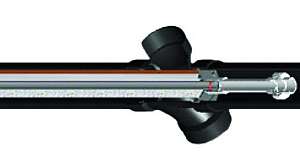
Assuming inspection ports are present, we first want to record liquid level measurements. By determining the type of inspection port (trench-end, in-field, upper gradient, lower gradient, groundwater) and comparing the total depth of the inspection port to the depth to liquid, we can determine separation to groundwater or the saturation of the permeable material (media) in a trench or bed.
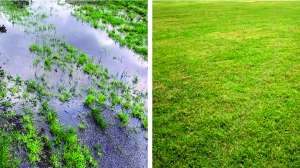
If measurements reveal excessive saturation in a bed or trench, a hydraulic load test should not be performed and further investigation is recommended. Is the problem due to high groundwater, excessive water use, or solids carryover to the drainfield? In any case, remediation measures should be considered.
If distribution boxes are accessible, they should be inspected for solids and cleaned if necessary. Access to distribution boxes also allows hydrocleaning of distribution laterals. To prevent contamination, it is important to collect solids from distribution or drop boxes into a vacuum truck or to pump them into the septic tank inlet.
Hydraulic load test
Providing all other conditions are acceptable, we should perform a hydraulic load test of the soil treatment area. This allows us to track its acceptance rate over time. Hydraulic load testing is based on design flow and requires adding a specific amount of water to the septic tank outlet over a specified time.
By monitoring the response of the tank and the inspection port liquid level during and after the test, we can determine how well the soil treatment area is performing. Many local authorities have adopted procedures for hydraulic load tests. Check with the permitting authority in your area for recommended procedures.
If a drainfield is experiencing dispersal problems due to high groundwater or solids carryover, we should first consult with a qualified professional to see if the soils and site meet current standards for separation from limiting conditions, such as bedrock, fractured rock, heavy clay or groundwater. Many older systems did not take this into consideration, and while they may be renovated, they may not provide adequate protection of groundwater if repaired with a similar system.
Restoration options
If a system has good soils but requires improvements or renovation, there are many options to consider. It may only need a curtain drain or some other method of groundwater or surface water diversion. If solids overloading is the problem, a number of biological, chemical and physical procedures may help.
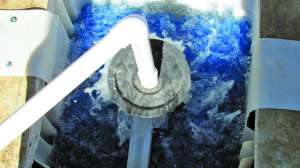
It has been found that aeration of the septic tank effluent does a good job without the need for additives. Another option might be to install a switching valve to divert the flow between dispersal components, enabling you to rest a portion of the system and allow it to recover naturally.
And then there is the issue of encroachments upon the soil treatment area or reserve area. Activities such as driving, parking, construction, or livestock grazing can cause soil compaction or erosion, damaging the soil structure and the environment. Service providers should also advise system owners on proper vegetation to avoid root intrusion into the soil treatment area, and on the need to avoid encroachment on a designated reserve or expansion area.
The bottom line is that proper design and siting, user education, and pretreatment tank maintenance will assure long system life and protect human health and the environment.
In summary, here are the questions to ask when performing O&M on a system with a gravity drainfield:
1. What kind of gravity drainfield are we dealing with? Pits? Trenches? Beds? Something else?
2. What type of permeable material or media is employed, if any? Rock? Synthetic materials? Chambers?
3. What is the flow configuration? Parallel or serial? Distribution boxes, drop boxes, overflow?
4. Is the site and are the soils adequate for the level of treatment needed?
5. Are there inspection ports installed to help determine the condition of the soil treatment area?
6. Are there accessible service points to help track condition and perform maintenance?
7. What is the level of saturation of the soil treatment area?
8. Is there adequate separation from groundwater to prevent contamination?
9. How is the hydraulic load test rating?
10. Are there any encroachments upon the soil treatment area or reserve area?
Find out more
To learn more about O&M on standard gravity systems and more, check this magazine’s calendar for the next NAWT O&M Service Provider training program, or attend the NAWT O&M Training in Louisville just before the Pumper & Cleaner Expo.
In our next article in the “O&M Matters” series, we will add a pump tank to the treatment train, creating a pump-to-gravity system.
About the author
Kit Rosefield is an adjunct instructor at Columbia Community College and a trainer for NAWT and the California Onsite Wastewater Association. His company, Onsite Wastewater Management in Mi Wuk Village, Calif., has a consumer education service at www.septicguy.com. Reach him at 209/ 770-6760 or kit@septicguy.com.
Continue reading for free