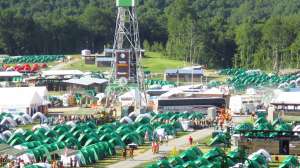

Locations of campgrounds or similar facilities are very often located in rural areas where an onsite sewage treatment system is needed to treat the wastewater. Because of the nature of these facilities, they can’t be treated like a typical residential onsite system.
They are usually seasonal, depending on the region, so there may be many months with periods of little to no flow while other times of the year when the system has extremely high peak flows. Wastewater in these areas tends to have higher strength waste due to the high use of toilet flushing at many campgrounds. The general layout of many campgrounds can be very spread out and often staged development resulting in challenges around the collection of wastewater. Having a good understanding of how the campground is used and operated is key to designing and installing a new system.
Accommodations
The type of camping accommodations will impact water usage. If there are cabins or dorms present, you will want to determine the number of beds. If their camping sites determine what type of sites they have or are planning electric sites with or with water and sewer hookups, or nonelectric sites with campers allowed or tents.
For existing campgrounds, flow data should ideally be collected through the busiest season of the year. Collection of daily flow is critical, striving for 90 consecutive days to understand the variation around weekends, holidays and events.
The occupancy of a camp or retreat usually depends on the season. These establishments tend to have higher occupancy on weekends and during holidays. If it is a camp for children, record how many campers and staff reside at the facility during each session and how long each session lasts. It should be determined which months of the year the camp is and if it is used in both the high and low season. During these time periods determining average versus high occupancy is helpful with measured or estimated numbers of campers and staff.

Amenities
Bathrooms - Access to bathrooms and shower houses will impact the usage at the campground. Toilets will increase the organic and nitrogen load to the system while showers add graywater, which will increase the hydraulic load, but can decrease the concentration of the influent. At campgrounds, it is likely that users unfamiliar with onsite sewage treatment systems will be using the system. There is certainly an elevated risk for nonbiodegradable items being added to the system.
Food Preparation - Meal preparation is another item to discuss with the campground owner. Some campgrounds will have a commercial kitchen for meal preparation that typically generates high-strength wastewater. The food service wastewater from these facilities will include all the sewage wastes from commercial food preparation, food processing or food production sources. Depending on the type of kitchen, you may consider adding an external grease interceptor, a clean-out outside the structure in the lines, and placing the tank close to the establishment (i.e., a short building sewer) to keep the sewage from cooling and grease solidifying in the building sewer.
If campers are able to cook food on their own, there is commonly a dishwashing station available. If there is no way to regulate what they pour down the drain, it could lead to upsets in the onsite wastewater treatment system.
If the campground is located on a lake, river or stream, and fishing is an activity of those staying at the campground, it will need to be determined how and where the fish are cleaned and where the related solid and liquid waste will go.
Laundry - The presence of laundry machines adds substantial amounts of graywater and large surges of flow to the onsite wastewater treatment system and is something to consider when designing a system. Campers may tend to do several loads of laundry at a single time. This laundry may be particularly high in suspended solids due to dirt on the clothing as well as significant amounts of lint that is released during the laundering of clothing. Staff staying on site will use these machines as well. The treatment of wastewater from laundromats is often difficult due to high use of soap, chemicals and water.
RV Dump Station - Campgrounds may also have an RV dump station as part of the services they provide. A typical holding tank holds 40 gallons, and dumping of this waste is often highest during weekends. RV waste is very concentrated and has a high organic loading. It may also be toxic to some wastewater treatment systems if odor eliminators are added to the waste stream including:
- Formaldehyde: the organic strength is so high that the resulting mixture in a holding tank is 15 to 20 times stronger
- Quats are not biodegradable and deodorize by killing the odor-causing microorganisms
- Enzyme-based products that employ natural organic chemicals are the safest option
Convenience Store – Many campgrounds will stock items people may need during their stay including everything from s’mores ingredients to RV sanitizers. If any sort of food preparation or food waste is generated in the store, the waste sources should be evaluated. Items to take note of include soda machines, ice cream dispensers, coffee stations and other similar uses as they can create a concentrated and challenging waste stream.
Other - There are even campgrounds with pools, restaurants, event centers and/or event venue uses which should also be evaluated. With all existing campgrounds, several samples should be collected, and the waste characteristics be determined for the solids loading (BOD/TSS and FOG if there is a commercial kitchen) as well as nutrients such as nitrogen and phosphorus if the system will be required to treat those.
Campgrounds tend to have high peak flows and a challenging waste stream. The design should consider extra tank capacity, commercial-size effluent filters and the use of flow equalization. Pretreatment may also be needed to get the levels of the effluent down to domestic levels and to deal with the sensitive environment many campgrounds are located in.
Continue reading for free