
Acreage Development Solutions in Alberta has evolved toward larger and more complex treatment systems in its 16 years in the onsite industry.
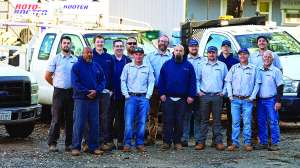
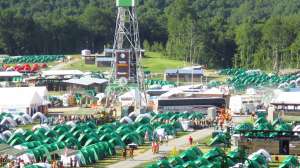
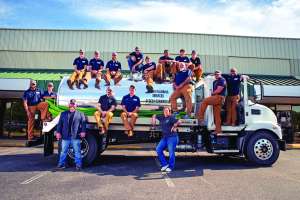
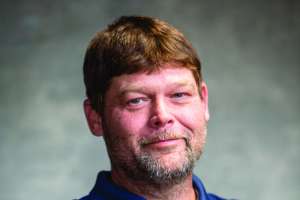
Owner Clayton Foster installs systems for commercial customers that have included provincial parks, schools, veterinary clinics, a truck stop, a bus terminal, and others.
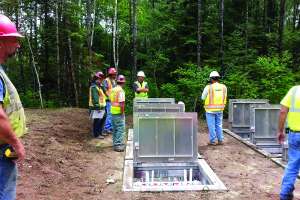
For the company’s largest projects, Foster relies on AdvanTex AX100 aerobic treatment units from Orenco. “Years ago we made an alliance with Orenco, and we have stuck with them,” says Foster, whose business is based in Millarville, near Calgary. “Every four or five years, I take some of our team members to their headquarters in Sutherlin, Oregon, for training and updating. We’ve created a good relationship with them.”
AdvanTex units are designed as compact and effective recirculating packed-bed filters. Foster has found the technology to be reliable, low maintenance, and energy efficient. The units use a lightweight textile fabric as the filter media instead of sand, peat or foam. The systems are quiet and emit minimal odors, and their low profile helps them blend into the landscape.
AX100 units operate on the same principles as the company’s smaller AdvanTex residential treatment systems. They treat influent to better-than-secondary standards, including nitrogen reduction where required. Their durable, watertight basins are filled with the highly absorbent, engineered textile media that treats a large volume in a compact space.
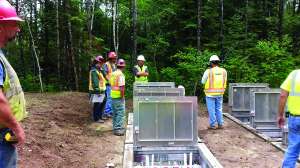
The manufacturer says the units are suitable for applications that include residential subdivisions, RV and manufactured home parks, hotels, resorts, churches, businesses, freeway rest areas and others. A single AX100 pod can treat flows of up to 5,000 gpd, and systems can be installed in multi-pod arrangement to handle larger flows.
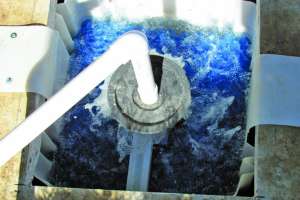
The treatment media is microdosed at regular intervals by high-quality, low horsepower pumps. Spin nozzles distribute the effluent efficiently to optimize treatment. The fabric media provides a large surface area for biological treatment with abundant void space and high water-holding capacity.
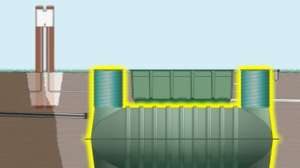
In operation, wastewater flows to the tank where natural biological and physical processes provide primary treatment. In the primary chamber the wastewater separates into a scum layer, a sludge layer, and a relatively clear layer of liquid between.
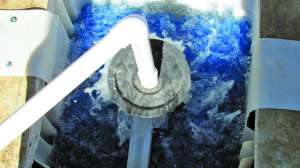
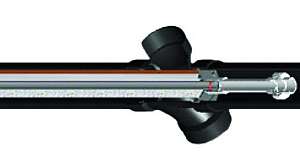
A pump in the secondary treatment chamber draws this liquid through a Biotube filter and sends it to the AX100 pod. There the wastewater is sprayed over hanging sheets of the porous textile media. As the water trickles over and through the sheets, microorganisms in the aerobic environment break down the organic matter.
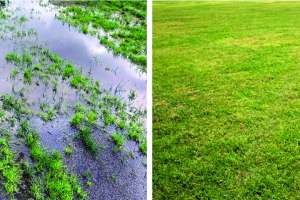
Effluent recirculates between the tank and the treatment pod. After recirculating several times, the effluent is discharged directly from the processing tank or after first being collected in a pump basin. Effluent can be discharged to a drainfield, an underground drip irrigation system, a constructed wetland, an effluent sewer system, or a reuse system. The treatment system can include equipment for UV disinfection.
When properly sited, installed and operated, AdvanTex systems can treat wastewater to 10 mg/L BOD and 10 mg/L TSS.
The multi-pass treatment technology has undergone third-party testing and evaluation to ANSI Standards. About 37,500 AdvanTex residential and commercial treatment systems have been installed worldwide, and some 3,400 AX100 units are in operation.
Read more about Acreage Development Solutions in a profile in the September issue of Onsite Installer.
Continue reading for free