
There is no doubt that Little Rooster Septic Service of Gonzales, Louisiana, has a catchy name, and its origin comes from the company’s owner, Joshua DeVillier.
“I ran a septic division for a sewer and wastewater firm called Rooster Lips Company Inc.,” he says. “I worked for them for so long that they started calling me Little Rooster. So when they let me buy the division a few years back, I named it Little Rooster Septic Service to be synonymous with the parent company.”
Going out on his own was a change, but something he knew he had to do. “I started Little Rooster because I really saw a need for competent, professional septic tank installations and maintenance in Louisiana,” DeVillier says. “We see a lot of systems where people have done septic systems wrong or been severely neglected, and we do our best to fix them.”
A growing enterprise
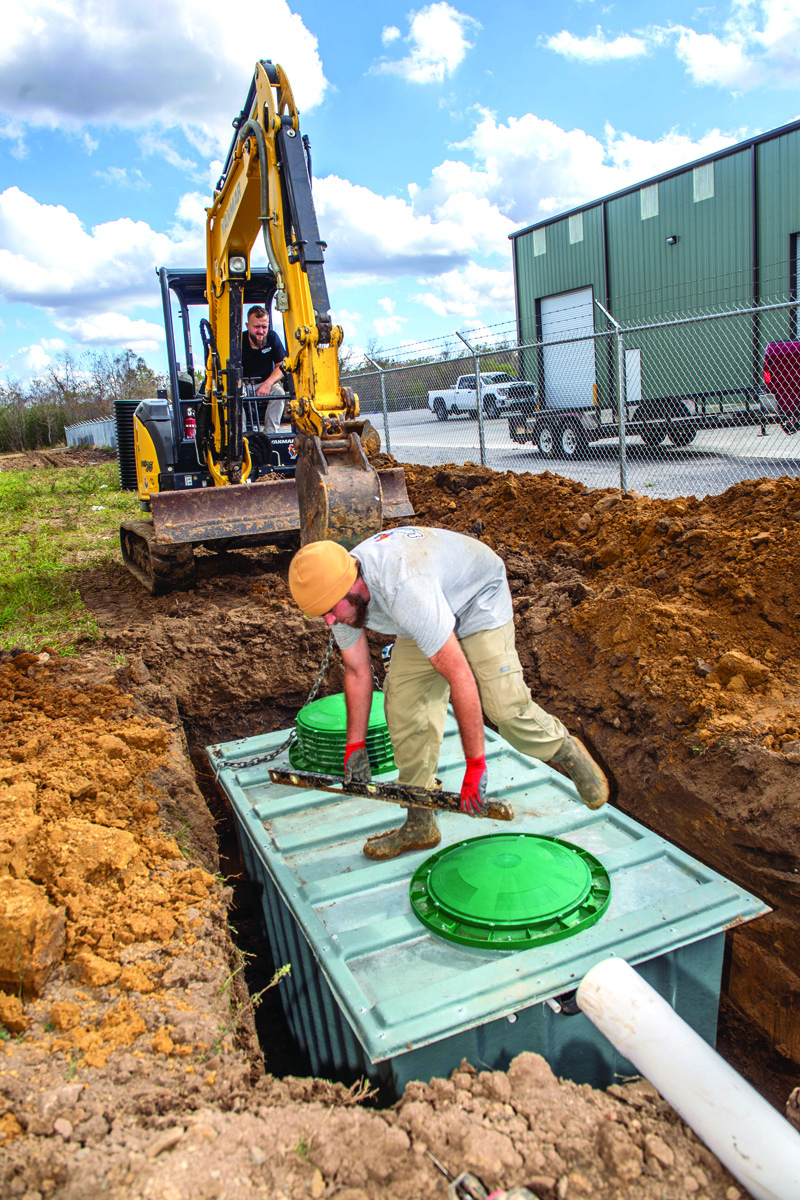
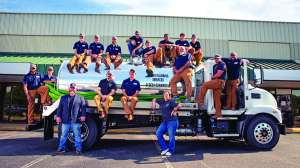
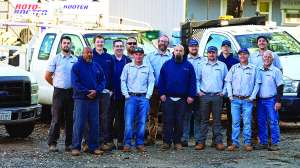
Since striking out on his own in 2023, DeVillier has grown Little Rooster from a one-man operation to a company with a full-time secretary, Chasity Poston, and two technicians, Tanner Tull and Chase Hamilton. DeVillier also uses part-time help as needed, and acts as a driver, tech and installer. His company handles on average 20-30 service calls a week, approximately 32 commercial maintenance contracts a month throughout Louisiana, while also performing about eight to 10 excavation/installation jobs in the same time and region.
In the past three years, equipment inventory has grown too. Little Rooster has gone from one to three vacuum trucks with the primary vac truck being a 2016 Freightliner Cascadia with a 3,000-gallon Keith Huber tank and a Challenger NVE 607 pump. Another is a 1998 Peterbilt with a homemade 1,350-gallon tank that came from Rooster Lips and a Battioni Mech 8000 pump. “They are the pride of my little fleet and on the road every day,” says DeVillier. “I also have a 2006 Freightliner with a 2,500-gallon tank, which serves as a backup unit.”
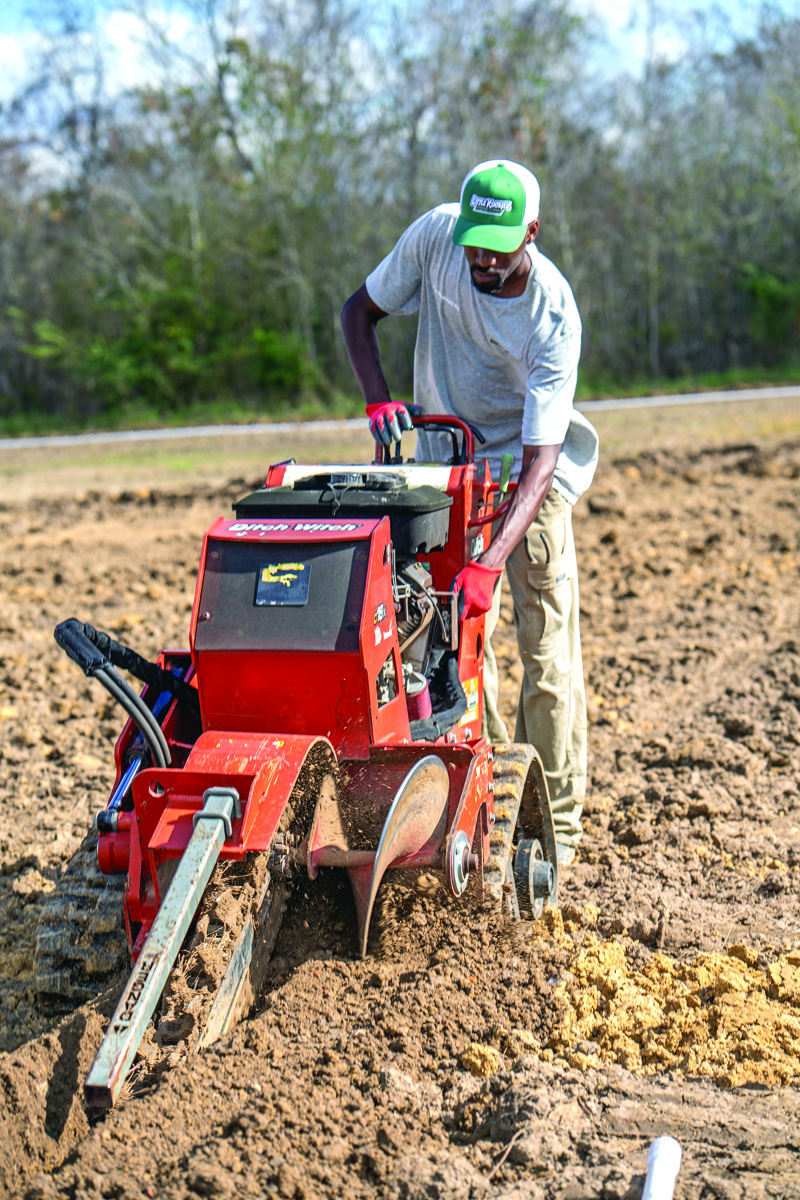
Little Rooster’s other equipment includes a 2016 GMC 3500 dually pickup used for service calls, and a 2007 GMC dually panel truck used for service and installation support. The company’s suite of heavy machinery and tools include a Yanmar 35 ViO35 excavator used for tank excavations and installations, a Ditch Witch C16X trencher used for trenching lines, RIDGID Scout locators with flushable transmitters, and various jetters and camera systems for line cleaning and inspection.
The “Wild West” of Louisiana septic
According to DeVillier, the septic tank situation in Louisiana is like nothing else in the United States. Conventional systems are not allowed in most areas due to soil conditions and lot sizes.

“Just about anywhere else you go, in any other state that I’ve traveled in, you never see a sewage ditch,” he explains. “In Louisiana, especially here in south Louisiana, everywhere you go you can be sure that you will see sewage ditches around. Meanwhile, for a three-bedroom, two-bathroom that does have a two-compartment aerobic tank, which is the most common unit here in Louisiana, you’re only going to have about 50 to 65 feet of drainfield with an overflow. That overflow will go to a drainage ditch. A lot of times, you’ll go to neighborhoods and the entire ditch will be black as oil. The state code says that a traditional anaerobic septic tank is not supposed to be drained into a ditch, but you’re not going to find one septic tank that isn’t going to a ditch either.”
These conditions stem from several factors. First, much of the state is heavy silt or clay. This kind of terrain holds water tightly, preventing it from draining easily. Second, Louisiana has a high water table due to its low elevation. As a result, using a septic drainfield runs the risk of contaminating local groundwater because the wastewater doesn’t drain the way it would in other states. Third, the heavy rains and hurricanes that hit Louisiana often result in flooding, making drainfields useless for days or even weeks at a time.
Little Rooster’s solution
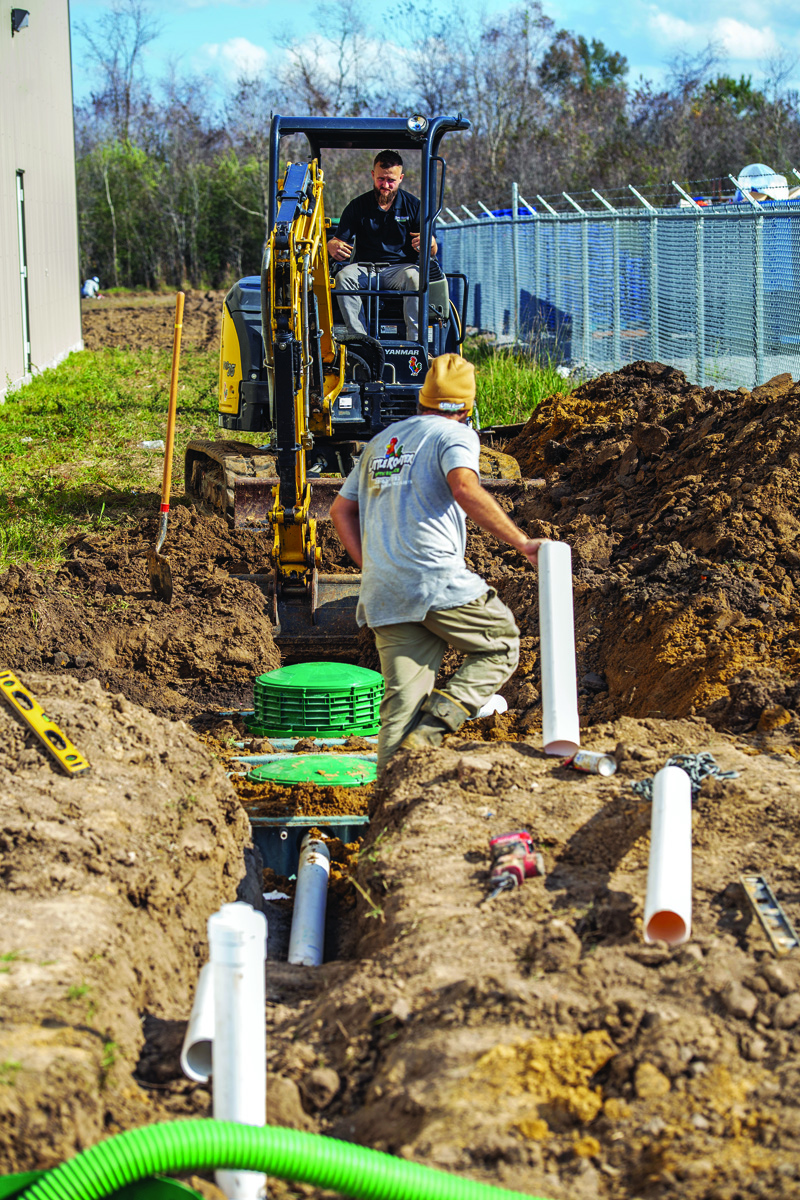
DeVillier wants to make a real difference in improving Louisiana’s septic systems. This is why he sticks to what the state allows and installs a lot of ATUs instead of conventional anaerobic systems.
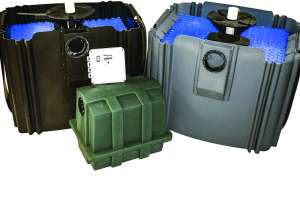
DeVillier is now a licensed and endorsed installer and maintenance provider for five brands of aerobic systems and a distributor of AquaKlear treatment plants and products. “We do a lot of commercial spray irrigation systems. I like to add pretreatment tanks or trash tanks to them, which allows you to produce a better effluent,” he says. “Pretreatment tanks are not required here, but I advocate for them because they catch all the solid waste before entering the ATU.
“It’s part of how I build better systems, since it isn’t required most installers don’t push for them because it costs more. I like to build systems for their intended purpose, and I am willing to sacrifice some cost for quality. Everyone doesn’t always agree.”
Little Rooster will look at each situation and install what they believe is best for the client instead of a one-system-suits-all approach. “We use products like effluent filters, surface skimmers, even chlorinators and different styles of spray heads; whatever we feel best fits the application,” DeVillier says. “We don’t treat every system like a cookie-cut operation, which is mostly what you see in our market. We also push for high level alarms, control panels and blower housings. None of these things are usually required by code, but are often needed for the best quality system.”
A race to the bottom
In his bid to sell quality septic systems in Louisiana, DeVillier is up against a very tough market. This is because price, rather than quality, is often the determining factor in his customers’ purchasing decisions.
“With the economy in Louisiana the way it is — it is all over the place and most of the time it’s in the trash — it is a race to the bottom when it comes to sales,” he says. “I saw an ad this morning for a septic tank where the advertiser said, ‘Bring us the lowest price that you can find and we’ll price-match it. If you find a price lower than us, we’ll match it.’ And that’s not where I’m at. I’m focused on putting in a better system, something that’s going to last.”
This is why Little Rooster’s staff spend a lot of time educating potential clients, so they will hopefully choose a septic system that is best for their needs, rather than just the cheapest to buy and install. “When people ask why we cost more, I show them our brochure, plus photos of the tank and the actual stuff that we put in, like the filters, or alarms along with the surface skimmer and the different brands of motors that we have,” DeVillier says. “In doing so, I am trying to show them why our company can provide them with better products that will last longer and be much cleaner to live with. That’s what we can offer.”
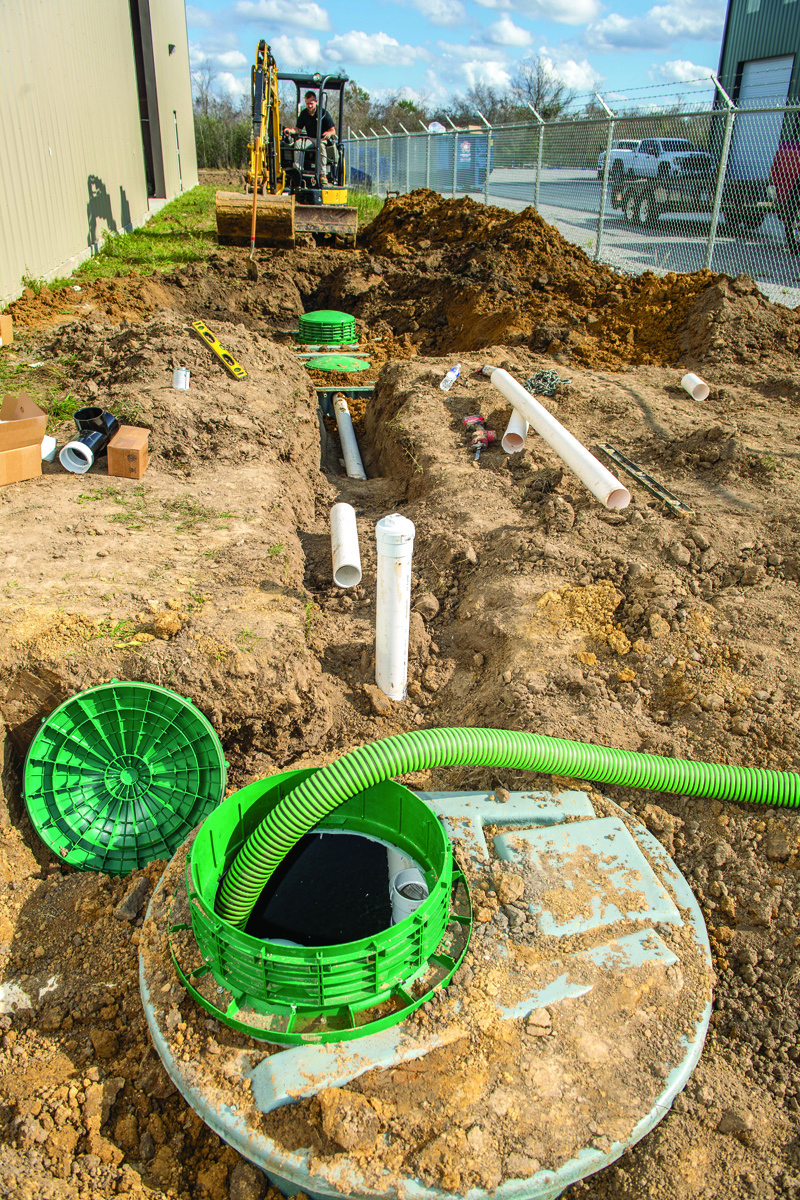
Given that Little Rooster’s price for an ATU-based septic system runs about $1,000 more than his competitors, selling what he does can be challenging. “I just try to be personable, but not everybody gets it,” DeVillier says. “When things have been one way for so long, a lot of people just don’t understand. You just have to take everything with a grain of salt and just do the best you can. That being said, I’ve done well enough to grow Little Rooster exponentially since I took it over. So clearly we are doing something right.”
As for the future, DeVillier intends to keep growing Little Rooster, doing what he can to reduce the number of black drainage ditches in Louisiana. “If I had to offer any business advice based on my own experience, I would say stay true to yourself,” he says. “Don’t be afraid to be different and don’t be afraid to work hard. I know sometimes it sucks, but the best thing that you can do is to invest in yourself and don’t let other people discourage you. Keep your faith, be confident in yourself and your ability, and don’t be afraid to be different.”
Continue reading for free