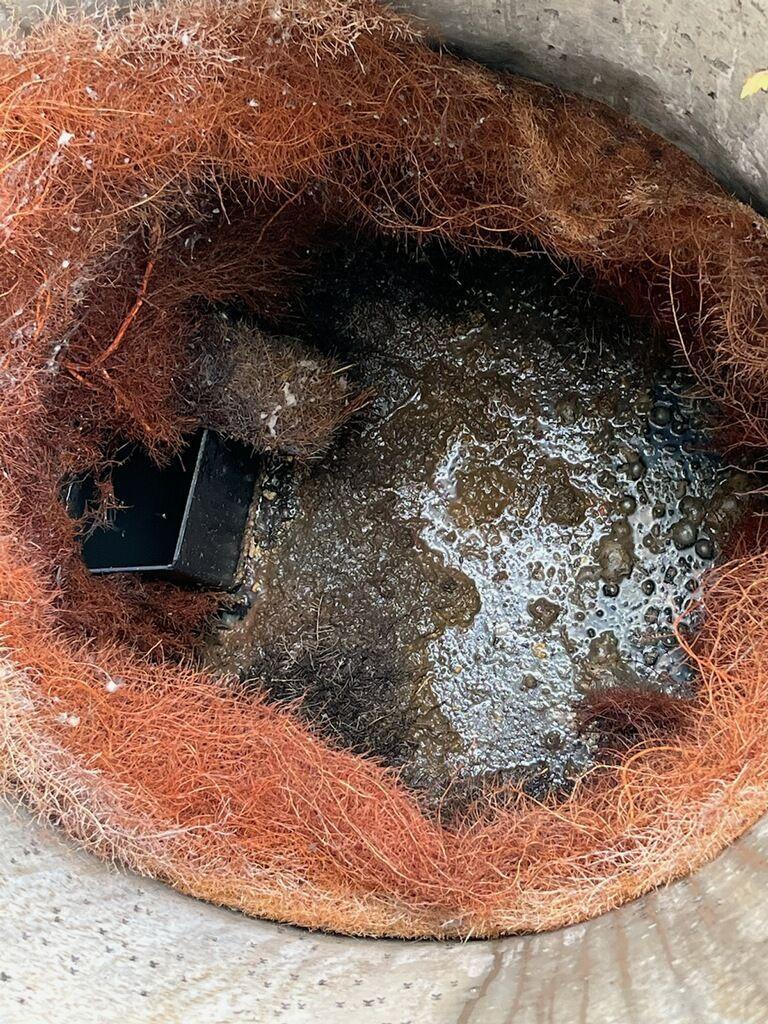
There are many issues we find with risers that need repair, replacement or modifications.
On a constant basis, we see access covers buried too deep, risers cracked and broken, access cover not locked, access cover cracked, risers with exposed aggregate, risers with concrete corrosion, covers flush at grade, plastic risers that were backfilled in a way that rendered them no longer round so the lids do not fit securely, plastic covers that do fit securely but screws are stripped out, root and water intrusion, just to name a few.
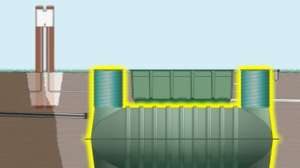
Risers are an incredibly important component of onsite systems and they come in so many variations now. Concrete risers, plastic risers, plastic risers with rings that allow connection to concrete risers. One of my concerns about risers is that, at least in our area, every manufacturer has their own sizing and their own "lip" or groove/channel that only fits their risers and covers and nobody else's. And then to make matters absolutely worse some manufacturers change their design from time to time, and now their new risers don’t fit on their old ones. If the industry (at least in our area) would make a universal riser design it sure would make life a lot easier for the onsite system owners who always need to add or replace their risers. Cobbling the wrong risers together is not a good answer.
Risers get cracked, landscaping changes the grade and buries covers, and we do find concrete corrosion destroying some risers. So people are always in need of extra or replacement risers.
In my state (Wisconsin) septic tank access covers have to be within 6 inches of the surface if buried, and at least 4 inches above grade if exposed. If there is a filter or pump beneath the cover, the cover has to be exposed. And of course, all exposed covers need a chain and lock. How many times have you arrived at a customer's house, asked where the septic tank access cover is and they say what access cover? How many times have you removed a septic tank cover, only to find that it's one compartment of a multiple compartment tank and the other compartment is buried beneath landscaping?
One of the many services our company offers is servicing and maintaining onsite systems. Every time we notify a customer that a chain and lock are required on their exposed cover(s) the response is always, "We've never had one before." (Even when you can see the decayed remnants of the old chain.)
There is such a ridiculous stigma about seeing a person’s risers; everybody wants to hide them and that makes so many of them flush at grade. Flush at grade is horrible because it puts the system at risk for stormwater to hydraulically overload the system and cause failure. Don’t think tank access covers flush at grade will hydraulically overload a system? I was called to evaluate a mound system that had failed and flooded a finished basement of a brand-new house that had not even been occupied yet. So I arrive at the site of a new-construction house. The backyard is shaped like a bowl with the back and side lot lines about 8 feet higher in elevation than the backyard of the house. The septic tank and pump tank are in the middle of the backyard at the bottom of this topographic ‘bowl.’ There was a series of catastrophic rainstorms (some might remember they were bad enough to cause Lake Delton to wash into a nearby river causing an entire busy lake to vanish).
Three things were obvious: 1.) The stormwater had nowhere else to go — nobody associated with this construction project took the grading (or lack of?) into account. 2.) All the stormwater found the path of least resistance was into the septic and pump tank. The onsite system never stood a chance. 3.) And because the sanitary was underfloor, it flooded out a finished basement up to a level of about 4 feet.
The mound did indeed have one side completely blown out. So when you hear of hydraulic overload, this isn’t something that has to occur over a long period of time. This extreme example happened over a matter of days. The pump probably never stopped pumping out into the mound, which didn’t even have grass growing yet so there was nothing to hold its shape while being pumped nonstop with stormwater.
So what does this have to do with risers? Flush-at-grade tank access covers will hydraulically overload a system. In the extreme case I gave, even if the risers were sticking 8 feet out of the ground, would they have been watertight enough to withstand the lake that formed in this backyard? The grading should have allowed for the stormwater, and the onsite system should not have been installed where it was.
Replacement of risers that are compromised is always the best answer. But there are many instances where depth of the tank combined with landscaping or other site limitations require more innovative solutions.
Riser retrofits can take various forms:
- There are companies that sell both spray-on and trowel-applied access riser “chimney” liner.
- There are several coating manufacturers for sealing the inside of risers.
- You want to make certain that the concrete condition is worth trying to save. Also, make certain the concrete is properly prepped to receive the coating. I know of a coating improperly applied that just eventually fell off.
- There are rubber insert-type liners that are installed inside of risers. There are similar rubber liners for installation on the exterior of risers as well. These are commonly used with municipal sewer structures and associated risers. On municipal projects, the rubber liners are typically specced right up front with new installations for long-term protection. Some are attached with a metal band and some are heat or chemically adhered.
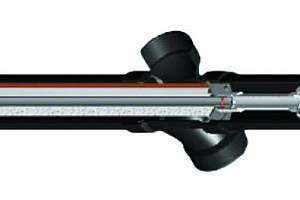
- Some of the same technologies that are used in trenchless pipe lining are being used to line risers as well.
- There are times where to protect from water (and sometimes roots) installers will make sure the riser joints not only have butyl sealant between each riser, but will coat the outside of each joint with a waterproof sealant, as well as a wide rubber tape that tank manufacturers are providing. The joints at the riser/tank interface are another prime spot to make sure it is double coated. Once root or water intrusion begins, you will wish you took extra precautions on the outside of the joints prior to backfilling.
A little effort in properly locating tanks and sealing risers and joints can go a long way to protecting the longevity of a system.
Continue reading for free