
Onsite systems — when designed, installed and maintained properly — are fairly robust systems that in most cases rarely freeze. My experience has always shown that if a system freezes, there’s an underlying reason that in most cases can be addressed.
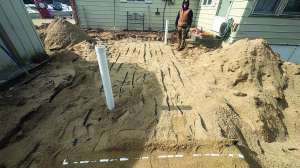
Frozen mound: Years ago I was called because an alarm was going off. The mound was fairly new, so the alarm was perplexing. It was the middle of winter. Upon arriving at the site, it was obvious the snow on the mound was compacted down on the mound. The household occupants were using the mound as a snowmobile jump, compacting the snow down with their snowmobiles. Compacted snow does not insulate, but uncompacted snow is a great insulator. Let the snow accumulate on any onsite system in winter.
Frozen force main: Typically, force mains are either buried deep or installed to drain empty after each dose. I was called out to a new-construction home where the resident claimed the force main kept freezing up. Upon inspection, two things had happened after the mound installer was completely finished and off the site: A landscaper had cut a swale across the top of the force main, thus decreasing the amount of soil over the top of it. While cutting close to the force main, the landscaper actually caused the force main to settle at that location. So it was a double issue: Some water could settle in the low spot of the pipe and it did not have enough soil to insulate the pipe properly, which allowed freezing there. Repair of the settled area was addressed by properly bedding the pipe in washed stone to prevent any future settling, then adding additional soil for insulation back over the pipe. However, be aware when adding soil to a swale not to incorrectly direct the stormwater toward the house or some other unplanned area. Make sure the swale is graded to still move water to a safe location.
The foot of soil that was added over the force main has incredible insulating value. I learned firsthand one year just how much insulating value soil has. We installed a pond for a golf course in the middle of winter. There were large stockpiles of topsoil left to finish the project later in summer. In August when we came back to do final grading around the pond, upon digging into the topsoil piles we dug out large chunks of ice that had stayed frozen all summer within the topsoil piles! If I did not see that with my own eyes I don’t think I would have believed it. Soil has incredible insulating properties.
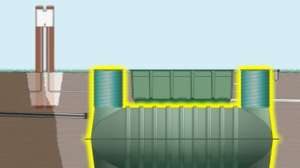
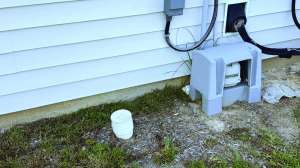
Recently there was a person who had an exterior grinder pump in a two-compartment basin; the pump is deep in the lower compartment and the upper compartment is for depth as well as the pipes and vents run up through. This person leaves their house for the winter and the only water in the entire house is the condensate from the furnace, which goes into a floor drain and then into the exterior grinder pump basin. Two winters in a row, the slow trickle froze the pipe solid while they were gone. A contractor filled a large contractor-grade garbage bag with packing peanuts (the small foam pieces) and placed it into the top compartment (which does not come in contact with the water), then covered the top with hay bales. That winter the basin never froze. They removed the bag of packing peanuts during the warmer part of the year and then reinserted it before they headed south the following year. Prior to trying the packing peanuts they were so concerned about the freezing they hung a heat lamp inside the basin.

I’ve found a pattern of system freeze issues occurring while the house is vacant and there is just a small trickle of condensate going slowly into the sewer line. Just removing the source isn’t as easy as it sounds when our state code requires the condensate to go into the system or municipal sewer.
Another tip I’ve heard people say is to leave a faucet drip or run slowly if you’ll be away. I really do not like having water running in any house while nobody is there; that is a disaster waiting to happen. Should the freeze occur, now there’s just additional water to cause a larger flood.
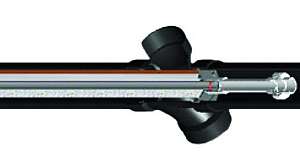
A reader wrote in and asked about a 3-inch pipe they have buried 30 inches deep from a guest house. The pipe runs beneath their gravel drive and always freezes in extremely cold weather. Thirty inches deep is shallow, especially beneath a driveway where the snow will be removed (or compacted) in winter. They asked about insulating the pipe; I think I’d recommend insulated pipe vs. just insulation board. Insulated pipe has insulation sprayed on all the way around the pipe and gives a better chance compared to insulation board just over the top or properly insulated on three sides. For insulating pipe nothing beats pre-insulated pipe. The reader also mentioned in-pipe heat lines. There are some of those with approvals in some jurisdictions; it would be interesting to see how they would work in this case. The other concern is blockages. If you have a foreign object such as a heat line inside of a sanitary sewer pipe, what prevents it from causing blockages? I hesitate at putting any physical object inside a sanitary sewer pipe to help with one problem when it might cause another. Could the reader add a pump? Slip a smaller force main through the 3-inch and dose the water? The larger pipe and air envelope might aid in insulating the smaller pipe.
I find it quite rare (other than when using a mound for snowmobile jumps) that the soil absorption component freezes. Typically it’s a pipe on its way to the septic tank or on the way to the soil absorption component. If it’s an ongoing issue, insulating the pipe or, alternatively (and less expensive) placing hay bales over the pipe in cold weather if possible, really helps to insulate the pipe as long as the hay bales are left undisturbed during the cold weather.
If a customer knows of an ongoing freezing issue, leaving the snow deep, making certain the soil is deep enough over pipes, and regular use of water should protect most systems from freezing.
About the author
Todd Stair is vice president of Herr Construction, Inc., with 34 years’ experience designing, installing, repairing, replacing and evaluating septic and mound systems in southeast Wisconsin. He is the author of The Book on Septics and Mounds and a former president of the Wisconsin Onsite Water Recycling Association.
Continue reading for free