
A reader sent in a question about considerations that should be taken when installing a replacement system over an existing system.
My first response would be: What do your local code or regulations specify regarding installing a new system over an existing system? I think the reader was trying to help the local code writers with info pertaining to this.
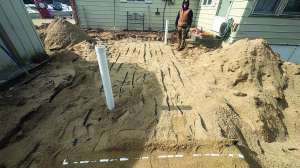
My next concern would be whether this would require installing a system in fill, since the area had obviously been dug up and backfilled at least once before for the existing system's installation.
The reader mentioned the potential to pretreat the new system with a pretreatment device such as aerobic pretreatment. My concern would be whether the clogging mat in the existing system is primarily organic or synthetic. The organic mat stands a chance of possibly breaking down over time with pretreatment. A clogging mat that is high in synthetic fibers might not break down as easily, if at all.
We assume there’s a mature clogging biomat, or else the system wouldn’t need to be replaced. If the existing system is not moving water properly now, how is adding a system on top of that going to make a bad situation any better?
A soil test performing a good morphological analysis and determination of depth to seasonal high groundwater is imperative for any system design and installation. Knowing the detailed soil characteristics and depth to groundwater will all play a significant role in this or any installation.
In discussing the installation of a system over an existing one, this should be a last resort. All other options should be looked at and considered. The existing clogging biomat will be restrictive and the soil has been removed and replaced.
Also consider what percentage of the new system has an existing older system beneath it. The less the better. For the ratio of new system to existing, you would hope for a small old system and much larger new system.
Another question to consider: What is the existing system you intend on replacing? If the system is being replaced, chances are it’s an older system that might not have had robust soil evaluation. It is possible the design was not the best either. Just because there is a system there now does not mean it was properly installed then. Is the system just a concrete tile? A rectangular "bed"? Seepage pits? Chambers? Dirty or improper stone? My company does a lot of system replacements. It becomes real apparent why some of these systems require replacement.
In the past when I’ve installed systems over existing systems, regulators and engineers for the media we were using have always required the removal of the old system and replacing it with ASTM C-33 coarse washed (mound) sand. In the instances of systems being installed over seepage pits, we were required to pump the seepage pits empty and fill those with the same approved mound sand. By using the mound sand in place of the existing system, we’ve removed the clogging biomat and provided media with known treatment characteristics.
What type of building is this serving? While it might get by for a residence, it might not be as good of a choice for a building producing higher-strength waste.
Obviously this would be a last-resort situation (i.e., nowhere else to install one), after all other options have been considered.
There are so many variables that each replacement system should be looked at on its own individual merits, especially when having an existing system to contend with.
About the author
Todd Stair is vice president of Herr Construction, Inc., with 34 years’ experience designing, installing, repairing, replacing and evaluating septic and mound systems in southeast Wisconsin. He is the author of The Book on Septics and Mounds and a former president of the Wisconsin Onsite Water Recycling Association.
Continue reading for free