I knew an onsite system parts vendor was going to be in the area inspecting one of their installations and I wanted to meet him to pick up a part. When I arrived at the site, the person’s truck was there, but I could not find him. Then I walked around the corner and saw a ladder sticking out of the access cover of the tank.
I yelled down into the tank and when he responded, I admonished him for being down there without any proper confined-space entry protocol. He said he didn’t smell anything at all so he "knew" he was safe. Please remember, most people who die in tanks or manholes die from lack of oxygen, and these conditions can’t always be detected with just your nose. Even worse, there is a high percentage of two people dying the same way because a well-meaning person typically goes down to save the first person and neither makes it out.
I knew an "old timer" who would always say he’s been in thousands of tanks without a problem (using the ladder method). I’ve heard of a couple local onsite installers and pumpers in our area who use the ladder method.
Let’s be plain here. Nobody under any circumstances should be entering any tank, manhole or confined space without proper training, safety equipment and proper protocols and safeguards. Those that use the ladder method are gambling with their lives.
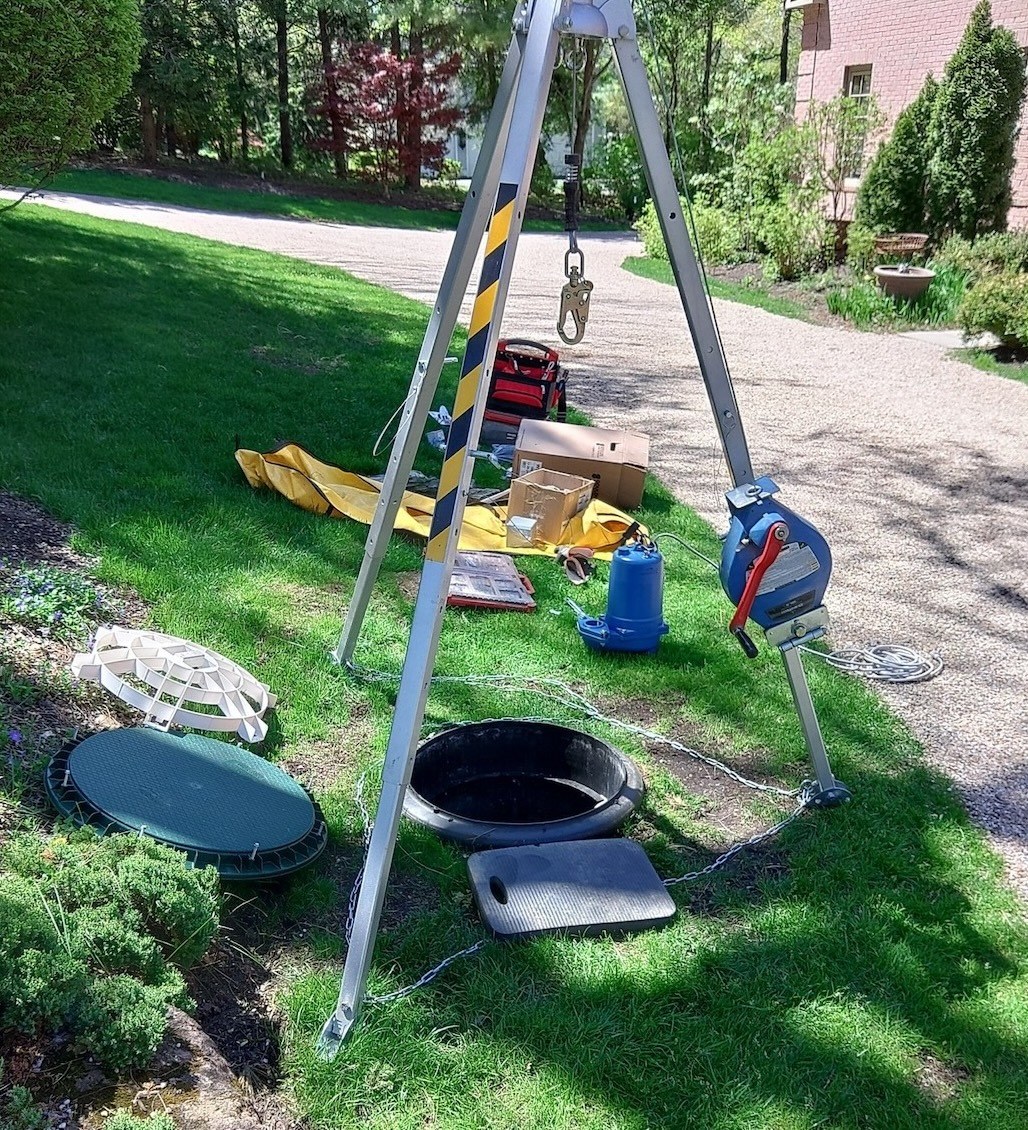
Recently, Bryan Litchfield of the Christopher Bryant Co. in Connecticut posted a picture (shown above) of a pump repair/replacement. I was extremely encouraged to see a tripod set up at the access cover opening. Here’s a guy and company who gets it, I thought, a person who knows what they are doing. He commented that he bought a package that included everything: the tripod, winch, harness, blower, etc.
(I am not going into detail on confined-space entry training in this article, but I do hope “etc.” included atmosphere monitor(s).)
When we hire new employees, one of the first things we do is have the employee take the United Rentals confined-space entry certification course. If your company does not own confined-space entry equipment, you can rent it at United Rentals and I am certain other rental outlets have them also. Although not an advertisement for United Rentals, when I walk into their local office, on the wall inside the door are about 50 atmosphere monitors all charged up on the wall in charging stations. If our atmosphere monitor is in for calibration, we rent one from United Rentals.
Following proper protocol after using a blower to exchange the atmosphere in a tank, we test the atmosphere several times at 15 minute intervals and log each atmosphere test into our permit sheet prior to having anyone enter the confined space.
The atmosphere monitors are small enough that a person entering the confined space can easily wear an the monitor clipped right to the front of them.
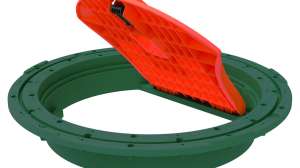
But there was actually a second thing to be encouraged about in Bryan’s photo. On the ground was a riser safety screen. I trust and hope that riser protection screens are used more and more, especially where a plastic cover is used. I know the access covers I typically install are so heavy (concrete) that the manufacturer tried getting their covers approved as locking devices without use of a lock.
All exposed access covers should be locked in some way. Our state (Wisconsin) made locks and chains the required method after years of just saying a locking device. Obviously some plastic covers are actually screwed on. Sometimes the screws strip out on plastic covers so when they do make sure they are repaired.
Recently an onsite installer in my area was digging in a pipe and was 7 feet deep. OSHA happened to be driving by heading to a completely different job, but saw the excavator and plumbing van and paid them a visit. They weren’t using any shoring and were rightfully eventually ticketed.
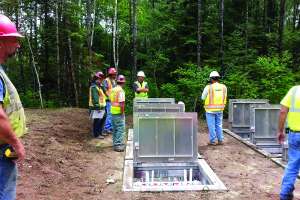
Hydraulic shoring is easily accessible, easy to use and will save a life. Average soil weighs 2,700 pounds per cubic yard. It doesn’t take much of that soil to cause a person to not be able to breathe and cause other major internal damage to the human body. At 4 feet or deeper, some type of protection is required. The other certification we get new hires is trench safety (OSHA Competent Person) to assure that all persons doing this work know the importance of using an approved method to protect themselves and their coworkers.
Our industry is dangerous enough. Practice every possible safety measure you can to keep yourself, your employees and customers safe. Confined space, trench safety and riser safety screens are all important and required measures that will save lives. There is no excuse for not using all necessary safety measures.
Seeing Bryan’s picture made me think our industry just might be turning the corner. It was awesome to see a picture of a company that valued the safety of their employees. Make sure your co-workers and employees are set up to succeed safely.
About the author
Todd Stair is vice president of Herr Construction, Inc., with 34 years’ experience designing, installing, repairing, replacing and evaluating septic and mound systems in southeast Wisconsin. He is the author of The Book on Septics and Mounds and a former president of the Wisconsin Onsite Water Recycling Association.
Continue reading for free