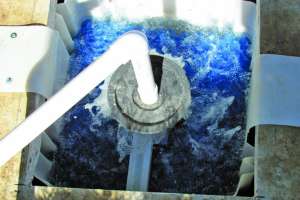

Elmer's glue. The only way to describe the septic tank I was looking down into was that it appeared to be completely filled with Elmer's glue. I was asked to troubleshoot a system the homeowners were having issues with. There was no scum layer, nothing floating at the top and no clear zone. No sludge layer at the bottom. One consistent mass of thick, white, goopy water.
When I saw this, it was shocking compared to the hundreds of tanks I had looked into before this one. Even when you catch someone washing paint brushes into the system, the white paint is more of a whisp or a layer within the normal layers, not a complete replacement of the typical three layers.
I inspected the house and interviewed the owner, looking for anything that could have caused this. I was almost giving up when the owner said that they have several foster children each on fairly heavy doses of psychiatric medications. Wow, I thought, how does one treat the tank for this?
Most medications travel unabated through the human body and when excreted are still chemically the same. Septic systems are not designed for pharmaceutical removal and neither are municipal treatment plants. Almost all treatment plants empty into some type of waterbody and that’s why past studies found so many pharmaceuticals in rivers, causing frogs and other life forms to mutate.
I was once called to a brand-new home — occupied for less than a year — and the owners were having some issues they thought might be associated with their onsite system. This one was at the other end of the color spectrum but just as concerning. The entire tank, top to bottom, was a thick brown mass with no free water at all, let alone three layers. Every ounce in the tank looked the same.
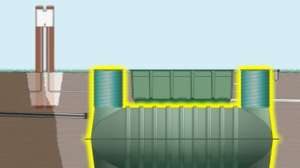
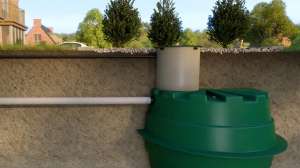
In both cases the tank was emulsified. When a septic tank is ‘healthy’ and operating normally, you have the typical three layers. The top scum layer consists of your lighter floatables: hair, oil, grease, etc. The middle layer should be cleaner water that exits the tank through a baffle or filter. The bottom sludge layer is the heavier solids settling out to the bottom.
In the two examples above emulsification broke down the three layers, combining the tank contents into one homogenous, uniform mass.
The first example of the white thick goop was caused by heavy medication use by several occupants. Heavy medication use is indeed detrimental to any system. In the second example, the homeowners were using chemicals that caused emulsification in the septic tank.
Onsite installers should make certain their customers realize the onsite system uses chemical processes to treat their wastewater. The system is designed to treat what would naturally be flushed through the toilet or sinks. Flushing of unneeded medications, or occupants being on large doses of medications such as chemo, will be detrimental to the system.
In addition to medications and chemicals, new construction (or remodeling) is also a rough time on a system. When painters wash their brushes in a sink, paint and solvents are washed down the drain and into the septic tank. Those chemicals and debris from other trades wreak havoc on a system.
The following are ways you can have your customers protect their system from issues that could cause damage to their systems:
- During new construction (this can also double as a way to protect the system during heavy medication use) we recommend to our customer to have us plug the outlet of the septic tank with a removable 4-inch compression pipe plug. During construction they temporarily use the septic tank as if it is a holding tank, pumping every so often. When they are ready for occupancy, we pump it one more time before we remove the plug and then they are using the system normally. This is done to prevent any of the construction debris (paint, drywall mud, grout, etc.) from getting out into the soil absorption portion of their system. If using the temporary holding tank method, let the local regulator know so they are aware of the temporary plugging of the system (and why).
- A reminder to NOT flush wipes (any wipes — baby wipes, personal wipes, dusting wipes, cleaning wipes, etc.) The only paper product that should be flushed is toilet paper. Wipes claim they are flushable, but flushable only means it will get past the toilet; once beyond the toilet they are bad news for the system.
- Make certain the system owner realizes that the ecosystem of the septic tank must be protected from chemicals such as:
- Heavy medication
- Surfactants/cleaning products/antibacterial soaps
- Liquid fabric softener (use dryer sheets instead)
- Cooking oils and grease should not be knowingly poured into a system
- Some body and bath oils are detrimental to onsite systems
- Quaternary ammonia (quats) in many cleaners and disinfectants
- Some toilet and drain cleaners should also be replaced with environment-friendly cleaners or minimize use
To a lot of people, a septic tank is “out of sight, out of mind.” Many people move from a municipal sewer to an onsite system and think it is one and the same. Systems have to be well maintained and protected from chemicals, medications, and construction debris that could cause the systems to fail prematurely.
About the author
Todd Stair is vice president of Herr Construction, Inc., with 34 years’ experience designing, installing, repairing, replacing and evaluating septic and mound systems in southeast Wisconsin. He is the author of The Book on Septics and Mounds and a former president of the Wisconsin Onsite Water Recycling Association.
Continue reading for free