
No matter how much planning goes into a system installation up front, after it’s complete, next comes the outbuilding the homeowner wants connected.
A second garage, a barn, a pool house — I get this call from customers two or three times per month. Installers are discussing this same topic online: adding outbuildings to existing systems.
There are several options for adding an outbuilding on to existing systems; each install will be unique.
One project I’m working on now is an existing home where the homeowners are building a standalone mother-in-law suite. They want this new building to connect to the existing system. But that brings some challenges. The outbuilding and the existing tanks are 250 feet apart. The new building sewer certainly won’t make it 250 feet by gravity. And once you add a pump and 250 feet of pipe, aren’t we better off just installing a new system to serve the new building?
Here are several variables that need to be considered when adding on to an existing system:
- Additional load. Will the use increase the hydraulic load on the system, or is this new add-on going to merely be used by those in the house (i.e. already using the existing system)?
- Elevation and distance. Can you get from the new source of wastewater to the existing septic tank by gravity or will a pump be required? It’s also important to determine whether the distance is far enough that you should consider a septic tank at the source of the new building. When the run is long between the new building and the existing system, I always recommend a two-compartment septic tank with an effluent filter where the new sewer line exits the building so that the large solids are removed prior to the long trip to the existing system. And multiple septic tanks are always a good idea.
- Condition of the existing system. How old is the existing system? What kind of condition is it in? What condition is the septic tank in? Is the soil distribution area dry?
- Holding tank. Would just a holding tank be suitable for the new building if use is limited? Unfortunately a lot of the counties and municipalities I work in are opposed to holding tanks so they make them a system of last resort. The policy is if you can use any other kind of system a holding tank is not allowed. In areas where holding tanks are allowed, and the outbuilding is prohibitively far from the existing system, in some applications a holding tank might not be a bad idea.
- A new system just for the new building. If a new building to be served is prohibitively far from the existing system, then test for a system that serves only the new building. This new system would not have to be very big but in a case like that I always try to size the system larger than what the minimum would call for.
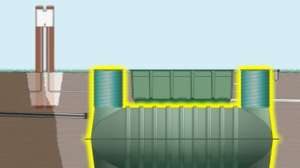
- Add a tank. Should the outbuilding have its own septic tank even though its wastewater is going to the original septic tank? It’s never wrong to have a septic tank prior to another septic tank.
- If the distance is long to the existing septic tank, I certainly would want the larger solids to settle out in a close septic tank prior to the long run to the existing septic tank.
- Is there a kitchen or bathroom in the new outbuilding? Then I would definitely recommend its own septic tank just outside the outbuilding.
- Pumping over to the existing system
- Years ago we would have used grinder pumps to pump over to the existing system. Another option is to install a septic tank, and then a pump tank with an effluent pump or sewage pump to pump over to the existing system. If you use this idea, I’d put a filter on the pump you are using.
- If going through a septic tank first, could you just pump directly to the pump tank? I’d vote for still pumping into the inlet pipe going into the septic tank of the existing system.
- What we often do now is use a vortex pump to pump everything over to the existing system. Like grinder pumps, a vortex pump would not necessarily require a septic tank before it (but it’s always a good idea). Unlike grinder pumps, the vortex pump will not grind the solids to a slurry. This way the solids have a much better chance of settling out.
Not all existing systems are in good enough condition to accept the wastewater from an outbuilding. And in some cases, the due diligence (i.e., soil test) results in requiring the existing system to be changed because the soil tester determines it is not installed in suitable soil.
Jobs connecting outbuildings to existing systems have a lot of variables, from the type and use of the outbuilding to the condition of the existing system. When doing your due diligence for this type of project, it’s like starting over from scratch as this was never figured into the existing system. Make certain to determine if it truly makes sense to combine the buildings into one system or not.
About the author
Todd Stair is vice president of Herr Construction, Inc., with 34 years’ experience designing, installing, repairing, replacing and evaluating septic and mound systems in southeast Wisconsin. He is the author of The Book on Septics and Mounds and a former president of the Wisconsin Onsite Water Recycling Association.
Continue reading for free