
The onsite industry doesn’t get depicted in the brightest of lights. You know the jokes.
What the public doesn’t see is the dedication and effort put forth for the protection of groundwater and public health.
As onsite professionals, it’s important to find ways to make sure the onsite profession is understood better — by both the public at large and individual home and business owners who rely on their onsite system.
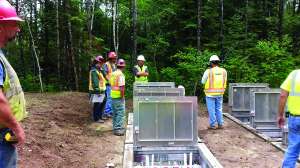
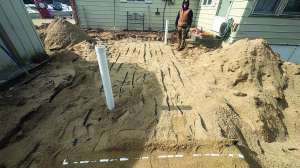
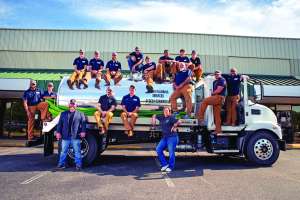
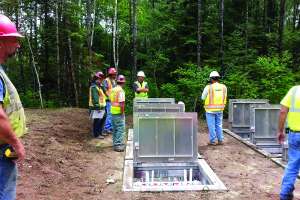
Several times in the past, the Wisconsin Onsite Water Recycling Association, the state’s onsite association, has had a day where membership (installers and vendors) volunteered time, material, labor and equipment to install an onsite system for a worthy recipient who was in need. Local and state political representatives were invited to be there and so was the media. The political representatives and the media were shown firsthand what we do on a daily basis, and they saw our membership working together to help someone in need. They were great events for our membership, the political representatives and the person gaining the new system. We were able to educate both the state representatives and the media about what we do, how and why we do it that way. Now when talking to the representatives at their offices in Madison, we aren’t strangers; neither is what we do for people and the environment.
Know the power of your plumbing/installers license and what your profession means to public health and the environment. When you do your job right, public health and the environment are both protected. But being an onsite professional means knowing how to describe to laypersons what we do.
There are many potential venues for teaching the public and our customers what they need to know regarding onsite systems and our industry. I’ve spoken at career days at high schools, trying to convince graduating seniors the benefits of working in our industry. In the fall, winter and spring there are usually home and garden shows that typically always have speakers. A presentation regarding onsite systems with a robust Q&A session at the end is a great educational opportunity. Display and speak at farm shows. Farm shows are huge and attract a lot of people who live in rural areas. State and county fairs typically are great opportunities for displays and talks. Real estate offices typically have speakers once per month or more frequently. Homebuilders have informational seminars for their potential customers and are great fits for onsite professionals. YouTube videos, podcasts and social media now give us an unlimited opportunity to educate the public regarding onsite systems. It’s important to say yes to and seek out these opportunities to educate the general public about onsite systems.
But when speaking, whether to a crowd, on social media or an individual customer, don’t talk over their head. Just because you know a lot of fancy terms like influent, BOD, interpretive determination or redoximorphic features, please don’t think your audience has a clue about any of those.
Recently a soil test did not pass for a potential mound system installation job; the only option was a holding tank. The customer panicked — they wanted a mound, not a holding tank. In Wisconsin, if a soil test does not pass, there is another step we can take with the state involved called an interpretive determination; then we can still get a system on some lots that don’t pass the initial soil test. The customer wanted a mound and we started to explain the interpretive determination.
Every time the words interpretive determination were mentioned, the customer got more distraught. Noticing the customers’ continued concern, I finally said to think of the interpretive determination as a type of "appeal process" and the customer’s mood immediately changed for the better. Appeal process they understood; interpretive determination meant nothing positive to them.
Being in the onsite industry, we understand the language and concepts, but our customers do not. I’ve always looked for ways to get our concepts across using analogies that they are familiar with.
The best analogy I’ve found is the car. Everyone understands cars, car care, and discussing septic systems in those terms seems to put everyone at ease.
Some examples include maintenance. Customers are always told to pump their systems for proper maintenance. Not everyone knows or sees the monetary benefit of spending money on pumping their system. People delay maintenance because they have better, more immediate needs for their dollars. Pumping and maintaining an onsite system does not mean much to someone who has not had a failed system yet.
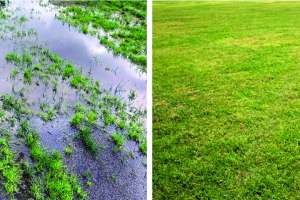
I tell all of my customers that having your system pumped is the same thing as having the oil changed in your car. Pumping a septic tank removes the particles that will eventually cause your system to fail. Think of failure as the engine blowing; eventually the engine on this car will blow. Customers will ask what happens when the engine blows, and I explain that they will have a sewage pond in their yard, their basement or both. Pumping on a regular basis ensues. They can now more easily understand, and gain the urgency they did not have before.
We always warn all customers not to flush wipes. Some will say, “But it says flushable on the package.” My response is twofold:
1) A car is flushable if it’s chopped into small enough bits, but do you want a car in your septic tank? Flushable merely means it will get through the toilet, not break down at all once through the toilet.
2) I always add that the genius who prints flushable on the package never once gets an emergency call from any onsite system owner while their basement floods with sewage.
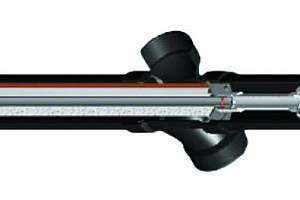
I had a customer once who needed a large mound system in her backyard on the other side of a creek. It was expensive — directional drilling (sleeved) beneath the creek, plus a rather large mound system.
When I gave her the proposal she said she could buy a Lexus for that amount. “I’m buying a Lexus and burying it in my backyard.” Moving forward she referred to her mound system as Mount Lexus. So it’s not just me that uses car references; customers do too.
About the author
Todd Stair is vice president of Herr Construction, Inc., with 34 years’ experience designing, installing, repairing, replacing and evaluating septic and mound systems in southeast Wisconsin. He is the author of The Book on Septics and Mounds and a former president of the Wisconsin Onsite Water Recycling Association.
Continue reading for free