There are entire aisles of stores dedicated to different cleaning products in today’s world. Consumers browse the choices reading what each cleaner does until they find one they think will best handle their intended job. Rarely, if ever, are they thinking about the chemical makeup and the consequences they have when washed down the drain.
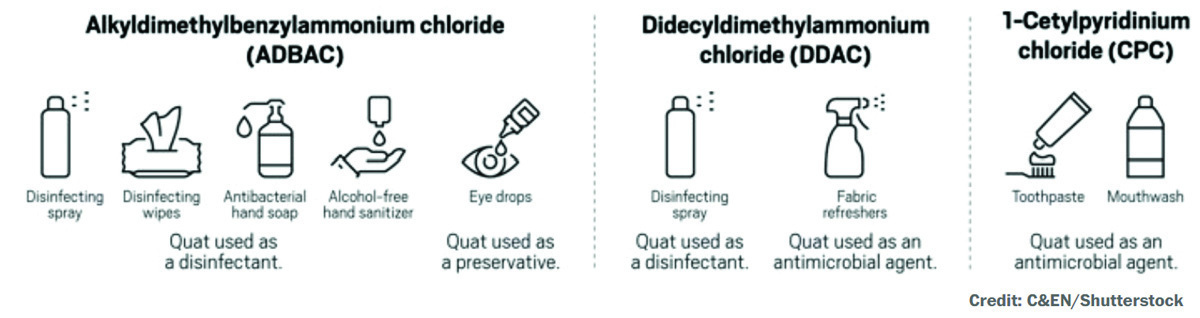
One example, quaternary ammonium compounds, often referred to as QACs or “quats,” which are active ingredients found in many common cleaning products used in commercial facilities and increasingly in homes. In commercial kitchens, they are commonly used in three sink-washing processes as the final sanitizer. In both commercial facilities and homes this ingredient can be found in bathroom and toilet bowl cleaners, liquid fabric softeners, laundry sanitizers and some antibacterial hand soaps.
Quats are officially registered as pesticides with the EPA and were first discovered in the early 1940s.
An In-Depth Look
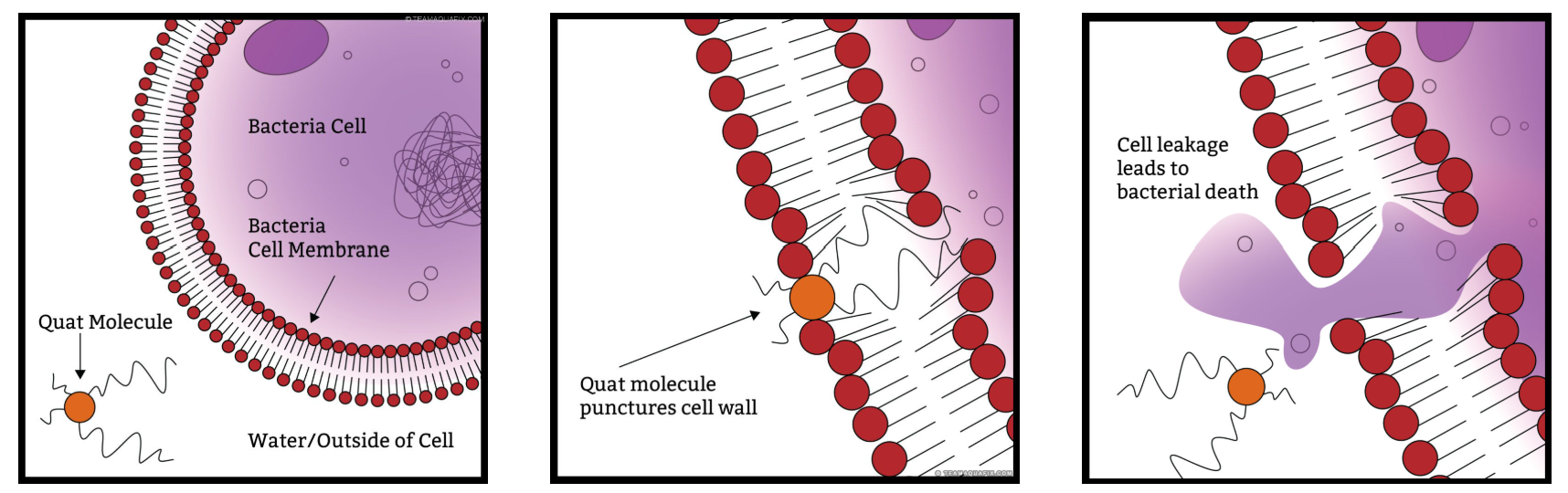
All QACs consist of a nitrogen cation bound to four separate side molecules that function by direct contact with bacteria. Their positive charge and shape cause them to rip apart bacterial cell walls and membranes, therefore killing them. Although they have been used for over 80 years, they have had a recent increase in use as demand for QAC-based disinfectants rose significantly as a result of the COVID pandemic.
These compounds are known to be quite stable and therefore can remain active in wastewater systems for some time. QACs are not volatile compounds like chlorine that get bound up quickly in a septic environment. Chlorine is a preferred disinfectant as it is very reactive and will oxidize most organic matter it comes in contact with. The big difference is once chlorine molecules attach to a cell wall component, the molecule is deactivated, while quats are more robust and continue on after initial contact, meaning they can kill a lot of bacteria before they are no longer effective.
Identifying Quats
Quats are commonly found in cleaning products that are advertised as “antibacterial.” Check the required label and check the “active ingredients.” Commonly found quats in household products usually include “-onium chloride” in their names and may be listed as:
- Benzalkonium chloride
- Benzethonium chloride
- Alkyl dimethyl benzyl ammonium chlorides (C12-16)
- Alkyl dimethyl benzyl ammonium chloride (C14 60%, C16 30%, C12 5%, C18 5%)
- Alkyl dimethyl ethylbenzyl ammonium chloride (C12-14)
- Alkyl dimethyl ethylbenzyl ammonium chlorides (C12-18)
- Didecyldimethylammonium chloride
- Dioctyldimethylammonium chloride
Aside from sanitizers, QACs are used in many products, including wood preservatives, herbicides, eye drops, mouthwashes, nasal sprays, detergents and shampoos, dryer sheets and fabric softeners.
Where We’re Concerned
QACs have been found in surface waters, soil, sediments and wastewater sludge. Researchers have raised concerns for microorganisms and aquatic organisms as well as the impact of QACs on wastewater treatment plants. Due to their effectiveness as a disinfectant, these compounds can cause toxicity issues in all wastewater systems, including onsite wastewater treatment systems.
Onsite systems can handle small amounts of disinfectants and sanitizers, but high concentrations can be damaging and because the chemical bonds are difficult to break, they have a long biocidal effect.
When in high abundance, quats can drastically alter the microbial community, having a potentially major negative impact on the entire system. If a substantial portion of the bacterial population is wiped out by quats, it can dramatically slow treatment of waste. At concentrations as low as 2-5 mg/L, QACs can impact nitrifying organisms, which are critical to the first step of the nitrogen removal process. At 5-30 mg/L, aerobic treatment can be greatly inhibited.
Testing
Typical levels of quats used for sanitizing are between 200 and 400 mg/L. The wastewater in a system can potentially be evaluated with quat test strips, but they must be low-level QAC as most of the available ones are manufactured for restaurants who need ones that are targeting high concentrations. You can also check with your local laboratory to see if they can do the analysis.
The best approach is to get the owners to stop using these products. If this is not an option, a neutralizing product can be added into the sanitizing process at the end that will deactivate the QAC.
The good news is there are numerous effective, inexpensive and commonly used nonantibacterial cleaners, that can be used for cleaning and sanitizing. Both the CDC and the FDA prioritize cleaning with regular soap and water to keep spaces healthy. When a disinfectant is needed, look for safer alternatives that do not contain QACs, including those with active ingredients such as hydrogen peroxide, alcohol (isopropanol/rubbing alcohol and ethyl alcohol), lactic acid, chlorine or thymol. In commercial kitchens, high temperature is preferred, or when a chemical is needed, bleach or iodine are preferred.
Continue reading for free