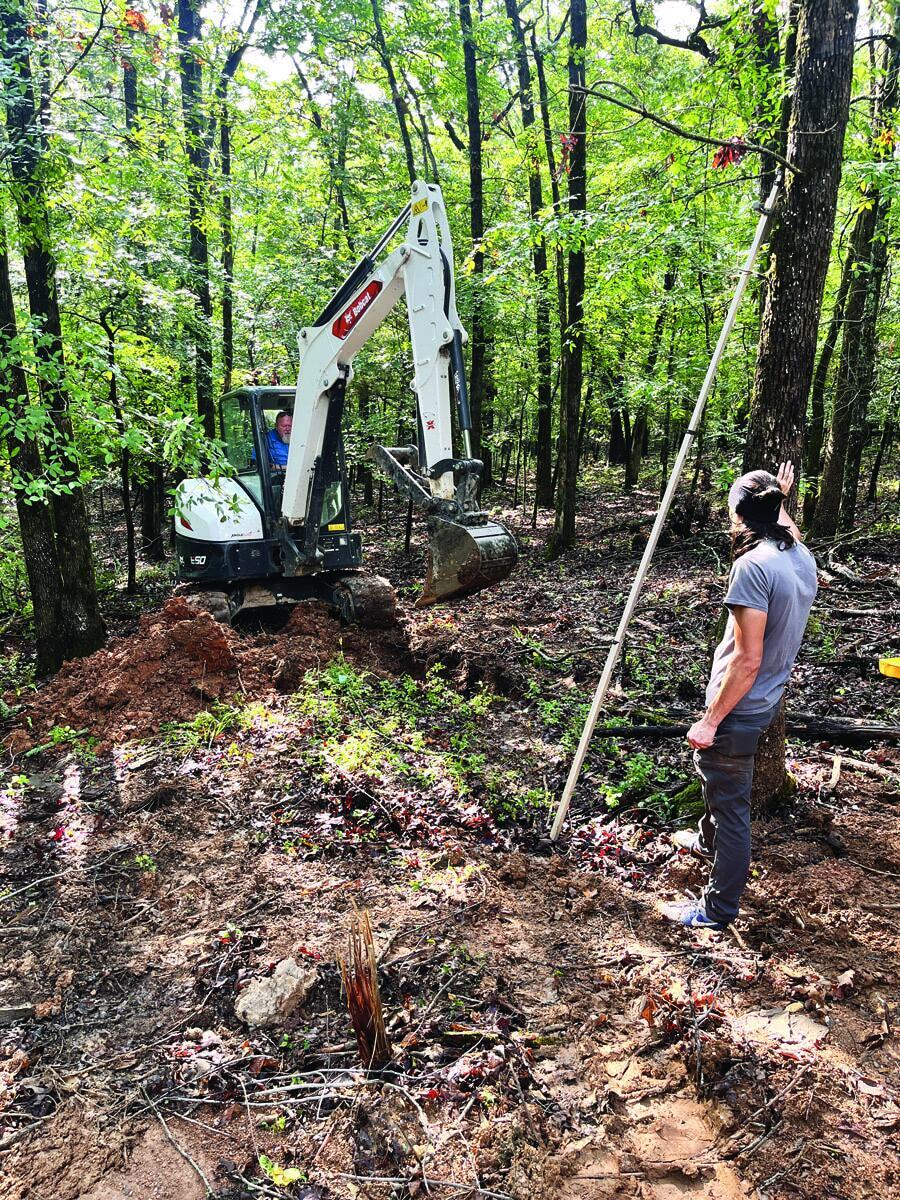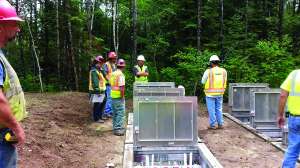
Talk about a tight squeeze. A heavily wooded lot, roots and clay didn’t stop the crew from installing this Polylok hillside sampling box, prior to the surface discharge point of the treated effluent. (Photos provided by Piper Satterfield)


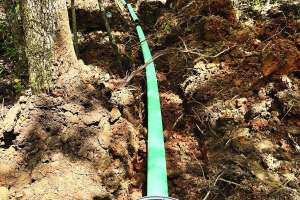
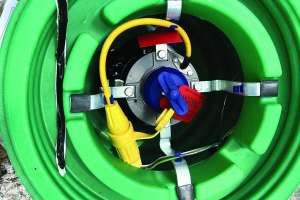
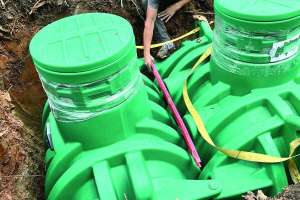
Talk about a tight squeeze. A heavily wooded lot, roots and clay didn’t stop the crew from installing this Polylok hillside sampling box, prior to the surface discharge point of the treated effluent. (Photos provided by Piper Satterfield)
Parts of Arkansas are topped with thick, heavy clay, among the worst soils for septic system construction. Designing and installing a septic system for a client in the Fayetteville area of Northwest Arkansas required a little ingenuity and a lot of sweat.
A residential client living near Fayetteville had purchased a 20-acre site for the construction of a two-bedroom home. However, construction could not begin until a suitable and compliant septic system could be designed and installed.
Due to the extremely high clay content of the development lot, which covered the entire acreage several feet deep, the client required the construction of a special surface discharge system offering a course of pretreatment and disinfection.
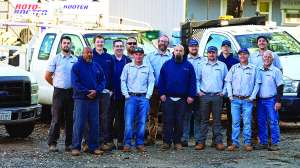
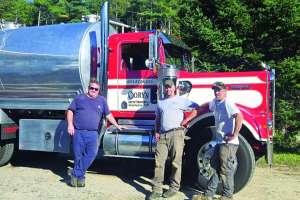
BBB Septic and Portable Toilets of Bentonville was the septic system installer for the project. Launched in 1987, the business is co-owned by Jon Jouvenaux and Dave Davis and offers septic system installation, maintenance and pumping in addition to portable restroom rentals and service, and construction of storm shelters across Northwest Arkansas. The company employs a dozen people and is known for its expertise in advanced treatment systems.
The septic system designer was Zeth Martin of Martin Septic Design & Pump Services LLC of Huntsville, Arkansas. Piper Satterfield of Bentonville was the in-house design consultant, working for BBB Septic as a septic design specialist at the time the system was designed and installed. A self-described “septic nerd,” Satterfield has more than 20 years of experience in the field, including employment at the Arkansas Department of Health. She has since launched her own venture, Satterfield Septic Consulting, as part of a cooperative of likeminded businesses serving the septic industry under the umbrella of “The Septic Hive.”
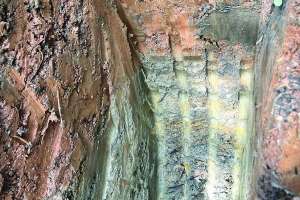
Test pits dug across the 20-acre site revealed unsuitable soil for a traditional septic system.
“It’s called Enders soil, which tends to be formed from shale and sandstone,” Satterfield says. “It can be very, very high in sticky, ugly clay, which turns black or gray when the soil becomes saturated and water stops moving. In Arkansas, if it’s more than 60% clay within a certain depth, then it’s considered unsuitable for subsurface septic disposal. In this case, the only option was to do surface discharge, which is something we don’t do often. It’s considered a last-ditch design when the soil is so terrible or there is not enough soil available for complete renovation.”
Having significant clay soil on a site doesn’t guarantee a slam-dunk approval of a surface discharge system. All potential sites must measure a minimum of three acres. Strict setbacks restrict the system discharge from being located 100 feet from wells, 100 feet from the structure that it’s going to serve and 150 feet from any property line. In addition, the system must be located 200 feet from the property line on a downhill slope from the outflow and 300 feet from adjacent homes, structures or businesses.
“Sometimes three acres isn’t even enough to meet all of the conditions,” Satterfield says. “If that’s the case, you don’t get to build the house. You’ve bought a nice camping spot.”
“For this customer, surface discharge was the only option,” Satterfield says. “That means the effluent must be pretreated and disinfected before discharge.”
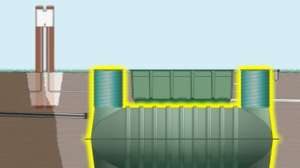
The specified septic system was a Norweco Singulair Green with AT 1500 UV Light (BBB is also a Norweco distributor). The system incorporates Norweco’s advanced aerobic treatment process, enclosed in a polyethylene tank. It combines pretreatment, aeration, clarification, filtration, flow equalization, optional disinfection and dechlorination in the same treatment unit. An NSF Standard 40, Class I-approved aerobic treatment system, the tank has a capacity of 1,300 gallons and was designed to treat domestic wastewater flows of up to 600 gpd.
“Normally, we put septic systems a minimum 10 feet from the house, but in this case, we had to provide 100-foot setbacks from the well, which was located on the other side of the house,” Satterfield says. “The design employed gravity flow through a 4-inch Schedule 40 PVC pipe to the Norweco tank, which was located 45 feet from the house. I continue to spec Norweco products because they perform well and everybody says they’re easy to install.”
The Norweco AT 1500 UV disinfection system, joined to the tank with a 1-foot length of pipe, reduces bacteria levels from secondary effluent to achieve strict water quality standards.
“We also installed a Polylok hillside box as a sampling port because one unusual thing about surface discharge systems in Arkansas is that you have to get two permits,” Satterfield says. “One is approved by the Arkansas Department of Health, and one is approved by the Arkansas Division of Environmental Quality, which monitors the discharge. They grab samples through the sample port for laboratory analysis.”
The effluent is gravity fed and discharged into a forest through a 50-foot length of 4-inch PVC pipe.

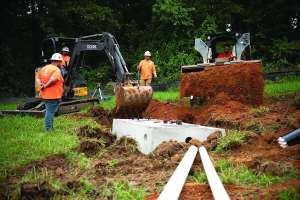
With a surface discharge system, the slope required to enable a gravity-fed system doesn’t require a significant depth of excavation. However, excavating the pit for the tanks and the pipe trench was challenging. Workers and equipment had to work around rainy weather and were frequently mired in mud.
“It was the stickiest install that I remember,” Satterfield recalls. “You could hardly get it off your boots. We tried to wait for it to dry up enough to get in there and work. Even though you’re using track equipment, the clay sticks to you, to your boots and to the excavator. A full bucket of soil coming out of the tank excavation is exactly the same shape as the bucket. You could probably make some great pottery with that stuff.”
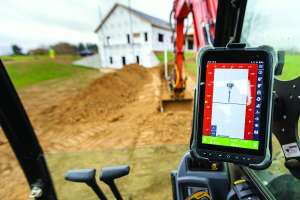
Led by Brook Cannedy, now retired from BBB, overall construction took about two days using a Bobcat E50 compact mini-excavator.
“I completed the final inspection of the system,” Satterfield says. “I have my installer’s license, so even though I’m not the one installing these, I’m authorized to inspect another installer’s work.”
Following the successful installation of the client’s system, Satterfield is now involved with the design of a second surface discharge system on an adjacent eight-acre property owned by the client’s daughter.
“We’re still waiting on the permits to come back from the health department,” she says. “The smaller property size further limits the location of the septic system, but it’s essentially the same thing, with the same geology in another place.”
Continue reading for free