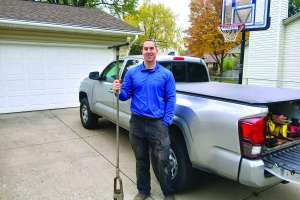
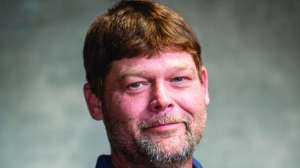
Name and title or job description: Alex Pepin, environmental engineer/septic system designer. I design onsite wastewater solutions for a wide range of clients including single-family homes, small subdivisions, schools, campgrounds and others. I also inspect onsite systems for compliance and am a certified service provider. I provide ongoing operation/maintenance of advanced systems in the state of Minnesota.
Business name and location: Ten Thirty Environmental Solutions, Blaine, Minnesota
Services we offer: Design, inspection and service provider, O&M of advanced/performance systems
Age: 46
Years in the industry: 12
Association involvement: Minnesota Onsite Wastewater Association. Current board member and past president.
Benefits of belonging to the association: The biggest advantages are the ability to learn from others in the industry and make connections with others in the industry. Association members have so much knowledge and experience, and I learn so much just talking shop. You never know when those connections can come in handy. On many occasions, the connections I made in MOWA have led to obtaining jobs and/or doing those jobs more effectively.
Biggest issue facing your association right now: I think the biggest issue facing our organization right now is an aging workforce. People have been in the industry for a long time and have been a part of our association for years. Now they are aging out.
Our crew includes: Me, my CAD specialist, Arie, who helps draw up site plans. Not a big team, but we take pride in our work and try to do the best we can.
Typical day on the job: My typical day usually starts the week before when I prepare for the site visit. I make sure I have all the information I need on the soils I expect to find on the site, the property lines, any water bodies or other sensitive features I need to be aware of, as well as the characteristics of the establishment I am going to be designing for. Then, when it is time to conduct my fieldwork for that site, a typical day on the job involves me driving out to the site, usually about 45-60 minutes away, and meeting with a client to discuss their needs.
I find it incredibly important to walk the site with clients and discuss their water usage and desires for the property. More times than I can count, little tidbits of information come out of those conversations. If I wouldn’t have known that information, we would have faced some really big issues.
Next, I start my fieldwork. I lay out the system, do soil borings/pits and collect all the applicable field data. My CAD specialist and I get to work on finalizing the paper side of the design (calculations, site plans, etc.). For single-family homes, we have gotten pretty streamlined and are usually able to complete the fieldwork and office work in one day. Other establishments are more time-consuming, but we have a pretty good system in place for homes.
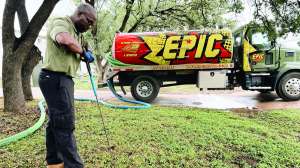
The job I’ll never forget: One job that I will never forget is when I was working for a local county as an inspector, and we were dealing with a discharge of heavy metals from a dentist into a septic tank. We had representatives from the hazardous waste company taking the contaminated material out of the septic tank and a local pumper there to deal with the rest of the sewage. The hazardous waste representative had a full body hazmat suit on with a respirator. He was pulling out the contaminated material from the septic tank sludge. Meanwhile, the pumper was standing 5 feet away pumping another tank, with a T-shirt and jeans, a baseball hat and a big smile on his face. I remember thinking, I love this industry. We do the dirty work that other people don’t even want to get a whiff of, but we do it with a smile and a sense of humor.
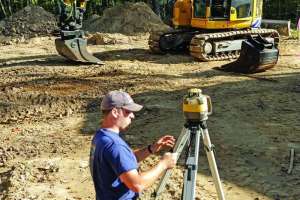
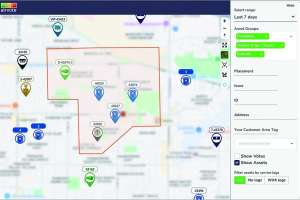
My favorite piece of equipment: My Emlid Reach RS3 RTK GNSS receiver. I just got this piece of equipment last year, and it streamlines the design process for site plans. I record GPS points on site and upload them into my CAD drawing software. It’s easy for me to delegate my CAD drawing to our CAD specialist, which saves me time back in the office. Plus, if my stakes get removed, I can go back and easily restake everything.
Most challenging site I’ve worked on: Last year I was on a site that basically had a cliff in the backyard and front yard and an extremely steep hill on the side/back where we wanted to put the system. No room for anything, and steep slopes to put it on. In the end, I was able to break up the mound into three pieces. We put in a triplex pump and alternated doses between the mounds, all of which were different lengths and at different elevations. Not easy, but it felt good to figure something out as they were having their wastewater surfacing out of their cesspools at the time.
Oops, this didn’t work out as planned: I worked on a design on a lake property that at least two other designers walked away from. The lot had no room for a system, disturbed soil in many areas and access issues. As an engineer, I was able to go a little off-script and use drip dispersal (not a registered/typically allowed product in Minnesota for single-family homes). I charged more than usual and allotted extra time, but permitting took way longer than expected, and the additional time involved far outweighed the fee I charged for that design.
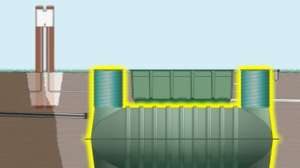
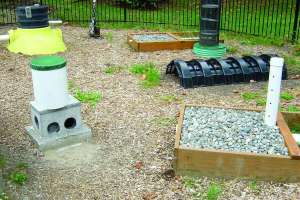
The craziest question or most insightful comment from a customer: I can’t count how many times I have had customers who think the tanks are what are in the mound. The first time I heard that, I didn’t know how to respond. It does kind of make sense. What else would be in there?
If I could change one industry regulation, it would be: More training to become certified to do the work on your own. We are working on a utility, and while I appreciate that our state requires classes and testing and even some experience to get certified to do the work, we need more experience before we should be allowed to work on our own. I made many, many dumb decisions over the first few years of this work that could be avoided with more experience requirements.
Best piece of small business advice I’ve heard or came up with: I had a fellow designer tell me one time, “Call people back, no matter what, no matter how long it takes, call them back.” It seems simple, but when you get busy, it is easy to just hit that delete button on your voicemail. I have heard from so many customers who appreciated the callback. They left several messages with other designers, and no one even bothered to call back.
If I wasn’t working in the wastewater industry, I would like to: Coach or play baseball. Despite the fact that I lost a front tooth to baseball, I have played for many years. Now I get the joy of coaching my kids in baseball.
Crystal ball time – This is my outlook for the wastewater industry: I really think that onsite wastewater treatment is the most sustainable way of managing wastewater. We are able to pull water out of the aquifer from our wells and put it right back onsite after it is treated, so I think the future of onsite wastewater treatment is bright. My hope in our state is that people start looking at our industry like other trades (carpenter, electrician, plumber) as viable career options out of high school, or even before. So, what I would like to see is community colleges or trade schools starting to get involved in training future workers with pathways to internships/mentorships that would help prepare the future workers in our industry.