

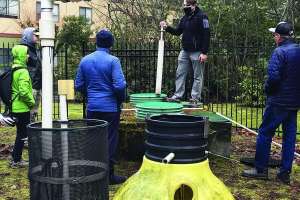
As an alternative to septic inspections by onsite wastewater professionals, do-it-yourself inspections have been allowed in various counties in the state of Washington for more than a decade. Several thousand homeowners have taken certification classes that allow them to report on the performance of their onsite systems. Jane Mountjoy-Venning, senior environmental health specialist in Thurston County – which borders Puget Sound – explains how the self-inspection program came about and how the reporting has worked out:
Onsite Installer: What was the impetus for do-it-yourself inspections?
Mountjoy-Venning: One of our marine inlets experienced a shellfish harvesting downgrade and in 2001 a Shellfish Protection District was formed. By state law, the county was then required to make a plan to improve the water quality. Testing determined that septic systems were a major contributor to the pollution. That in turn required us to develop a septic system management plan, which included regular inspections. The original notion is that septic professionals would do the inspections, but members of the public wanted a less expensive alternative. So in 2007 we created a certification program to enable homeowners to inspect their own systems.
Onsite Installer: What kind of systems qualify for inspection by the homeowner?
Mountjoy-Venning: Homeowners can inspect conventional gravity systems, basic mounds, Glendon Biofilters and pressure distribution systems. Most of the more complex systems must be inspected by professionals.
Onsite Installer: How often are system inspections required?
Mountjoy-Venning: We recommend inspecting annually. Homeowners are required to submit an inspection report to the health department every three years for most systems. Advanced systems, community systems and those serving food establishments must submit inspection reports annually.
Onsite Installer: Is periodic pumping required in conjunction with the self-inspections?
Mountjoy-Venning: Pumping is only required when the solids are greater than one-third the tank volume (generally about 16 inches deep), or when the inspection is overdue and pumping is required to remove a violation status. The time between pumpings can vary for households based on use of the system, how many people live in the home, and if a garbage disposal is used.
Onsite Installer: When pumping is needed, are homeowners notified and given a deadline?
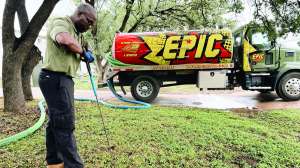
Mountjoy-Venning: We usually give a three-month extension to have the pumping completed by a certified pumper, who then reports the work to an online public database. That database interacts with our internal database and notifies us when the pumping report is submitted.
Onsite Installer: How well was the homeowner inspection program received?
Mountjoy-Venning: In the early years we were surprised. We thought only a few homeowners would be interested. But we ended up needing four classes a month for a couple of years to accommodate the many people who wanted to be certified. We recently expanded the program from only the areas where marine water quality was a problem to making it available county-wide. We now offer two classes per month. Some people take the class but then decide not to do the inspections. Others do the inspections for a while but later choose to hire someone.
Onsite Installer: What does the certification class consist of?
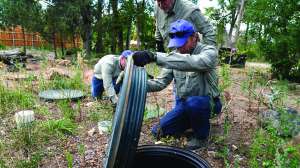
Mountjoy-Venning: There are some very good videos about septic inspections on our state health department website at https://doh.wa.gov/community-and-environment/wastewater-management/septic-system/do-it-yourself-inspection-video. We send a link to those ahead of time and ask the people to watch them. The class itself is four to five hours. We go over the components of a system, what they look like, what they are supposed to do, and what to look for during inspections. We have a lot of show-and-tell items, and we also have a slideshow.
Onsite Installer: Is there a hands-on component to the class?
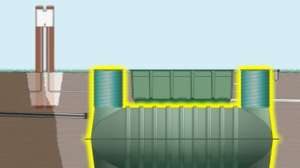
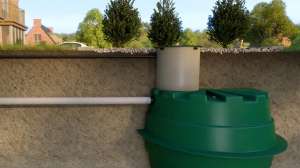
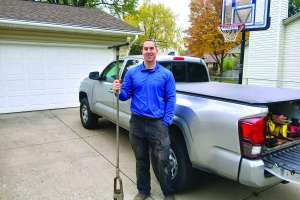
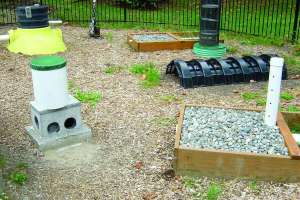
Mountjoy-Venning: Yes. We worked with septic professionals to install an area we call the septic park behind our health department building. There are two septic tanks, one older and one newer model, installed half in and half above the ground. We also have sample gravity and pressure drainfields bedded in gravel so participants can see the pipes. We have sample pumps, timers and other components. We’ve tried to include the gamut of what homeowners might encounter in their own yards. They have a chance to practice using the scum and sludge measuring tool, although we don’t have any sewage in the tanks.
Onsite Installer: How much does it cost a homeowner to take the class?
Mountjoy-Venning: We don’t charge the individual for taking the class. The cost is covered under other charges related to their septic system, and by some grant funds from the state Department of Health.
Onsite Installer: Have you encountered any issues with homeowners’ inspections and reports?
Mountjoy-Venning: People fill out their inspection forms and turn them in to us. We have a staff person who reviews them. If there are discrepancies, or something is answered in a way that makes us think the tank is leaking or something else is wrong, we’ll follow up with the owner. To be a self-inspector, they have to agree that we have the right to follow up and do a visit. We try to do that at maybe 10% of properties per year.
Onsite Installer: To what extent do you regard professional inspections as necessary?
Mountjoy-Venning: While we believe homeowners can be certified to conduct inspections competently, we also think it’s important to have professional inspections. As of last year, as part of the sanitary code, we require people who do self-inspections to have a professional inspection at least once in a nine-year period. That can be timed with a regular pumping, so that the pumper can also do the inspection. Another change taking effect statewide next year is that when a home with a septic system is sold, an inspection must be done by a septic professional.
Onsite Installer: In what circumstances can an owner’s certification be revoked?
Mountjoy-Venning: If their system goes into what we call nonconforming status, then their certification is revoked. That could happen because they didn’t turn in their inspection report by the required date. It could be that there is a problem, we inform them, and they don’t take care of it. Or if someone is trying to give us disinformation, that would be a reason to revoke. Only once or twice have we had to revoke because somebody was cheating.
Onsite Installer: Do you see any conflict of interest in owners reporting on their own systems?
Mountjoy-Venning: No. Homeowners are ultimately responsible for the system and making sure it works right. Our class covers not only how to inspect but also why it’s important to inspect and how to live with a septic system. One thing we emphasize is that the septic tank is there to separate out the solids and to send clear effluent to the drainfield. So don’t use a garbage disposal. Don’t flush those wipes. If your system isn’t working right and solids go out to the drainfield, now instead of a pumping fee you have a $20,000 to $30,000 drainfield replacement.
Onsite Installer: In general, how well have the do-it-yourself inspections worked out?
Mountjoy-Venning: I think they have worked out well. It’s a good opportunity to educate the homeowners, who have to live with the systems and ultimately have the most impact on them. The program gives people information to help them make good choices.
Continue reading for free