
On occasion, an individual wastewater source inside a home or business should be separated from the rest of the onsite wastewater treatment system due to treatability or regulatory issues.
Many OWTS regulations are designed to only treat domestic wastewater from normal domestic activities. However, there are many waste streams that require further treatment. Some of those sources may be defined as not sewage, such as animal waste, while other floor drains, utility sinks, laboratory drains, disinfecting basins and dishwashers may produce such a high strength of wastewater that it is economically beneficial to treat it separately or pump and haul it away as they may have very high chemical use that negatively affects the treatment system. If the percentage of the problem stream is small, but it has the greatest impact on the OWTS, it is beneficial to separate it.
Below are some examples of waste streams that should not be allowed into systems or that may benefit from source separation.
Medical and dental facilities
These facilities often generate regulated medical waste that must be collected and treated by specialized services. OWTS are not designed to handle medical waste. If these facilities have labs, the waste streams from them should be evaluated as well to determine if it is treatable and producing non-hazardous, liquid waste with no corrosive pH levels. Waste that has been treated with disinfectants or other toxic chemicals should only be discharged into the OWTS if it has been determined that the chemicals will not harm the treatment system.
Dental practices connected to OWTS should only discharge domestic wastewater, not wastewater from dental procedures. If dental practices are discharging any nondomestic wastewater such as from an amalgam separator and X-ray film developing waste a holding tank will likely be needed.
Strip malls
Separated source collection and treatment is often a good idea when working with buildings like mini-malls or chopping centers that host a variety of tenants and the tenants can change often. The individual businesses may need to be evaluated separately for their water uses and characteristics. It is ideal if each business in the mall has its own built in sewer with a septic tank or sampling location. Then the waste stream can be tested from the specific business and managed appropriately.
Commercial kitchens
Businesses with commercial kitchens include restaurants, cafes, catering companies, food trucks, bakeries and manufacturers of packaged foods. Many supermarkets, gas stations, hotels and resorts, health care facilities, event centers, churches and schools also contain commercial kitchens.
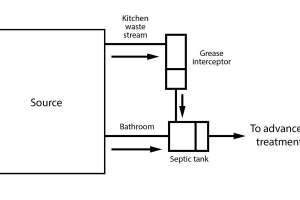
With many of these facilities, if the flows from the kitchen are isolated from the general wastewater stream, it may be more economical as there is opportunity for management of the individual streams.
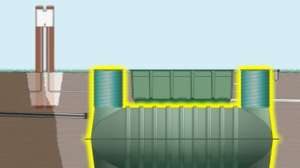
It’s not uncommon for commercial kitchens to produce elevated levels of fat, oil and grease. The traditional approach to separating FOG from wastewater has been to use a grease trap. In these tanks, the inlet and outlet devices may extend closer to the bottom of the tank to facilitate maximum separation of oils and greases. Grease traps are placed first in the treatment train, and blackwater from restroom facilities is usually plumbed around the grease trap to reduce the water flow through the tank and maximize detention time of the kitchen waste. The key to a grease trap’s effectiveness is regular, frequent pumping. Another benefit of separation is that the grease trap is smaller and more economical to maintain regularly.

Car washes
If a bathroom is present it is recommended not to mix its wastewater with the car wash systems due to the risk of malfunction with the car wash waste. Car washes provide a challenge from an OWTS standpoint, particularly because the waste stream does not supply the traditional food supply for microbes.
Car washes have high surges of flow that contain high levels of oil, grease, sands, silts, clays, salts (used to deice roads) and phosphates (from detergents). Detergents produce a chemically emulsified mix of oil and water, which will not rise to the top of the tank with the other FOG. The TSS level is also high from excessive soil particles washed off the cars. Clay-sized soil particles can remain in suspension for long periods of time and increase the risk of carryover to subsequent treatment steps.
There are several ways to minimize the organic and hydraulic loading to the treatment system. Water-saving devices or low-flow high-pressure nozzles can be used to minimize the water use. They can reduce the amount of detergent used which reduces the amount of rinse water needed, or use biodegradable soaps instead of solvent-based ones. Doing so reduces the amount of toxins in the wastewater treatment system.
To tackle the high TSS levels, a sediment trap that is located in the drain essentially traps the heavier suspended solids before they enter the system can be used. If there is not a sediment trap present, then it should be recommended as an upgrade. The owner is responsible for cleaning it out on a regular basis.
Beauty salons and dog grooming
Many property owners are tempted to add salon waste from salons and dog grooming to their OWTS. This waste is potentially challenging due to the increased hydraulic load, the hair/fur and the products used in the facility. Due to the lack of dilution with small wastewater treatment systems these issues could cause the OWTS to malfunction. Alternatively, this wastewater could be stored in a holding tank and hauled offsite, or it could also be collected in a separate system to treat the individual waste stream.
RV dump stations
Due to the concentrated wastewater along with the deodorizers used in most RVs, this waste stream benefits from being separated so it can be treated prior to mixing with other campground waste.
Separating waste streams that require additional treatment may be a practical option if treatment of the waste requires a large detention time. If mixed with all of the other waste, then the system would have to be very large and expensive. The key to source separation is to look at the percentage of flow that is causing the problem. Keep in mind that the problem may be limited if the system owner can change the activities inside the facility. Having a good working relationship with the system manager can help to find a cost-effective solution.
Continue reading for free