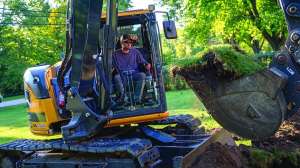

Joe Bruening firmly believes smaller excavators make more money for his company, Bruening Excavating Corp., than bigger excavators could. They’re more fuel-efficient, so he saves money on gas. And they can maneuver in cramped quarters where bigger machines would be hamstrung.
“Plus, I don’t need a commercial driver’s license to haul them around,” he adds. “I just drive them onto a flatbed trailer and go.”
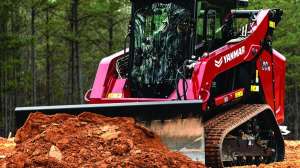
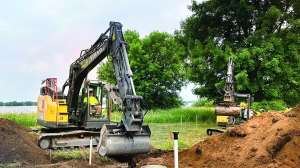
Bruening prefers excavators made by Takeuchi. The company owns two compact excavators — a TB290 and a TB250 — as well as a TL10 track loader.
“I’ve tried other brands, but I really like the way Takeuchis perform,” he says. “You get a lot of power in their package. Plus they’re known for their durability.”
As an example, he cites the TB290, which he says can lift a concrete tank and lower it into place, something other similar models in the same price and weight class would have trouble doing.
The TB290 weighs 18,630 pounds and offers a maximum bucket breakout force of 16,565 pounds, maximum arm digging force of 8,161 pounds and a 7-foot arm length. The TB250 weighs 11,288 pounds, offers a maximum bucket breakout force of 10,430 pounds, maximum arm digging force of 5,261 pounds and a 5-foot, 9-inch reach.
Bruening had his TB250 equipped with a hydraulic “thumb” attachment that effectively converts a standard excavation bucket into a jaw-like grabbing device that he says greatly increases productivity.
“It allows me to boost production because I can pick up things like logs, concrete and rocks,” he says. “It makes the machine much more versatile.
“I did a concrete demolition job where I had to remove a garage floor, foundation and a driveway, and that attachment paid for itself five times over. We did the job in a day.”
Read more about Bruening Excavating Corp. in the July issue of Onsite Installer.
Continue reading for free