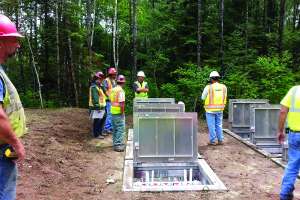

Many homes in the rural areas around the southwest Michigan city of Grand Rapids were built 30 to 50 years ago. This aligns well with the expected life of onsite treatment systems.
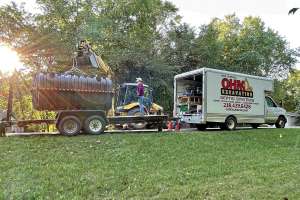
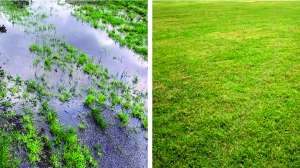
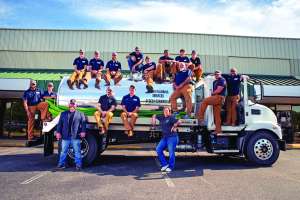
So Travis Gemmel, owner of Walnut Grove Excavating in nearby Clarksville, often encounters drainfields that appear to be failing. He finds that those fields can often be revitalized, much to the delight of property owners who then do not have to bear the substantial cost of a new field.
Where the system’s condition and site conditions are favorable, Gemmel installs SludgeHammer treatment units. For example, if Gemmel and his field teams verify that the existing system is not impaired by root intrusion and that the site does not have a high water table or heavy clay soil, then a SludgeHammer system is often workable.
“We can install a SludgeHammer system at very low cost,” Gemmel says. “If for whatever reason it doesn’t work as intended, we can pull it out and build a brand-new system, but put the Sludgehammer back in, and it will count as an advanced treatment system for the septic tank. So no money is lost except a small amount for labor.”
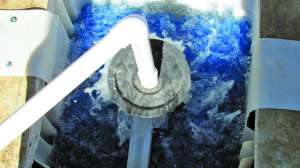
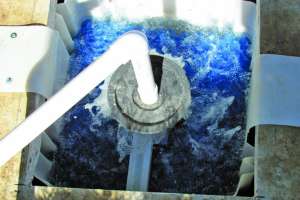
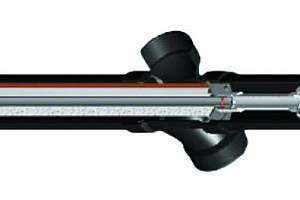
SludgeHammer systems use microorganisms and air in a simple hardware configuration to convert conventional septic systems into cost-effective biological treatment systems. The selected microorganisms oxidize the soil in residential systems to keep drainfields functioning the way they should.
Septic systems depend on microbes in oxygen-rich soil to consume organic material. If oxygen is limited, the slime layer commonly called a biomat forms and clogs the soil, causing the drainfield to fail. The manufacturer estimates that up to 95% of septic system failures are related to biomat clogging.
The company says SludgeHammer technology has been tested and certified to restore clogged drainfield at a rate at least 2.5 times faster than aerobic treatment alone. The systems clean septic tank effluent so that drainfield bacteria have much less organic matter to treat.
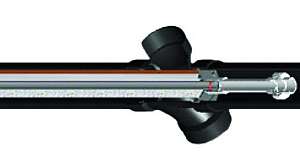
The most commonly used SludgeHammer system is the S-46, designed for homes with up to four bedrooms. Installed inside the septic tank or in a separate chamber, it has an overall height of 36 inches and weighs 42 pounds. It operates on a 120-volt AC, 60 Hz, 15-amp electrical service. The power draw is 60 watts.
Air is delivered at 2.4 cfm and 2.0 psi. The liquid mixing rate is 22,600 gpd at a 4-foot depth,
Systems can digest 1.5 to 3.0 pounds of BOD per day. Units can be installed in double-chamber septic tanks rated for 500 to 1,200 gallons.
Read more about Walnut Grove Excavating in the June issue of Onsite Installer.
Continue reading for free