“In the U.S., construction workers have a higher risk of developing cardiovascular disease.”1
I had absolutely no idea our industry was at higher risk for heart disease than any other industry.
This past May, the day before my birthday, I was getting ready for work in the early morning. I had just fed our cats when I immediately felt a sensation I had never felt before in my chest and knew right away it was not a good feeling. I had heard if this happens to take aspirin so I grabbed two aspirin and took them with water like you normally would. I felt the sensation start to spread up to my head and walked upstairs, woke my wife and told her I needed a ride to the hospital. She asked me what was happening. All I could say is that it was my chest and my head. She said, “For chest you don’t drive to the hospital you call 911.”
She dialed 911 and they told her to have me chew an aspirin, so I chewed an aspirin. I sat on a chair in the kitchen while she was on the phone with 911 and sweat was pouring off my head. The sensation you always hear about is pressure. The sensation I felt was as though someone took a compressor hose, jabbed it into my chest and turned the compressor on full bore. My chest and head felt as though they were inflating.
After chewing an aspirin I started to feel somewhat better. The initial ‘not good feeling’ lasted about maybe 20 minutes and by the time my first-ever ambulance ride arrived at the front door I felt good enough that I asked if I could walk to the ambulance. I really didn’t think I needed a stretcher, but not getting on the stretcher was not an option. I was wheeled to and lifted into the ambulance.
To make a long story short I had no clogged arteries (which surprised the cardiologist) and they also did an echocardiogram which showed no heart damage. I really lucked out. What they determined caused my ‘mild heart attack’ were (no pun intended) PVC beats. PVC beats are beats everyone gets once in a while that start a beat from the bottom of the heart and pump no blood. Beats are supposed to start at the top of the heart and of course pump blood. Everyone gets a PVC beat every now and then, but I had several that strung together which is bad. That morning my heart was incorrectly beating and pumping no blood for (luckily) a short time. I remember in the ambulance when they stuck the monitor electrodes on my body that the person watching the monitor said he was seeing PVC beats more frequently than normal.
Although I felt perfectly fine by the time I was in the ambulance, the hospital kept me overnight for observation and a lot of testing.
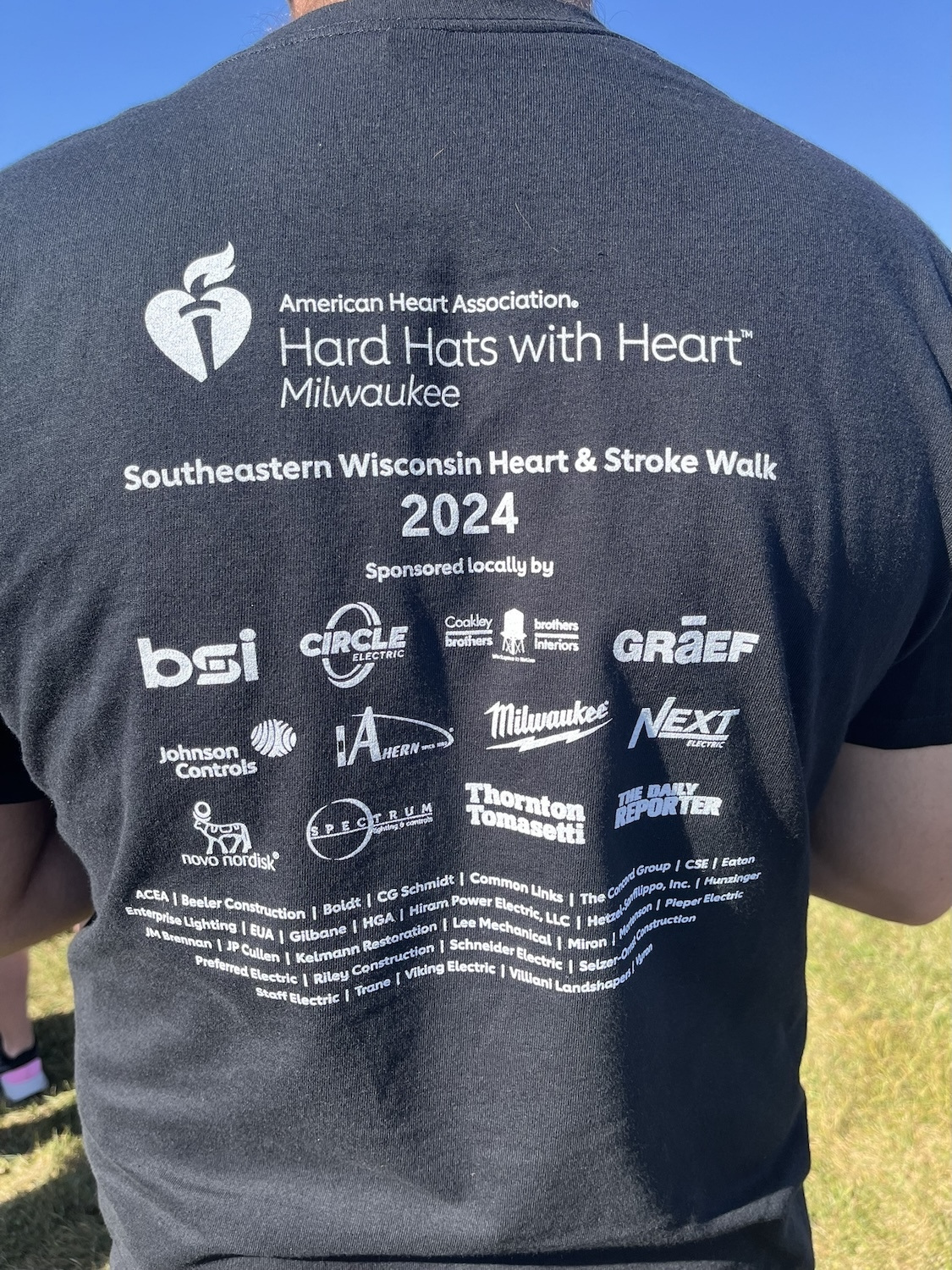
My local health organization has an amazing cardiac rehab program. During that program they mentioned an American Heart Association Heart Walk in downtown Milwaukee on Lake Michigan and would like me to be part of it. It was while I was at the Heart Walk that I noticed an entire group wearing T-shirts that said Hard Hats with Heart. I asked one of the guys if I could take a picture of his shirt because I wanted to remember to look more into this group.
The T-shirt listed many of the subcontractors and builders I am familiar with in our area.
The American Heart Association Hard Hats with Heart website says that some of the reasons the construction industry has a higher risk of cardiovascular disease is due to such factors as: long hours, high stress, poor nutrition, high tobacco use, and lack of heart strengthening exercise.2
Other risk factors include controlling weight, blood pressure, and amount of sodium intake. Although genetics is also a risk factor, by controlling the other variables, even a person with a family history of these issues can keep themselves safer and at a much better chance to stay healthy.
My cardiologist told me I needed to lose 50 pounds. So far I’m down 30 pounds six months after my ambulance ride. I have found that keeping sodium intake below 1,500 mg per day really helps control my blood pressure quite well.
My cardiologist also said PVC beats can be caused by alcohol; this was not a factor for me, I don’t drink alcohol. Then he said the other risk factor for PVC beats is caffeine. To that I responded, guilty as charged. My zero-sugar soda intake was pretty high.
We all talk about safety with our crews as much as possible. Safety always touches on certain issues. But the health of your co-workers is paramount. As the Hard Hats with Heart website says, you cannot be safe without your health.
Add heart health discussion into your safety program. Steps that construction workers can take can make a huge difference in whether they stay healthy or have cardiovascular issues. The American Heart Association has a lot of information on their website under Hard Hats with Heart. I had no idea our industry has a higher risk of cardiovascular disease. Your employees and co-workers might not know this either. A little health education can go a long way in helping those you know and work with live healthier lives. Visit the American Heart Association website for Hard Hats with Heart and share the information with your crews ASAP.
1American Heart Association, Hard Hats with Heart website home page
2Ibid.
About the author
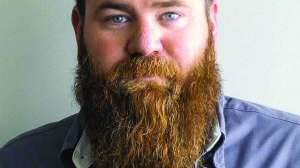
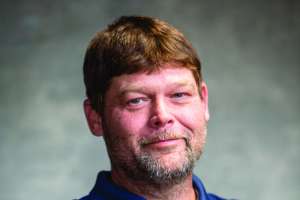
Todd Stair is vice president of Herr Construction, Inc., with 34 years’ experience designing, installing, repairing, replacing and evaluating septic and mound systems in southeast Wisconsin. He is the author of The Book on Septics and Mounds and a former president of the Wisconsin Onsite Water Recycling Association.
Continue reading for free