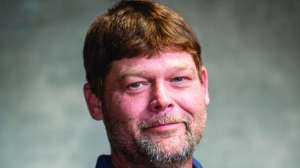
Alan Gale uses just a few words to sum up his first impressions of people in the onsite industry: educated, honest, friendly, open, down-to-earth.
He’ll have ample opportunity to enjoy those qualities as executive director of the National Onsite Wastewater Recycling Association (NOWRA). Gale assumed the director’s chair on Nov. 1. He is a partner of the BTF Enterprises Inc. association management firm in Santa Cruz, Calif.
Gale joined the firm just over three years ago and has dedicated himself to helping NOWRA increase its revenue, expand membership, and deliver programs that members will find valuable.
Before joining BTF, Gale worked several years with Cisco Systems in logistics, customer service, manufacturing, and management. While there, he earned an MBA degree from the University of Phoenix to go with his bachelor’s degree in political science from San Jose State University.
In an interview with Onsite Installer, Gale shared perspectives based on his first several months of involvement with the onsite industry and his aspirations for NOWRA.
Installer: What is your first impression of NOWRA as an organization?
Gale: I think NOWRA is very relevant. It’s a cutting-edge association in terms of its importance to environmental quality, which of course is a major issue today. I think we are very well poised to expand in the future and help provide real-world solutions to current problems.
Installer: What does the NOWRA membership picture look like today?
Gale: We have about 4,500 members. Of those, about 60 percent are system installers and designers, 25 percent come from academic institutions, and 15 percent are government regulators.
Installer: How would you assess the installers’ level of involvement in NOWRA?
Gale: I see installers starting to get a clearer idea of how NOWRA can be valuable to them. They’re looking for the organization to demonstrate what it can do. They’re the “show me” kind of members. So far, their reactions have been very positive.
Our third annual Installer Academy grew by 100 attendees this year, to a total of 250. From the time I came on board until the academy was held last December, we had very limited time to market the event. We were quite gratified with how well the installer community responded.
I was highly pleased at the quality of the people who attended. NOWRA is a highly educated group of people who do the work they love, with all its challenges. I found them really intelligent, friendly, open, down-to-earth. The way I would describe it is that I get absolute honesty — and then somebody hands me a beer.
Installer: What would you say is the association’s greatest need?
Gale: NOWRA needs a solid association foundation so that it can go further in the future. That is what we are working to build. At the outset, we saw the volunteer board members and other members doing a great deal of operational work. At BTF, we have the technology and know-how to assume those tasks and free the members to do what they want to be doing, which is working on industry issues.
We can provide advice on basics such as organizational structure and how to run committees efficiently. We intend to improve the planning and marketing of the annual technical conference. We’re also looking to give more support to NOWRA’s local affiliate groups.
Installer: How exactly do you see the national organization helping the affiliates?
Gale: It’s the local affiliates that do much of the work NOWRA members need done and deliver many of the tangible benefits they want. I think the national organization is very well positioned to support those groups.
I’ve been amazed at how hard the volunteer boards work at just running the operations of their groups. We can provide real benefits that enable these people to step back from those tasks. We won’t do it with more manpower. We’ll do it with technology.
Installer: Exactly how might technology come into play?
Gale: Take annual conferences, for example. Right now, almost every local affiliate group holds a conference. The volunteer boards or the executive directors spend a great deal of time processing the registrations and handling the finances. People fax and mail in registration forms, and someone enters all that manually into a spreadsheet.
We have the technology to make online registration available to these groups. We have a database that we use for other organizations and could easily put to work on behalf of NOWRA and its affiliates. Our technology can help free the group leaders and members from those administrative tasks so they can do what they should be doing – working with their local governments, lobbying, building programs for their members. Of course, there’s also the Septic Locator, which we regard as the industry’s leading online directory.
Installer: NOWRA has built good working relationships with various related industry groups. Where do you envision those relationships going?
Gale: We do have connections with other organizations in the industry, and also with the EPA. I see value in making those connections even stronger. That’s part of the value NOWRA can bring to its members.
I’ve had the pleasure of meeting key people from almost all these groups. We’re at the stage of building relationships. I’ve talked with Tom Ferrero (executive director of the National Association of Wastewater Transporters) about matters such as how we can better integrate our web sites and communicate more effectively with our members.
With Christl Tate (onsite wastewater program coordinator with the National Environmental Health Association), I’ve explored the possibility of collaborating in some way on conferences in the future.
Installer: On the national stage, how can NOWRA increase its in-fluence on behalf of the industry?
Gale: I see us ratcheting up par-ticipation on issues of national concern, with help from other industry groups. I see us getting more involved in the bigger picture of decentralized, distributed and integrated water resource management, through legislative initiatives, grant seeking and conducting of joint studies.
Issues that concern NOWRA members — public health, intelligent development, environmental quality — are very relevant on the national agenda and on local agendas as well. Together we have an opportunity to make a real difference.
Continue reading for free