John Graves Jr. loves a challenge, and that may be one reason he is successful as an onsite installer in Delaware County, Ohio.
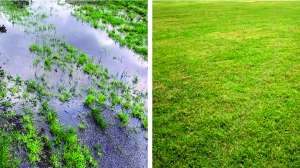
“Seasonal high water tables at depths of 12 to 18 inches are common in this area, and people are starting to recognize the relationship of a high water table and system performance,” says Graves, a second-generation installer based in Sunbury, about 28 miles north of Columbus.
History says that when it’s time to innovate, Graves is there. His company, Graves and Son Inc., in business for 48 years, installed the first mound systems and the first drip irrigation systems in the county.
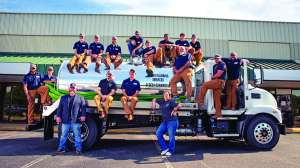
Graves prides himself on working carefully to fit the system to the site. The business is tightly focused on installation — services like operation, maintenance and repair are not on the company’s menu. He does take time consistently to educate himself and his two employees, and to serve the industry by supporting training and advocating for progressive onsite regulations.
Following father
His father, John Graves Sr., started the business in 1960 to pursue the American dream. The company started in pipeline installation but soon shifted its focus to onsite system installation. John Jr. chose to follow in his dad’s tire tracks. “I’m like the kid who grew up in a sand box,” he says. “I liked it, and I stayed.”
Today, Graves and Son regularly covers a 30-mile radius, and for selected jobs the firm will travel up to 100 miles. Graves finds that by controlling the number of employees, he can keep his overhead low and focus on his market niche.
Ed Pearl, the only full-time employee, is an equipment operator and supervisor. He and Graves work some jobs together, both supervise subcontracted equip-ment and short-term laborers. This approach leaves Graves to handle both busy and slack periods without having to find “keep busy” work. Kim Bear works part-time as bookkeeper.
Overcoming challenges
Graves was there when mound systems were introduced to Delaware County in the mid-1990s as a way to gain vertical separation from seasonal water tables. Graves’ first mound installations became training events for regulators, introducing them to the field realities of mound construction.
Before 2000, Graves estimates he installed about 80 percent of the mounds in the county. While he has enjoyed success with mounds, that has not always been the case with conventional systems.
In 2000, Graves installed several conventional systems in a small community. The county health department approved each site and each system design, yet not long after installation, several failed. Looking at these systems, and drawing on his knowledge of the connection between seasonal high water tables and system performance, Graves proposed drip irrigation as a replacement technology. His drip installations were another first and also doubled as regulator training sites.
Graves does not work in the tract housing market, preferring to work with owners who want upscale, distinctive homes. “More and more, these folks want a system that is sited, designed, and operated to meet the sewage treatment needs of their lifestyle while overcoming the site’s limitations and ‘disappearing’ into the landscape,” he says.
Leadership role
Graves’ strength is in coordinating the building site with the property’s soils and wooded areas and with the future homeowner’s vision. Also on the team is a soil scientist, and Graves prefers to work with one scientist for all his jobs. “We get to know each other and how the other thinks,” he says. “Keying off each other, we discuss options, potential sites, technologies, and the opportunities and obstacles each presents.”
In his meeting with the designer and future owner, and sometimes an engineer, Graves applies construction practicality to the project. These meetings produce win-win results. ‘The meetings are not the starting point,” he says. “They are the culmination of field investigations, and of preliminary discussions with the builder and homeowner and, most important, the soil scientist.”
The county health department reviews and approves every design, and Graves also submits each design to the treatment equipment manufacturer for review. The manufacturer is also part of Graves’ team.
Graves and Son takes pride in serving customers well during installations, but the company does not offer service contracts. Treat-ment equipment vendors provide that service, and Graves is happy with that arrangement. Occasionally he is called in to assist when a vendor’s personnel are stretched and a client has a problem. “We help out our vendors, just like they help us out,” Graves says.
The firm rarely undertakes system repairs. Graves spends the winter months working with designers, builders and homeowners, and in good economic times he sells two-thirds of the upcoming season’s construction by late March. “Repair work is terribly disruptive to a fully committed construction schedule,” he says. In slower times, he may take on a repair or two to fill unsold time.
Involved in the industry
Graves believes in the value of training, and staying small helps him afford to take full advantage of opportunities for himself and Pearl. “Ed and I participate in every available training opportunity, and that lets Graves and Son put a fully qualified person on every jobsite,” he says.
He believes a full understanding of technology is essential when making installation decisions. His expertise sets him apart from many competitors.
When not learning himself, Graves gives back. The onsite industry in Ohio is regulated by county health departments, which means great diversity of site evaluation and installation standards. Believing that “better educated regulators raise the bar for the entire industry,” he has opened his installations for regulator training. Competitors are welcomed to the sites, as well.
His open-site approach to peer training caught the attention of Dr. Karen Mancl, co-director of the Soil Environment Technology Learning Lab (SETLL) at The Ohio State University. The lab serves designers, contractors and installers, regulators and landowners, with the goal of eliminating nonpoint source pollution from onsite systems in rural Ohio.
An integral part of the SETLL training program is installation, operation and demonstration of various onsite technologies. The installations use sewage from occupied houses on the OSU research farm near the campus.
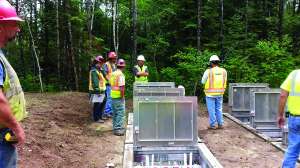
At the farm Graves has installed an elevated mound and a drip dispersal system. A third demonstration system includes a waste stabilization pond (sewage lagoon) that discharges to spray irrigation. All three are used for training throughout the year.
Well equipped
Graves has controlled his business destiny through personal education, paying attention to what sites tell him, and installing technologies that overcome site limitations. Another component of his success is found in his equipment yard.
To minimize loading pressures, all his equipment moves on rubber tracks. A Bobcat T190 skid-steer loader and a Bobcat 437 mini-hoe do most of the small or lighter work. Attachments include a soil conditioner used to prepare sites for final seeding and a Brushcat for initial brush removal.
Other often used equipment includes a 1995 Ditch Witch 400SX articulated plow, a 2004 Cat 312 trackhoe, and two Chevy pickup trucks. To move equipment, a 1996 International tractor pulls any one of several flatbed or low boy trailers. Also in the inventory but seldom used is a 1997 Cat D4 dozer left over from Graves’ mound-building days.
Equally selective when specifying technologies, Graves routinely installs drip technologies from Active Aeration Systems Inc. and American Manufacturing Company Inc.
Graves’ narrow menu of services has allowed him to focus on a niche and enjoy success employing processes that routinely work in an ever-evolving industry.
Continue reading for free