So many kids grow up fascinated with machinery. It’s big, colorful, makes cool noises and immediately draws their attention. They all want to grow up and drive equipment, until they don’t.
In every issue’s Snapshot column, we ask an expert in the industry about their respective wastewater associations. One question in particular and a theme in the corresponding answers has stood out to me.
Among the posed questions, we ask the source to tell us what the biggest issue facing their association is right now. Far too often, the answer we receive relates to a lack of young people attending meetings and getting involved.
It’s not just in the associations either. I often hear from those that have been in the industry a long time that they are discouraged to see the lack of young people willing to step up and make a career in the septic industry.
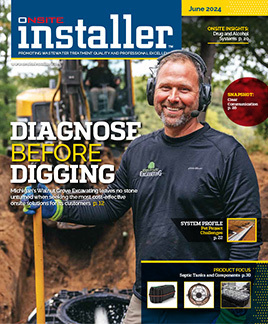
In the pages ahead, you’ll get to know how Justin and Bonnie Brown have developed and run a successful excavation business. I asked Bonnie what her experience has been in terms of young people entering the industry, and she agrees that it is hard to recruit the younger generation.
“Social media has now just started pushing the trades a little more,” she says. “While I see plumbers, electricians and others being pushed, I still don’t see a push for the dirt world, which is concerning.”
AS AN OWNER
As the owner of a company, you have a tremendous opportunity to facilitate growth and involvement from young men and women.
In next month’s issue, you’ll get to know Josh Williams, owner of Lakeland Septic Company in Florida. Williams is 35 years old and was introduced to the industry by his father, a veteran pumper and installer.
I also asked Williams what his thoughts are on getting young people into the septic business. Without hesitation, he said he prefers to hire young adults so he can train them from the ground up and mold them to fit his business.
When he finds someone to hire, he always starts them on the pump truck. “I don’t need them to come to me with any skills. If they can hold a shovel and are willing to work, and show up on time, I will hire them,” Williams says. “On the pump truck, you’re going to see all different kinds of issues that could go wrong. You’re going to see new systems having issues because of something someone else did. You’re going to get experience with all different kinds of tanks, drainfields, systems, all of it.”
Not only does that exposure help the recruit to decide if this career is really for them, it also allows them to experience a little bit of everything it has to offer, so they may gravitate toward one side of the business. Williams gave a good example of one of his crew members that loves pumping and dislikes the install work, while for other crew members, it’s the opposite. Finding a place where employees are happy is going to keep them around longer and working harder.
Along with that, take them seriously and reward them for their efforts. “Pay should reflect their hard work and skillset,” says Browne. “Not everyone can get into a hole 10 hours a day in the extreme heat or cold and work. Listen to your employees when they have ideas. Listen to what their needs are. Just don’t dismiss them.”
FOR THE NEWCOMERS
If you’re fresh into the field, do your due diligence to help yourself as much as possible. Don’t rely on others to do your homework for you. A veteran is much more likely to help someone that they see has the drive to get things done on their own instead of riding the coattails of others.
UNDERSTAND THE INDUSTRY
Before diving into owning a business, it’s crucial to gain a comprehensive understanding of the industry. Fortunately there are great resources for this like the annual WWETT Show. The show provides a platform to meet product manufacturing experts, pioneers and veterans of the industry, attend educational seminars and everything in between. Also, think locally and research the market demand for services in your area, identify potential competitors and assess their strengths and weaknesses.
DEVELOP SKILLS AND EXPERIENCE
Consider obtaining relevant certifications, and joining and participating in your local association. Additionally, gaining hands-on experience through apprenticeships or working for an established company can provide invaluable insights and practical skills.
OBTAIN NECESSARY LICENSES AND PERMITS
Before launching your excavation business, ensure that you comply with all relevant regulations and obtain the necessary licenses and permits. Requirements may vary depending on your location and the type of work you plan to undertake. Common permits include business licenses, contractor licenses, environmental permits and permits for operating heavy machinery.
INVEST IN EQUIPMENT AND RESOURCES
One of the most significant investments is acquiring the right equipment and resources. Consider whether to purchase new or used equipment based on your budget and operational needs. Additionally, invest in safety gear, maintenance tools and insurance coverage to ensure the safety of your team and protect your assets.
MARKET YOUR SERVICES
Effective marketing is essential for attracting clients and establishing your brand in the excavation industry. Develop a marketing strategy that includes creating a professional website, utilizing social media platforms, networking with potential clients and industry professionals, and leveraging word-of-mouth referrals. Highlight your expertise, quality of your work and commitment to customer service.
FOCUS ON CUSTOMER SATISFACTION
I can’t stress this one enough. In any business, whether you’re the business owner or crew member gaining experience, reputation is everything. Strive to deliver high-quality workmanship, adhere to project timelines and maintain open communication with clients throughout the entire process. By prioritizing customer satisfaction and building strong relationships with clients, you’ll not only secure repeat business but also generate positive referrals, which are invaluable.
And lastly, some advice from Browne on starting your own business. “If you are not ready to work 24/7, don’t start. Starting any business and being a business owner is all day, every day. Be prepared to have phone calls around the clock and along with that, your employees depend on you and you depend on them. Treat them with respect.”
Reach out to me with your thoughts on why this trend is occurring and other ways we can help, and as always, thanks for reading!
Continue reading for free